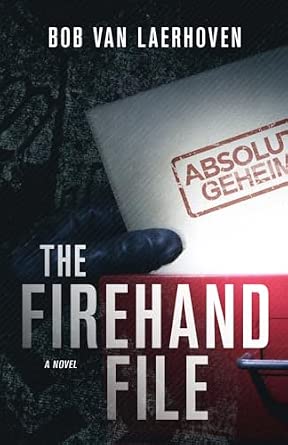
The Blurb
Berlin, 1921. A city of extremes.
While political violence plagues the streets during the day, a serial killer dubbed “The Skinner” roams the streets at night. Detective Chaim Orlosow suspects The Skinner is a World War I veteran, but he remains untraceable.
Meanwhile, the relationship between a famous Flemish DADA poet and his impetuous girlfriend is on edge. Like thousands of others in Berlin, they live in poverty and are addicted to dangerous street drugs.
In a moment of impulse, Van Ostaijen – the artist – steals a mysterious file from the apartment of the enigmatic spy, Elise Kraiser, a series of dramatic events is set in motion. Soon, they find themselves on a a collision course with a politician who is rapidly gaining influence… Herr Adolf Hitler.
Bob Van Laerhoven’s THE FIREHAND FILE is an electric historical thriller set in Weimar-era Berlin, Germany.
My Review
The Firehand File opens with the obsessive, drug-addicted psychiatrist who has said file, along with deeply troubled detective Chaim Orlosow who has risked his career by speaking out in support of his Albanian prisoner on trial for murder. The cast of characters also includes two Jewish children struggling to find a bite to eat, an angst-ridden Flemish DADA poet and his girlfriend who is also involved with a local wealthy businessman, a shifty underworld activist, and a Polish gangster.
The characters are well-crofted and believable. 1920s Berlin is a character too, a city in post-war turmoil, a melting pot at once sleazy, bohemian, depraved and corrupt.
Twin mysteries drive the plot: the identity of a serial killer and the content and journey of the Firehand File itself.
Narrated in an omniscient style with numerous diary entries provides a detached, matter of factness that suits the historical thriller genre. Despite its complexity, the story is surprisingly easy to follow. I appreciated the way all the plot lines came together towards the end.
Stage centre is the rise of the Nazi party and the anti-semitism that was rife in the streets of Berlin. This racism is juxtaposed via the central character Elise Kraiser with that of the Chinese Boxer rebellion, an anti-foreign uprising triggered by hardship, coupled, via Orlosow’s prisoner facing trial for murder, with the brutal crushing of Albanian uprisings by the Turks. This provides an important reminder that the Jewish people were and are not the only group persecuted throughout history. A delicate topic, controversial for some, and one that is certainly apposite in current times.
The Firehand File is at core a story of derangement – along with themes of obsession, cruelty and scapegoating – that digs deeply into the psychology of hate. At once provocative, insightful and compelling, the Firehand File pulls no punches. Highly recommended.

