Sorting Things Out – a short story in lit mag Fictive Dream

Photograph by Mathyas Kurmann

‘Sorting Things Out’ is a short story set in a small country town in New South Wales. It contains two kinds of truth. Firstly, I did sort mail at a country post office. I also used to do a mail run. I’ve never heard of Snake Road though, and all the characters are fictitious.

The second truth concerns the alienation that hits someone when they return to a place after a long spell away, and how relationships change and families grow apart. It takes a lot of effort to let go of closely held prejudices, open the heart, and step into the new.

I’m honoured that Fictive Dream found merit in my story. Doubly honoured that they’ve published it as part of their first anniversary celebrations. You can read the full story here – https://fictivedream.com/2017/05/28/sorting-things-out/


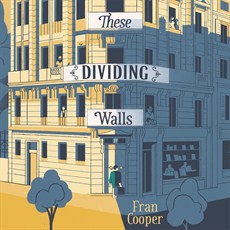
These Dividing Walls by Fran Cooper

Fran Cooper’s debut novel, These Dividing Walls, is a meditation on the way ordinary lives are impacted by racism, Islamophobia, terror attacks and the far right in contemporary Paris.

“One Parisian summer
A building of separate lives
All that divides them will soon collapse…

In a forgotten corner of Paris stands a building.

Within its walls, people talk and kiss, laugh and cry; some are glad to sit alone, while others wish they did not. A woman with silver-blonde hair opens her bookshop downstairs, an old man feeds the sparrows on his windowsill, and a young mother wills the morning to hold itself at bay. Though each of their walls touches someone else’s, the neighbours they pass in the courtyard remain strangers.

Into this courtyard arrives Edward. Still bearing the sweat of a channel crossing, he takes his place in an attic room to wait out his grief.

But in distant corners of the city, as Paris is pulled taut with summer heat, there are those who meet with a darker purpose. As the feverish metropolis is brought to boiling point, secrets will rise and walls will crumble both within and without Number 37…”

****************

These Dividing Walls takes the reader on a journey into the lives of the inhabitants of an apartment block in arrondissement Paris, drifting seamlessly from one character’s perspective to another. Meet among others, Edward and Frédérique, both stricken by grief; depressed and emaciated mother of three Anais and her absent husband Paul; Chantal and her lost and disillusioned husband César Vincent; Madame Marin, the gardienne who runs a hairdressing salon in the courtyard and slips out in the night; the hate ridden Isabelle Duval, and Josef, the vagrant who sleeps in the doorway opposite. Through this cast of quirky and troubled characters the various attitudes to be expected in any social mix, from tolerance through prejudice to extremism, are explored.

The writing is exquisite and discursive. The narrative meanders, rich with incidental details and acute observations, Cooper’s strength, her ability to enter into the souls of her characters. Frédérique seeks “a world beyond the bourgeois formalities cradled within these walls…everything that has suffocated her before in its intensity turned now a cushion against pain; scar tissue around her heart.”

The use of the present tense brings an immediacy to the story, focusing the mind of the reader on the characters in close proximity. Through it, Cooper, invites the reader to ponder the inane and banal aspects of prejudice.

These Dividing Walls is a slow read that contains few surprises. The portrayal of terror and reprisal bleeds into the narrative, growing ever larger, vying for centre stage, seeking to oust the much larger and more poignant story of grief. Contemporary fiction is difficult to write, for the risk is always that themes appear stuck on, worked into something already in existence. Cooper manages to achieve a good balance, using the weather – Paris endures a June heat wave –  to full and dramatic effect. Ultimately, it is the weather that binds this story and makes it work.

Tell Me Why by Sandi Wallace

All good books are hard to put down. Sandi Wallace’s Tell Me Why is no exception.

“Picturesque Daylesford has a darker side. Melbourne writer Georgie Harvey heads to the mineral springs region of central Victoria to look for a missing farmer.There she uncovers links between the woman’s disappearance and her dangerous preoccupation with the unsolved mystery surrounding her husband.Maverick cop and solo dad John Franklin is working a case that’s a step up from Daylesford’s usual soft crime; a poison-pen writer whose targets are single mothers.Georgie’s investigation stirs up long buried secrets and she attracts enemies. When she reports the missing person to the local cops, sparks fly between her and Franklin. Has he dismissed the writer too quickly? A country cop, city writer, retired farmer and poison-pen stalker all want answers.What will they risk to get them? What will be the ultimate cost?”

********

The twin elements that will win the hearts of crime fiction fans are setting and an interesting sleuth. In Tell Me Why Wallace has both. The setting is Daylesford, a small country town east of Melbourne famous for its proximity to Hepburn Springs, rendering the locale a lure for the rich and famous, an area of luxury hotels and spa retreats. Knowing this before opening Tell Me Why, the reader may be forgiven for anticipating an Agatha Christie cosy mystery, or a sort of corporate crime conspiracy novel. Tell Me Why is neither. The novel is firmly situated in the sub-genre of Australian rural crime, since there is such a thing.

The novel has two sleuths, senior constable John Franklin, and Melbourne-based writer Georgie Harvey, each investigating a separate mystery. The inclusion of two sleuths, one from the country, the other the city, plays to the theme of the rural-city divide, although the dichotomy serves more as a backdrop than as an issue explored and developed in a literary sense. Both Franklin and Harvey are well-crafted characters, satisfyingly complex and damaged. Neither sleuth is especially likeable at first. Both are hard edged, carrying their hurts and prejudices close. Both are judgemental, Harvey more so, her heart filled with resentments and frustrations, whereas Franklin is prone to the sort of casual sexism found in Australian rural society. Through both pairs of eyes social realism veers close to stereotyping, with single mothers under the spotlight.

Inevitably, the various foibles of Franklin and Harvey drive the plot. The story opens with a short prelude, a catastrophic fire and a mystery. From there the  narrative jump cuts from Franklin to Harvey, as their individual inquiries unfold.

The jump cuts work well, if making for a seemingly disjointed narrative at first, more demanding of the reader’s attention. The style makes for a fast pace and creates natural tension, the reader forced to wait for vital information as her attention is diverted back and forth between the points of view. What unfolds is a cracking plot. There is never a dull moment. The reader sinks into the story, confident the author is in control of the narrative and won’t disappoint. No small feat. Crime readers are a sharp bunch, likely to extract a calculator to check up on a distance or a passage of time. Thankfully, Wallace manages to avoid stepping outside the bounds of plausibility.

The writing is strong, gritty, earthy and witty at times. Tell Me Why  is a considered work, written with care. Wallace knows her craft. Tell Me Why is a perfect balance of action, dialogue, and reflection. Description is kept to a minimum, just enough to be evocative. Wallace knows her readership too. Themes appealing to female crime lovers abound. Mothers and babies, the strong bonds of female friendship, a cast of utterly believable and endearing minor characters, all held together in a pleasing the rural setting.

Tell Me Why is a compulsive read. The novel should appeal to crime lovers everywhere. I am looking forward to reading the newly released sequel, Dead Again.

Margo’s Slippers on Wandsworth Radio

What an auspicious day this was! My short story, Margo’s Slippers, live on air on Wandsworth Radio.

I have to thank literary journal Fictive Dream for arranging this and the presenter of The Chimnea, Andy Bungay.

My reading is be permanently archived here. My reading takes place 1 hr 57 mins into the show.


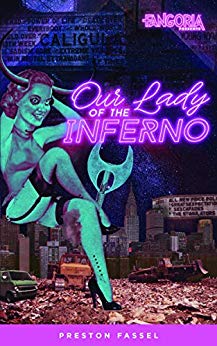
Book review: Our Lady of the Inferno by Preston Fassel

Our Lady of the Inferno is a gripping story of redemption and revenge set against the backdrop of New York’s 42nd Street and its sleazy underbelly. There is much in this novel to please the horror aficionado and the average reader alike.

About Our Lady of the Inferno

“Spring, 1983. Sally Ride is about to go into space. Flashdance is a cultural phenomenon. And in Times Square, two very deadly women are on a collision course with destiny– and each other.

At twenty-one, Ginny Kurva is already legendary on 42nd Street. To the pimp for whom she works, she’s the perfect weapon– a martial artist capable of taking down men twice her size. To the girls she works with, she’s mother, teacher, and protector. To the little sister she cares for, she’s a hero. Yet Ginny’s bravado and icy confidence hides a mind at the breaking point, her sanity slowly slipping away as both her addictions and the sins of her past catch up with her…

At thirty-seven, Nicolette Aster is the most respected woman at the landfill where she works. Quiet and competent, she’s admired by the secretaries and trusted by her supervisors. Yet those around her have no idea how Nicolette spends her nights– when the hateful madness she keeps repressed by day finally emerges, and she turns the dump into her own personal hunting ground to engage in a nightmarish bloodsport…”

*********

My thoughts

The irony in the title, Our Lady of the Inferno, with its reference to the biblical Virgin Mary, one tainted, corrupted, existing in an infernal hell, alerts the reader to the sort of novel talented author Preston Fassel has produced. The story has an urban feel, gritty, noir, providing the reader with a unique window into an American subculture of which prostitution forms a part, a world littered with 1980s pop culture references to comics, television and film. References to cinematic horror, often oblique, foreshadow the horror emerging in the lived reality of the narrative.

The story is the union of two portraits. A young woman prostitute and her disabled sister, and a psychopath with a vendetta.

Meet protagonist Ginny, a troubled young prostitute with a taste for the obliterating altered state of consciousness alcohol affords, and a commitment to education as the key to redemption for those in her charge, a small group of pornai at the Misanthrope Motel. She’s ruthless yet compassionate, obeys the rules that have been imposed upon her, and craves and strives for escape. Her younger sister, Tricia, is confined to a wheelchair. Ginny regards Tricia a burden she’s resigned to carry, shouldering the responsibility with long-suffering love. Their banter is funny, lighthearted. They bicker and squabble, tease and goad, and yet there’s an undertow of bitterness and regret, and overwhelming frustration, each of them craving the unobtainable, a better life. While Ginny drowns her anguish in the bottle, Tricia escapes into film and comics.

Through the sisters, Fassel explores an important moral theme, recognising that it is society that places young women like Ginny and her small group of pornai in such vulnerable situations and then ignores their existence. Further, that while prostitutes exist in a reality where almost all the predators are men, it’s a dangerous assumption because, sometimes, one of those predators will be a woman.

Antagonist Nicolette, at once disturbed and disturbing, slices into the main narrative, at first offering puzzling intrigue and menace. Fassel paints her portrait with texture and depth. She’s a troubled soul shut off from the world, obsessive compulsive, living her life through a set of complex rituals. Her mind is racked as much by fear and paranoia as it is loathing and rage. Hers is a quest for retribution. She blames, but as is often the case with childhood abuse and neglect, the target of her blame is misdirected. She’s a repulsive character yet the reader is drawn into sympathy even while revolted by her acts.

In Our Lady of the Inferno, Fassel weaves together the two narratives, building the suspense, the dread, leading the reader towards the inevitable, all the while inviting them to look at that which confronts, to ponder, to penetrate beneath the surface of taken for granted attitudes and norms.

The carnal aspects of the novel are juxtaposed with a theme of transcendence, embodied both literally and metaphorically in Sally Ride: cosmic, spiritual, aspirational and social transcendence, all are sought after by protagonist Ginny, for herself, her sister, and the pornai in her care, as she struggles to find  liberation from her pimp and motel owner, the outright misanthropic Colonel.

Written with grace, restraint and poise, the prose is evocative, at times almost poetic; edgy when it needs to be, sometimes suggestive; insinuating rather than descending into gratuitous portrayals of gruesome acts. And when the horror does take place, its detail is measured and carefully crafted.

Fassel is a visual, visceral writer, one in full command of the craft. Capable of conjuring a charged atmosphere one moment, a poignant scene the next, the author’s descriptive powers are enviable, especially in his depictions of character: “His intellect perhaps enough to make up for his lack of physicality but his social manners too crippled to cement the relationships he is always reaching out towards.”

Our Lady of the Inferno is as much a page turner as a novel to inhabit and thoroughly absorb. The story is well-paced, unfolding petal by petal until its awful truth lies splayed. Fassel handles his subject well, demonstrating sensitivity and insight, the result of considerable research and a natural empathy. The result is a novel that is finely tuned, ironic and hard hitting in equal measure, rounded out with a touch of comedy and a penchant for the absurd.


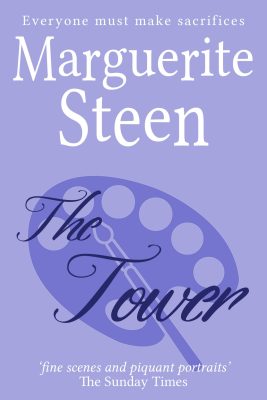
The Tower by Marguerite Steen

In The Tower, Marguerite Steen provides the contemporary reader with her valuable insights into the world of the struggling if moderately successful artist of 1950s Britain, a time of post-war transition in society and the art world, as abstractionism grew in ascendancy.

“Painter Tom Proctor and his wife Antonia are among innumerable victims of the so-called Welfare State, their problem complicated by their child, Noelle, who is in desperate need of care. Tom’s career has arrived at an impasse, in which his sole support is the steadfast belief of Antonia in the value and honesty of his work.

Torn between duty to wife and child and artistic integrity, Tom is about to play for safety by accepting a salaried job in an art school. In The Tower, Marguerite Steen delicately explores domestic tension and the strength that comes from a loving relationship against an artistic backdrop she knows so well.”

***************

In The Tower Marguerite Steen demonstrates considerable literary prowess, painting in words a character riven by situations and conditions beyond his control. Tom Proctor is enduring a form of mid-life crisis. With mounting debts and a wife and child to support, he is torn between satisfying convention and taking risks. He’s broody, wary, given to intense moods, staunch when he can’t afford to be, and prone to bouts of drunken recklessness. His angst centres on finding ways to earn a living from his art in a changing world. He hankers after a past, his own in those early years before the birth of a severely disabled daughter, Noelle, and for a time in the art world when primitivism was valued over abstraction.

The reader senses early in the narrative that Tom’s explanations and justifications for his various decisions take the form of an elaborate excuse for something disastrous. He is confronted with a decision, a fork in the road, two futures presenting themselves, one of security and stability, the other its opposite. What ensues has the flavour of a descent into desperation without redemption.

In Tom Proctor, Steen balances ruthless honesty and self scrutiny with equally acute observations of other characters, particularly the pretentious upper classes in the art and theatre milieu. Proctor’s observant eye is that of a painter regarding his subject and the result is a novel filled with evocative depictions of setting and character.

The Tower is not a work of perfection. Some of the transitions between scenes could have been more deftly handled. At times the narrative feels hurried, some plot points skated over rather than dwelt on, yet if they had been explored in more detail, the narrator pausing, attending, then The Tower would be a different book, and not what it is, a masterful portrayal of one man’s account of his motivations, apprehensions and misgivings in the face of an art scene filled with dilettantes, and a post-war society in transition. Steen provides an intimate tale of an artist battling with authenticity versus compromise, with his conscience, with his own artistic temperament and with his domestic responsibilities.

The re-release of this novel will satisfy a new wave of readers hankering after works composed in a richer style of prose, those who seek not only an entertaining read, but a work that stimulates the imagination and ignites the intellect.

I’d like to thank NetGalley and Odyssey Press for my review copy.

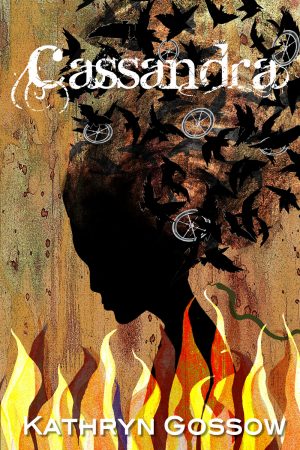
Cassandra by Kathryn Gossow

Kathryn Gossow is a masterful storyteller who displays great insight and sensitivity in her handling of difficult themes. The result, her debut novel Cassandra, is an extraordinary and engaging coming of age tale.

“On a remote farm in Queensland, Cassie Shultz feels useless. Her perfect brother Alex has an uncanny ability to predict the weather, and the fortunes of the entire family hinge upon his forecasts. However, her own gift for prophecy remains frustratingly obscure. Attempts to help her family usually result in failure.

After meeting with her new genius neighbour Athena, Cassie thinks she has unlocked the secret of her powers. But as her visions grow more vivid, she learns that the cost of honing her gift may be her sanity.

With her family breaking apart, the future hurtles towards Cassie faster than she can comprehend it.”

There is much to love in this novel. The reader is enchanted from the opening scenes, of a very young Cassie playing where she isn’t meant to, under the house; of her encounter with a snake and the nightmare that follows; of her innocent curiosity. “A crackle of excitement pops in her belly. Like Coco-Pops when the milk first goes on.”

Through the early chapters, Cassie soon grows into a teenager, and it is this lonely, rebellious, confused girl eager to belong, who experiments with her own abilities in an attempt to understand them.

Cassandra is laced with evocative descriptions of rural Queensland. Gossow’s characterisations are convincing and her pacing measured. Early suspense shades into a textured exploration of clairvoyance, dreams, trance states and the predictive powers of Tarot, as Cassie tries to get a handle on her own inner powers; her friend, the ever doubtful Athena, egging her on. These moments are convincingly portrayed, never overplayed, each adding another dimension to the fabric of the paranormal. In this fashion, tinges of Jungian psychology and Greek mythology are blended seamlessly into a family drama.

Cassandra rises and flows, rises and flows, the reader held in a deep ocean swell. When the end of the novel is sensed on the horizon, this swell breaks into great waves that eventually deposit the reader on the shore of normality, somewhat transformed by the experience.

A novel with broad appeal, Cassandra is told in well-crafted, elegant prose. The reliance on simile to create a childlike atmosphere works well in my view. Think Arundhati Roy’s The God of Small Things.

Gossow’s literary skills shine in her portrayal of Cassie’s altered states of awareness. It is in these scenes that the author demonstrates much empathy, empathy needed in order to render authentic the inner experiences of the protagonist. In this aspect, I am reminded more of Madeleine Thien’s Booker-shortlisted Do Not Say We Have Nothing than I am Paula Hawkins’ bestselling The Girl on The Train. Through all of the numerous scenes of other-wordly introspection, Kathryn Gossow reveals a fine literary talent.

The reader is gifted a gem of a story in Cassandra.  Highly recommended.

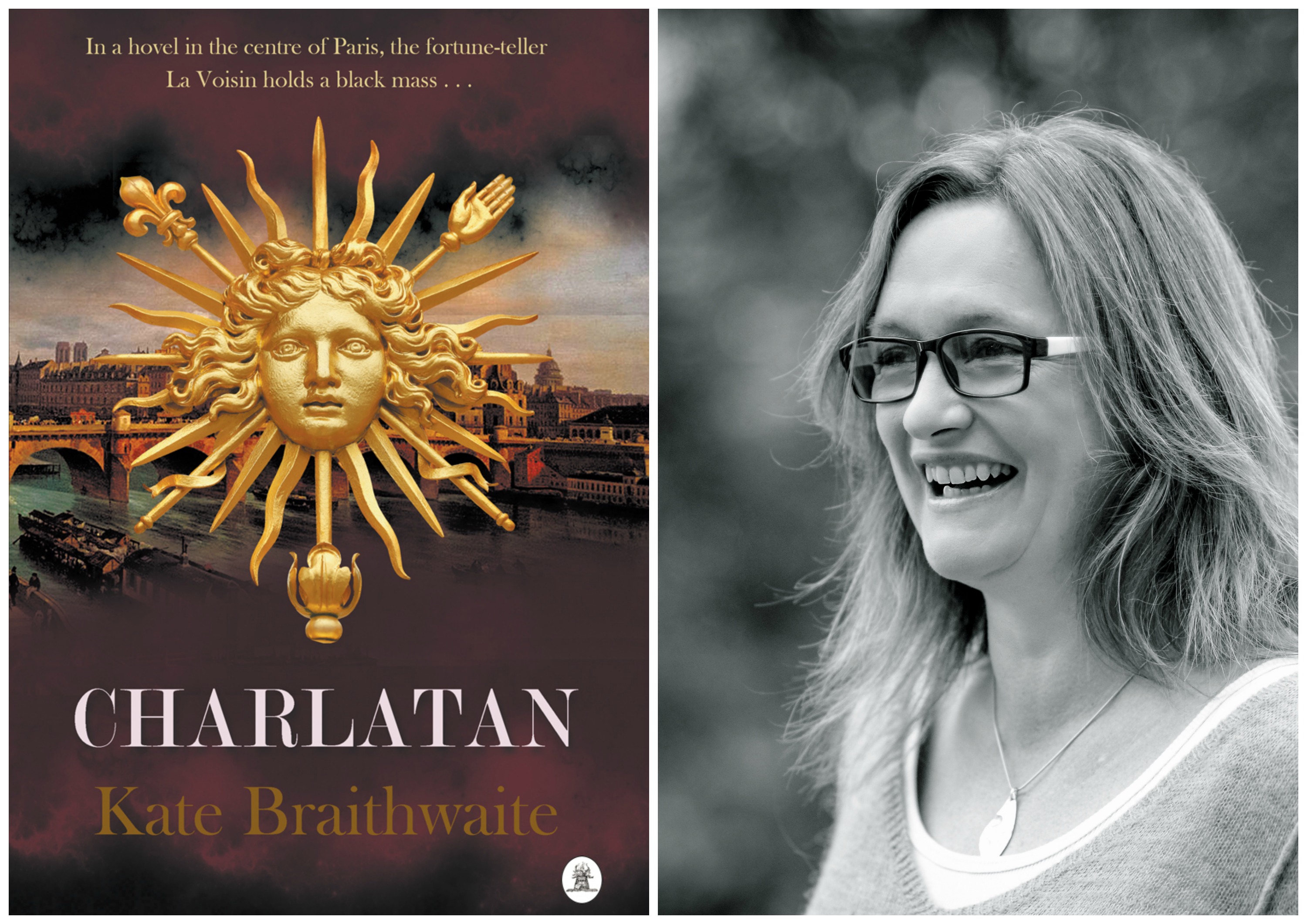
Charlatan by Kate Braithwaite

CHARLATAN is based on the Affair of the Poisons that scandalized Paris in 1679.

charlatan

In a hovel in the centre of Paris, the fortune-teller La Voisin holds a black mass, summoning the devil to help an unnamed client keep the love of Louis XIV.

Three years later, Athenais, Madame de Montespan, the King’s glamorous mistress, is nearly forty. She has borne Louis seven children but now seethes with rage as he falls for eighteen-year old Angelique de Fontanges.

At the same time, police chief La Reynie and his young assistant Bezons have uncovered a network of fortune-tellers and prisoners operating in the city. Athenais does not know it, but she is about to be named as a favoured client of the infamous La Voisin.

*********

Charlatan is an enthralling work of historical fiction set in the late 1600s in France. From a black mass held in the centre of Paris to the opulence of the court of Versailles, a story – part intrigue, part drama – unfolds that has the reader turning the pages on the edge of her seat.

What motivates an author to write historical fiction? The telling of stories untold? A revisioning of the past? Retrospective justice? Charlatan is all these and more. Told in richly descriptive and highly engaging prose, the work portrays in vivid details the torture, hangings and burnings of witches and their accomplices, including numerous priests. The author clearly knows her subject, the work as much informative as it is entertaining. Told from three points of view – the King’s mistress, the investigating police officer, the priest – Charlatan provides a fascinating insight into the occult underworld of Paris, its popularity, its secrecy, and the various motivations of those involved.

The premise of the story is the limitations of justice in a system riven by poverty and privilege, and it is a theme that plays out perfectly through masterful storytelling. The dialogue is impeccable and the pace never falters, the various storylines carefully woven into a seamless whole. Charlatan makes for confronting reading at times, but it’s all the stronger for not shying from the realities of the times. With Charlatan, Braithwaite makes a valuable contribution to raising awareness of a controversial subject.

The Street Sweeper by Elliot Perlman

What motivates a writer to compose a work of fiction? To entertain? To provide an escape from mundanities? To enlighten? To invite the reader to consider something new or ponder a fresh perspective on something old? Or to portray in fictional form real events that come alive in the imagination through the characters in a story?

content

“Tell everyone what happened here.” And in The Street Sweeper Elliot Perlman does just that.

“Recently released from prison, Lamont Williams, an African American probationary janitor in a Manhattan hospital and father of a little girl he can’t locate, strikes up an unlikely friendship with an elderly patient, a Holocaust survivor who was a prisoner in Auschwitz-Birkenau.

A few blocks uptown, historian Adam Zignelik, an untenured Columbia professor, finds both his career and his long-term romantic relationship falling apart. Emerging from the depths of his own personal history, Adam sees, in a promising research topic suggested by an American World War II veteran, the beginnings of something that might just save him professionally, and perhaps even personally.

As these men try to survive in early-twenty-first-century New York, history comes to life in ways neither of them could have foreseen. Two very different paths—Lamont’s and Adam’s—lead to one greater story as The Street Sweeper, in dealing with memory, love, guilt, heroism, the extremes of racism and unexpected kindness, spans the twentieth century to the present, and spans the globe from New York to Chicago to Auschwitz.”

A work of contemporary fiction, The Street Sweeper is well researched and artfully constructed, the interweaving of the two parallel narratives holding the reader in thrall as Perlman juxtaposes the black civil rights movement of African Americans with the persecution of Jews in Poland before and during WWII.

Gripping from cover to cover, The Street Sweeper entertains, educates, and above all brings the reader’s own moral compass to the fore. “Tell everyone what happened here”. There were parts of this story I could scarcely bring myself to read, and towards the end I had trouble seeing the print as my glasses fogged up with my tears.

I could criticise this work. But I won’t because it would be nit picking. I could cynically accuse the author of jumping on the Holocaust-porn bandwagon, buying into our morbid fascination for the horrors of the death camps in Nazi Germany, but I would be doing a disservice to an author at pains to make a significant contribution to the remembering. Remembering that needs to occur and reoccur; the events all too recent, all too easily overlooked in the busy information traffic of our lives.

The Birdman’s Wife by Melissa Ashley

What a delight it is to read stories of historical figures passed over by history probably because they were women. An even greater delight when they are told well, as is very much the case with Melissa Ashley’s The Birdman’s Wife.

30634833

Elizabeth Gould was indeed a remarkable woman. “Inspired by a letter found tucked inside her famous husband’s papers, The Birdman’s Wife imagines the fascinating inner life of Elizabeth Gould, who was so much more than just the woman behind the man.

Elizabeth was a woman ahead of her time, juggling the demands of her artistic life with her roles as wife, lover and helpmate to a passionate and demanding genius, and as a devoted mother who gave birth to eight children. In a society obsessed with natural history and the discovery of new species, the birdman’s wife was at its glittering epicentre. Her artistry breathed life into hundreds of exotic finds, from her husband’s celebrated collections to Charles Darwin’s famous Galapagos finches.

Fired by Darwin’s discoveries, in 1838 Elizabeth defied convention by joining John on a trailblazing expedition to the untamed wilderness of Van Diemen’s Land and New South Wales to collect and illustrate Australia’s ‘curious’ birdlife.

From a naïve and uncertain young girl to a bold adventurer determined to find her own voice and place in the world, The Birdman’s Wife paints an indelible portrait of an extraordinary woman overlooked by history, until now.”

It is only the hardboiled cynic who won’t fall into this story as though in love, won’t be seduced by the intimate narrative style. Here is a story, articulated in a voice commensurate with the era, of a life acutely observed, the sort of story that seems to flow from the pen, belying the many hours and months if not years of research that went into it. It isn’t easy to breathe life into history in fictionalised form. Too often the reader will sense contrivance, or stumble through an unconvincing scene. It’s a fine balance between fact and narration every step of the way and Ashley pulls it off with aplomb.

This is a work imbued with optimism and hope. There is an almost playful romantic quality at first, as a flirtation between Elizabeth and her soon to be husband evolves, yet the story soon departs from romance, as the practicalities and the tragedies of her life unfold, along with what can only be described her life’s work.

The Birdman’s Wife is a story of passion and depth of thought told with an empathy so deep the reader may look up from time to time to find herself in a room filled with specimens, the floor littered with sketches, and Elizabeth herself seated nearby.

Many thanks to NetGalley and Affirm Press for my review copy.

Domingo Díaz Barrios

Sitio web de mis obras

Soul to Spirit: The New Spiritual Psychology

Becoming Human, Becoming Soul, Becoming Spirit

The Dark Side from the Inside

Writing and Reviews from Dark Places

Bookinton

Book Blogging , Short Stories , Reviews , literary web-series and EVERYTHING FICTION !

Mitch Horowitz

Author • Lecturer • Narrator

ARMAND ROSAMILIA

Author of Thriller, Horror, Nonfiction stories and more

BOOKS FROM DUSK TILL DAWN

Each night I TRAVEL THE WORLD, I LIVE IN THE MIND OF KILLERS AND WALK AT THE SIDE OF HEROES

Passport Overused

Showing the beauty of this world through the people, places and culture

BooknVolume

For the Love of Words, Art, Nature, and Spirituality

THE BLOGGING STATION

LIFESTYLE, BEAUTY AND EVERYTHING IN BETWEEN

Frankly Wright

I give you my opinion whether you ask for it or not.

a good book, a good life

comments on books by Ann Creber

Carmel Bendon

Writing tales of then and now and the in-between