Book review: Return to Hiroshima by Bob Van Laerhoven

There is fiction that is entirely make believe. Then there is fiction that has its basis in fact and the historical record. Return to Hiroshima by Bob Van Laerhoven, in the tradition of political thrillers, is situated firmly in the latter group.

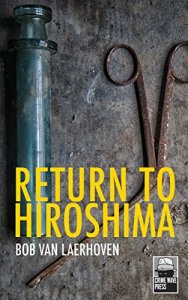
Return to Hiroshima

About Return to Hiroshima

Xavier Douterloigne, the son of a Belgian diplomat, returns to Hiroshima, where he spent his youth, to come to terms with the death of his sister.
Inspector Takeda finds a deformed baby lying dead at the foot of the Peace Monument, a reminder of Hiroshima’s war history.
A Yakuza-lord, rumored to be the incarnation of the Japanese demon Rokurobei, mercilessly defends his criminal empire against his daughter Mitsuko, whom he considers insane.
And the punk author Reizo, obsessed by the ultra-nationalistic ideals of his literary idol Mishima, recoils at nothing to write the novel that will “overturn Japan’s foundations”….
Hiroshima’s indelible war-past simmers in the background of this ultra-noir novel.
Clandestine experiments conducted by Japanese Secret Service Unit 731 during WWII are unveiled and leave a sinister stain on the reputation of the imperial family and Japanese society.

My thoughts

I have a healthy appetite for noir fiction and found Return to Hiroshima a sumptuous and wonderfully grotesque feast. Centred in Hiroshima and written for a Western audience, Van Laerhoven paints a vivid and dark portrait of Japan, its culture and society, and an equally vivid and dark portrait, both immediate and fifty years on, of the aftermath of Little Boy – the atomic bomb that fell on Hiroshima on August 6th, 1945.

Through the eyes of a diverse cast of characters, the reader enters a deep-state reality, shadowy, deceptive, peppered with lies and brutality. The author slowly reveals in short sharp chapters, the twisted and corrupt interplays at work behind the scenes as Japan endures a cataclysmic economic crisis. The novel is set partly amid the abandoned high rises built atop the coal mines of Hashima Island near Nagasaki, where Mitsuko wrestles with the reality she is forced to endure, dominated by her monstrous father and mafia-boss, so-called Rokurobei. She escapes to Hiroshima and forms a friendship with Yori, whose drug-crazed and maniacal boyfriend, Reizo, is at work on his novel in a squat in a disused warehouse.

Soon, the reader meets German photographer Beate Becht, Belgian graduate Xavier Douterloigne and maverick police inspector, Takeda. Each shines a spotlight on Hiroshima, and each is of course instrumental to the plot. What unfolds is on one level a straight ahead race to save Mitsuko from danger and reveal hidden truths. On a deeper level, Return to Hiroshima challenges authorised versions of events and their causes and perpetrators, those versions reported by the press.

Superbly written in an easy, fluid style with characters that are complex and believable, Return to Hiroshima contains a taut and artfully constructed plot. The reader is kept on edge. At any moment the tension will release. Eventually it does, dramatically yet incrementally, intertwined with revelation upon revelation, carrying the reader through to the last page.

While there are a few confronting scenes in this novel, with various victims meeting their awful ends, the ultimate victim in Return to Hiroshima is truth, at once laid bare by the narrator and distorted by the characters. Driving the plot are themes of memory and remembering, childhood trauma and unhealed wounds. Gruesome mutations caused by the atomic bomb are set alongside those caused by secret medical experiments. In all, Return to Hiroshima is an elaborate and insightful depiction of obsession.

Younger readers may not recall the sarin attack in a Tokyo subway that took place in March 1995, and the religious cult, Aum Shinrikyo who claimed responsibility. They may not know of Unit 731 and the atrocities the Japanese meted out in WWII on their prisoners of war, atrocities ignored by the West as we focus all our attention on the Nazis. Cruelty is a global phenomenon, then as now. In addressing this, Return to Hiroshima and its author deserve to be acclaimed.  An intelligent and compelling read.


Find a copy of Return to Hiroshima on Amazon

Book review: The Ka by Mary Deal

 The Ka by Mary Deal  

About The Ka

California archaeology student Chione has vivid dreams about the discovery of an opulent tomb. After the founder of the Institute of Archaeology learns that Chione’s dreams might be connected to events in Egypt, he accepts an offer to examine a mysterious site in Valley of the Queens.

After they discover an ancient burial site, spells encoded into the hieroglyphs on the tomb’s walls transport Chione and her former boyfriend, archaeologist Aaron Ashby, 3,500 years into the past: to ancient Egypt. There, they learn of Tutankhamon and Tauret, a priestess in Pharaoh’s Court.

Meanwhile, the other team members are affected in unfathomable ways by the Ka: the spirit of the entombed.

Chione and Aaron learn that Tauret plans to provide Tutankhamon with a living heir… and that they have been chosen to play a crucial part in completing their destiny.

My thoughts on The Ka

From the opening scenes in which a group of hot-tempered academics prepare to uncover a forgotten Egyptian tomb, The Ka draws its readers into a mystery centred in the ancient history of the pharaohs, one that pivots on mysticism and the paranormal. This is undoubtedly a potent mix.

Distinct and believable characters fumble and tumble their way through discovery and danger. The author clearly knows her subject, and provides a vivid and detailed portrait of the tombs and pyramids of ancient Egypt, along with the stories, the tragedies and cruelties, and the betrayals that went on. The historical exposition is cleverly woven into the narrative in the conversations among the party and in the mind of the protagonist, Chione.

The story maintains a good clip and is well-plotted with plenty of twists and surprises. The plot is driven by Chione, who endures many dreams and visions, at times clear, at others murky. Through Chione, Deal blends the present with the ancient, all the while imbuing the narrative with a looming sense of dread. Danger, is everywhere, as pervasive as the sweet odour that so enchants Chione.

Questions prevail, not least what is it between ex-lovers Chione and Aaron and will they re-unite? As the story unfolds the past and present collide in a dramatic way. Suddenly, ancient Egypt is a lived reality, not something dead and buried, but alive and influential, having lured Chione and Aaron back in time and trapping them there. What unfolds makes for a highly engaging read.

Original, refreshing and captivating from first to last, The Ka will appeal to historical fiction fans with a fascination for the supernatural.


Should authors Americanize their fiction?

I am a British-Australian author with nine novels under my belt to date. All of my fiction has been set in either the Canary Islands, Britain, Australia, or with multiple settings around the world, save for one book: Twerk.

Twerk

Twerk is set in a Las Vegas strip club. The characters are American. Therefore, it stands to reason that the writing should also be American, or should it? Having just been criticised by two book reviewers for using the words ‘fortnight’ and ‘car park’ instead of ‘two weeks’ and ‘parking lot’ respectively, my own perspective on how far authors should go in changing their language to satisfy readers from one particular country is shifting.

In my defence (or is it defense), I did my best to compose Twerk using American English. I switched to the American English dictionary in my Word doc. I paid close attention to the language. Most of my oversights were picked up by my publisher and corrected. For example, car ‘boot’ became ‘trunk’. Except for these two glaring examples of ‘fortnight’ and ‘car park’. Two tiny slips in an otherwise Americanized (or Americanised) novel, standing out all the more because no other slips have been found, and they have stuck fast in the minds of reviewers enough for them to make an issue of it.

I am very grateful to both reviewers for their lovely reviews, for taking the trouble to read my book, and to read it thoroughly enough to notice these words. I am not criticising these reviewers. I am not hurt or upset by what they have said. I am using their remarks to raise an issue and I am endeavouring to do so in a respectful manner.

What interests me is that this has never been an issue for me in the past. I know that my Australian vocabulary creeps into my novels set elsewhere and I have to do my best to weed it out. And vice versa, my British vocabulary creeps into my Australian writing. But British and Australian readers and reviewers have never once made an issue of this or even remarked on it. Readers seem prepared to let it go. The general attitude seems to be more accommodating and forgiving. No one has ever said I absolutely have to write in English English if I am to set a novel in England, or Scottish English in Scotland. With so many regional dialects as well – how far do we take this!

Why are Americans (from the United States) touchy about their language? How far should non-USA authors go to accommodate the assumption that all fiction set in the USA must use American (US) English and never once use a word from another English-speaking country for fear of being dragged over the coals? (an expression that may or may not be understood by those born and bred in the USA and means speaking to someone severely about something foolish or wrong that they have done)

I have not studied American English at school. Is there such a course? What about Australian English? You could fill a term’s worth of curriculum studying that. What about the various forms of English around the world, in Africa, in India and so on? What, too, of authors who set their books in countries where English is not spoken at all?

What do I, as a British-Australian writer, do from now on? I raise the matter here because Twerk is a novel containing about 85,000 words which altogether comprise a story with characters, a plot and themes. Should Twerk be viewed as a lesser book in the USA because it contains the word ‘fortnight’? By the same token, should all novels written in American English and set in other countries be viewed as lesser works for using the word ‘parking lot’ instead of ‘car park’?

You can find the Twerk reviews in question on Amazon by clicking this link

How Alice Bailey entered my life

I have been told many a time that when a seeker draws near to Alice Bailey, strange things happen and life seems to have a charge to it that it didn’t have before. Here is my story…

Alice Bailey

Finding Astrology

In 1990 I moved to Perth, Western Australia, and within a few weeks of my arrival I stumbled on astrology. I was staying in a cockroach-infested flat and one morning I decided to rid the place of the infestation by setting off an insecticide bomb. Only it meant I had to leave the flat for eight hours. It was summer, I had no money, so where would I go? I walked to the nearest library, and as I entered the air-conditioned cool, my eyes were drawn to some shelves containing the reference section – dictionaries and the like. In amongst the other ordinary books was an astrological ephemeris, a book detailing the daily positions of the planets in our solar system in relation to the zodiac for a period of a hundred years. I took the book and sat down to peruse the pages.

I found I had no trouble understanding the information. I knew all the glyphs and what each meant. It didn’t even occur to me that this in itself was a bit weird. How did I know all this? In the front of that particular edition were instructions on how to cast your own horoscope. I went to the front desk and acquired some scrap paper. A couple of hours later I had my chart, bar the rising sign. It turned out I needed another book to calculate that, so I headed to the state library in the city centre, found said book, and did the calculation. Then, I went home. I thought nothing of it.

Three days later, I was invited by a friend – who had the lease on the cockroach-infested flat – for coffee in town. He introduced me to another friend, a lecturer at a nearby university. This lecturer offered to drive me home and on the way he asked me about my interests. I told him, tentatively, that I had just discovered astrology and told him the story. He swung by his office and directed me to a bottom shelf behind the door. There, hidden away was a row of astrology books! He told me to take what I wanted. I selected twelve books. That night, I didn’t sleep. I was up, with the cockroaches. I didn’t know it then, but those cockroaches were the catalyst for a protracted phase of self-discovery and New Age exploring.

An Alice Bailey Book

Three years passed and I was studying for a diploma in transpersonal counselling. On the course I made a friend, enigmatic Claudio. Our friendship was intense and laced with romance although we both knew it wouldn’t last. He invited me back to his house one evening and while I stood in the hall he disappeared, returning a few moments later with a book proffered on upturned palms. It was dark blue and carried the title “Esoteric Astrology”. I gazed in wonder. ‘A gift,’ he said. He went on to explain how he had packed up his possessions in Adelaide some months before, as he prepared to drive across the desert to Perth, and he could only take with him what he could fit in his car. He saw the book, which he had bought in a second-hand book store, and hesitated. What on earth did he want to keep that book for? It weighed a fair bit, he had no interest in astrology and had never heard of Alice Bailey. But it seemed important and he felt compelled to keep it. When he met me, he realised why. ‘This book is meant for you,’ he said.

Esoteric Astrology

I had not heard of Alice Bailey either, but I took the book home and devoured it. There was something so intriguing and compelling about the writing, even as I scarcely understood a word of what was written. I wanted to know. And that desire, that need to know propelled me forwards.

Alice Bailey marked the end of that part of my journey. My life became very, very hard after that. I endured a decade of struggle and testing. A period of darkness in which I was forced to prove my worth as a human being. At the end of the decade, Alice Bailey unexpectedly re-entered my life. That story is even stranger than this.

Over the years I have bought the whole collection of Alice Bailey’s writings. I have read most. Something changed when I first encountered the Blue Books. I changed. The way I understood reality shifted. I will try to explain that shift another time.

I have always held the Alice Bailey teachings lightly and have never considered myself an adherent, but there is no need to be. All esoteric knowledge  is charged with a certain energy. Only, the knowledge exists behind a veil and to pass through that veil and enter into the realm, you need to have an esoteric disposition. What is that? Well, unbeknownst to me until I met the cockroaches, I had no idea I had one.

Twenty-five years later, and that early interest has culminated in The Unlikely Occultist: A biographical novel of Alice A. Bailey

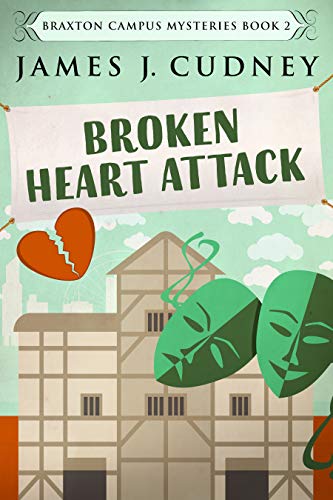
#BookReview: Broken Heart Attack (Braxton Campus Mysteries Book 2) by James J. Cudney #CreativiaPub

I am delighted to share my review of Broken Heart Attack by James J. Cudney, a cozy mystery with a professor for a sleuth!

#CreativiaPub

About Broken Heart Attack 

When an extra ticket becomes available to see the dress rehearsal of King Lear, Kellan tags along with Nana D and her buddies.

When one of them dies of an apparent heart attack in the middle of second act, Nana D raises her suspicions and asks Kellan to investigate the death. With family members suddenly in debt and a secret rendezvous between an unlikely pair, Kellan learns that the Paddingtons might not be as clean-cut as everyone thinks.

But can Kellan find the killer, or will he get caught up his own stage fright?

My thoughts on Broken Heart Attack

I have dived straight into the second book in the Braxton Campus Mysteries without reading the first. While it soon became clear I would have benefited from reading the earlier mystery, I was quickly brought up to speed and settled into the story without any difficulty.

Broken Heart Attack has all the elements of a good cozy mystery, including an amateur sleuth who sets out to solve a suspicious death, in this case Gwendolyn Paddington, a family friend dying while watching a dress rehearsal of King Lear. The narrator, professor Kellan Ayrwick, is a satisfyingly flawed protagonist with a full portion of problems, both personal and professional, on his plate. In true cozy style, the reader is drawn into an intimate world filled with loveable, and well-rounded characters. Even chair of the department, Miriam Castle, the “venomous barracuda”, is sympathetically cast.

As Kellan bends to his grandmother Nana D’s wishes and investigates Gwendolyn’s death, he struggles to deal with the complex matter of his own nuclear family. Cudney has given his sleuth a challenging and heartbreaking dilemma. Cudney’s handling of this theme is sensitive and considered.

There is nothing not to love about Broken Heart Attack. Cudney’s writing style is warm, vibrant, edgy and upbeat, the humour leaping off the page in the opening paragraphs. The first person narration is strong, the use of a modern vernacular style appropriate. Broken Heart Attack is a racy read, the reader kept entertained as the plot unfolds, eager to discover the culprit. The novel ends on a cliffhanger, leaving the reader hungry for Book 3. It is a device that does not always work, but in this case it does.


You can find Broken Heart Attack on Amazon

Book review: The Good Messenger by John Simmons

The Good Messenger is the second novel I have read by John Simmons and I have to say I am a fan of this author’s writing style. Here’s why…

John Simmons

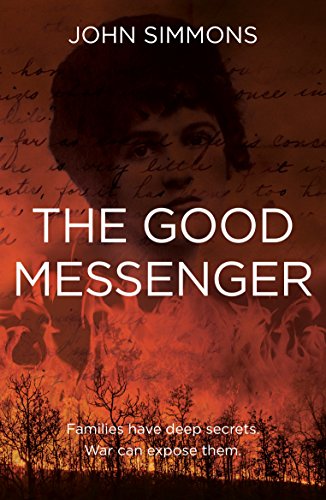
About The Good Messenger

1912: Tom Shepherd reluctantly stays for two weeks at Hardinge Hall. Mr and Mrs Hardinge are trying to arrange a marriage for their son Teddy to Iris, daughter of a local businessman. Tommy becomes the innocent messenger who delivers the secret arrangements.

Armistice Day 1918: The First World War has changed everything, especially the closeted world that Iris, Teddy and Tom existed in.

1927. Tom is now a journalist investigating the discovery of a baby’s bones in the woods around Hardinge Hall. Past and present move towards a resolution that might still bring everything crashing down.

My Review of The Good Messenger

The Good Messenger opens with a short and fragmented prologue that sets up a mystery unfolding in the pages to follow – the death of a soldier in WWI, his wife, his mother, a man visiting a prostitute in a doorway. In Part One, Simmons takes his readers back in time to 1912, when nine year old Tommy, the son of a cleaner, spends two weeks at Hardinge Hall. He encounters the benevolent Mr Hardinge and his mean-spirited wife, their son Teddy and his sullen sister, Muriel, along with another guest, Iris, who, if the Hardinges have their way, will be Teddy’s wife. Tommy is bemused, confused, in awe and a little terrified of his new and strange surroundings. An obedient and innocent boy, he obliges when Teddy, Iris and the barmaid Rosie, require him to pass messages back and forth. Part Two introduces Iris as an author, describing through the lens of her protagonist the mixed moods of Armistice Day out in the streets of London. In Part Three we meet Tommy as an adult, Tom, a freelance journalist given an assignment by a newspaper that takes him back to Hardinge Hall. There he unravels the  complex mystery of the Hardinge family, its dark secrets and tragedies, and, he falls in love.

Reminiscent of The Go Between and, in structure, of Atonement, The Good Messenger is a novel to sip and savour. References to Wind in the Willows lends a timeless, magical quality to the first part of the narrative, Tommy making sense of the world around him through comparisons with Mole and Ratty. Tommy’s reality is one of discovery, wonder and enchantment. The reader cannot help but adore the little boy, smile sometimes, feel saddened at others.

The characters throughout the novel are full-rounded and sensitively portrayed. The reader will sympathise with all of Simmon’s cast, even the sour and uptight Mrs Hardinge. The only character that remains somewhat in the shadows for a long time is Tom’s mother. Even when the narrative light shines her way, she remains a background figure, her development perhaps sacrificed to the confines of plot. In my mind, she represents some of the space between the lines of this story, a space for the reader to fill.

The construction of The Good Messenger works beautifully. The novel is at first a story of innocence observing the manipulations and deceptions of others, of class and its barriers, of old money and new, of poverty and its consequences for women, of prejudice, and of propriety and the inevitable antithesis. Simmons conveys well the changing of the times, WWI marking the end of one period of history and the beginning of another. Perhaps The Good Messenger is a novel to read twice, the reader drawn back, particularly to the prologue and Part Two, to reflect and ponder in the light of the revelations that follow, Part Two  especially pivotal in developing the theme of the changing times.

The narrative pace is slow, the storytelling descriptive. Simmons has a soothing style, allowing his readers to ease themselves into the setting and get to know the characters, his voice more a whisper, seductive, spoken with a welcoming hand. In Part Three, the narrative pace shifts up a notch. Simmons makes use of the first person perspective to provide a more intimate and urgent feel. The prose remains soft, but there is a touch more bounce to it. As the plot unfolds and rises to a climax, culminating in a series of shocking revelations, Simmons satisfies his readers and leaves no loose ends.

I commend Simmons for his handling of the trauma of war; his depiction of the soldiers who had witnessed the horrors in the trenches through the perspective of the onlooker, Tom, and the medical profession at the time, are well-researched and insightful.

Simmons’ writing is that of the water-colourist, all muted tones bleeding into each other, the tone never brash or overbearing. The author has finesse, his words seeping into the psyche like balm. Poignant, moving, romantic, and sometimes shocking, The Good Messenger is a lovely book to read, and then to treasure. A classic.

Don’t Let Them Fall! – a desert island protest

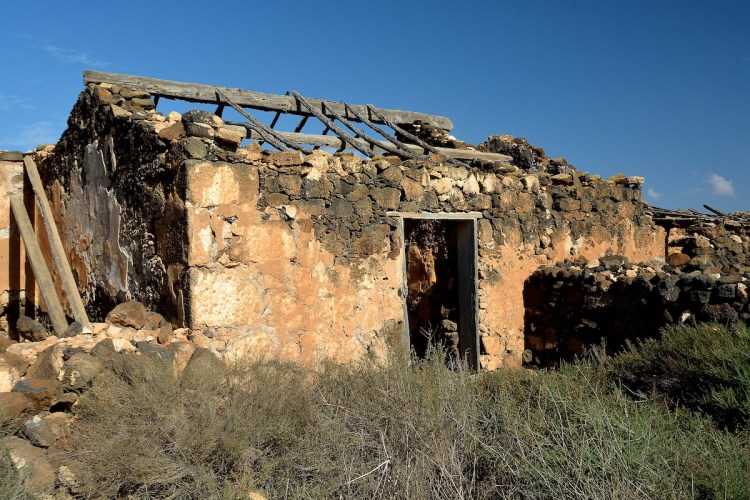
The ancient ruins of one desert island paradise

Cofete
Photo by JF Olivares

Don’t Let Them Fall!

I wasn’t planning on writing a novel set on the desert island idyll of Fuerteventura, the Canary Islands’ largest and driest island, with some of the world’s best beaches. Situated some 60 miles off the coast of southern Morocco, Fuerteventura really is an island of beaches. Then I met a photographer native to the island, a man with a grand passion. JF Olivares runs a Facebook group in which he posts his beautiful photos and also educates all who cross his path on the special heritage of Fuerteventura. He posts on the flora and fauna, the geology and archaeology, the landscapes and the changing seasons, and shares his photo-documentary of the many buildings in ruins.

Fuerteventura ruins
Photo by JF Olivares

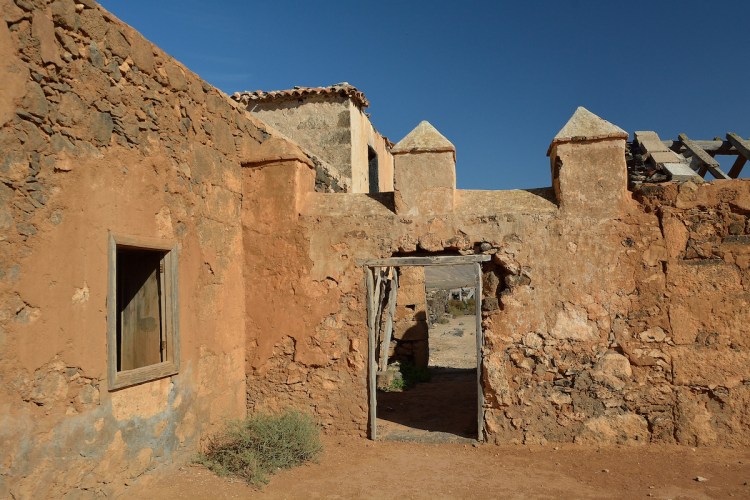
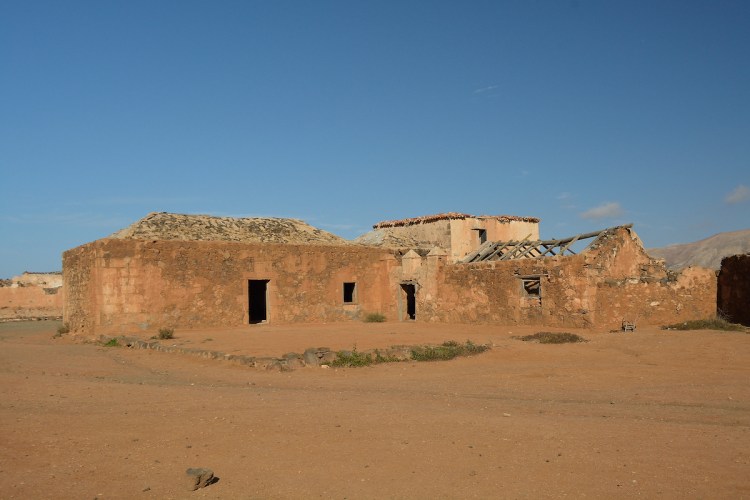
Old farmhouses dot the landscape throughout the island, especially in and around the inland villages. Some have been restored, and of course at vast expense, but too many have been left in ruins while new buildings are constructed, sometimes right next door. What is being lost is not only rock and mortar but a whole heritage, a story of a way of life of a people who lived in one of the planet’s harsher climates. These buildings are an integral part of Fuerteventura’s cultural identity.

Fuerteventura ruins
Photo by JF Olivares

It was images like these that prompted me to brush up on my Spanish and engage with Jf Olivares’ posts. He decries what is happening to the Canary Islands as a result of unregulated tourism. We soon became good friends as I told him I shared his passion. I had a hand in restoring an ancient ruin on Lanzarote back in 1988, purported to be 300 years old, a ruin I partly owned at the time. It was my dream home in my dream village on my dream island and I had to let it go. Little wonder I was drawn to these old ruins of Fuerteventura!

Fuerteventura ruins
Photo by JF Olivares

My own connection to Fuerteventura goes back to 1989, when I visited, staying in Corralejo and Tetir. I was taken there by my local friends from Lanzarote, where I was living. The first time I went, it was for a festival. Corralejo was so vibrant and alive and I met a man, Pedro, a local artist. The attraction was strong, so strong that he wanted me to live with him in a little village called El Time. But I was already being swept up by another man, the highly charismatic Miguel Medina Rodriguez. I was back then like a feather on the wind. I often wonder what my life would have been like if I had stayed, with Pedro, with Miguel, or alone on the islands that had embedded themselves in my heart. They were heady, Bohemian days.

I have dearly wanted to move back to the Canary Islands. Last year I came close to buying an old farmhouse in a tiny village but the sale fell through. So, I did the next best thing and wrote a novel set there, a novel about a woman who wins a lottery jackpot and restores a ruin in a village called Tiscamanita. I love it that my characters can live my dreams!

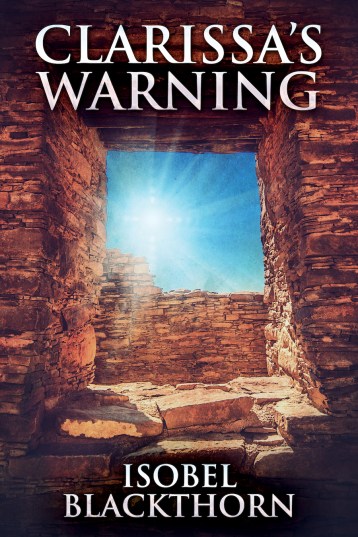
Clarissa’s Warning was written to help raise awareness of these lovely old buildings slowly falling back to earth. I am indebted to JF Olivares for inspiring me to write this book, and for letting me use his photos. I am now at work on another novel set on Fuerteventura, again thanks to JF!

You can read more about Clarissa’s Warning here

Here is a link to Clarissa’s Warning on Amazon viewbook.at/ClarissaWarning

Clarissa's Warning

Clarissa’s Warning is the third novel in my Canary Islands’ series, which began with The Drago Tree

Here is the link to The Drago Tree on Amazon viewbook.at/TheDragoTree


Book review: A Very Mersey Murder by Brian L. Porter

I am delighted to share my review of A Very Mersey Murder (Mersey Murder Mysteries Book 5) by Brian L. Porter

Brian L. Porter

About A Very Mersey Murder

1966. England wins the soccer World Cup. Same night, the body of a barmaid is discovered close to an abandoned lighthouse. Two more murders follow; all remain unsolved.

2005. D.I. Andy Ross is called in when a disturbingly similar series of murders begins in the same location.

If their estimates are correct, Ross and his team have one week to solve the case before the next Lighthouse Murder takes place.

In A Very Mersey Murder, D.I. Ross and Sergeant Izzie Drake return in a race against time, as they seek to identify and apprehend the vicious killer who seems to leave no clues, and no evidence.

The price of failure is death.

This is a standalone novel, and can be enjoyed even if you haven’t read other books in the series.

My thoughts

It can be a tricky task reviewing Book Five in a series, but I am new to Brian L. Porter’s writing and dived straight into his latest release. A Very Mersey Murder really is a stand alone, the author providing a useful catch up which is brief enough not to drag on the present story, while giving plenty of context. A tricky task for any author and Porter does it well, although I now feel compelled to start back at Book One!

The novel opens with a chilling scene of a murder that took place back in 1966. What unfolds is a gripping murder mystery set in the present as D.I. Andy Ross and his team try to prevent the murder of one of their own, which, if their predictions are correct, will take place in just one week. It is a set up that cannot fail to hit the mark for crime fiction fans!

Porter’s plotting and pacing are excellent. There are plenty of twists and turns. Just when you think you have it all figured out, you are thrown back into doubt. The author knows when to hold back and when to dish it when it comes to the gory details and he evokes a strong setting that puts the reader in amongst the action.

All of Porter’s characters are well-rounded and believable. A Very Mersey Murder has plenty of texture, too, as the various relationships between the police team play out, as well as the stories of the lives of those affected by the murders. I especially enjoyed the inclusion of excerpts from the killer’s own journal.

All good crime tackles pithy social issues, and Porter is no exception. In A Very Mersey Murder, the reader will confront themes of illegitimate children and adoption, and gender identity, alongside tensions in friendships and a dash of romantic love.

Porter keeps his readers guessing right to the very end, in what amounts to a complex, intense and highly intriguing whodunnit. I suspect this whole series would make for good television, something to rival Vera!


Book review: Egyptian Enigma by L.J.M. Owen

I am delighted to share my review of Egyptian Enigma by L.J.M. Owen, Book 3 of her Dr Pimms’ Intermillennial Sleuth series

Egyptian Enigma

About Egyptian Enigma

Dr Elizabeth Pimms, enthusiastic archaeologist and reluctant librarian, has returned to Egypt.

Among the treasures of the Cairo museum she spies cryptic symbols in the corner of an ancient papyrus. Curiosity leads Elizabeth and her gang of sleuths to investigate a cache of mummies hidden in the Golden Tomb.

What is the connection between the Tomb and Tausret, female Pharaoh and last ruler of Egypt’s Nineteenth Dynasty? How did the mummies end up scattered across the globe? And is Elizabeth’s investigation related to attacks on her family and friends?

Between grave robbers, modern cannibals, misinformed historians and jealous Pharaohs, can Dr Pimms solve her new archaeological mystery?

Filled with ancient murder, family secrets and really good food, Egyptian Enigma is the third adventure in the charming crime series:  Dr Pimms, Intermillennial Sleuth. Really cold cases.


My thoughts (reviewed for Sisters in Crime, Australia)

The third in the Dr Pimms Intermillennial Sleuth cosy mystery series, Egyptian Enigma takes

the reader deep into the exotic and ancient realm of the Pharaohs of Egypt. Engaging

opening scenes of the prologue dive straight into the action of the story as Elizabeth Pimms

visits a tomb in the Museum of Egyptian Antiquities in Cairo and catches a mysterious

woman in her hotel room stealing her journal.

The narrative races back 4,000 years to Khemet and the reign of Pharaoh Seti II as his wife,

Tausret prepares for her day. When her husband is assassinated, she takes control to

become the last in her dynasty to rule Egypt and she is at risk at every turn. This parallel

narrative is well-conceived and convincing, the reader provided an at once educative and

fascinating insight into an ancient civilisation.

Meanwhile, back home in Canberra, the intrepid and wilful Dr Pimms and her team set

about solving an archaeological mystery using modern techniques to see re-create a

mummy. How Dr Pimms’ investigations and Tausret are connected is the key narrative

driver.

The story is helped along by good characterisation of both the protagonist and minor

characters, and a carefully devised and well-paced plot with numerous twists and turns. The

reader is soon caught up in the blended family life of Dr Pimms and her professional life as

both librarian and academic, with all of the ups and downs, arguments and tensions that

come with such complexity.

The pace of the narrative is slowed considerably by both the archaeological exposition and

descriptions of sumptuous dining. Yet these descriptive scenes help to provide Egyptian

Enigma with a strong, cosy-mystery vibe. Themes of child brides, the subjugation of women

and the deleting of women’s stories from the historical record are foregrounded to the

delight of feminist readers.

The ending is abrupt and leaves many questions unanswered, leaving the reader waiting

impatiently for Book Four. Overall, Egyptian Enigma will satisfy cosy mystery fans who enjoy

being cosseted in a Miss Marple-style story world, L.J.M. Owen’s knowledge of archaeology

coming into its own as ever it does in the Dr Pimms’ series.

Book review: Graveyard Girls edited by Gerri R Gray

Graveyard Girls is a gripping anthology of short stories edited by Gerry R Gray

Graveyard Girls

About Graveyard Girls

A delicious collection of horrific tales and darkest poetry in one big, fat horror anthology from the cream of the crop; all lovingly compiled by the incomparable Gerri R. Gray! Nestling between the covers of this formidable tome are twenty-five of the very best lady authors writing on the horror scene today!

These tales of terror are guaranteed to chill your very soul and awaken you in the dead of the night with fear-sweat clinging to your every pore and your heart pounding hard and heavy in your labored breast…

Featuring stories from: Xtina Marie, MW Brown, Rebecca Kolodziej, Anya Lee, Barbara Jacobson, Gerri R. Gray, Christina Bergling, Julia Benally, Olga Werby, Kelly Glover, Lee Franklin, Linda M. Crate, Vanessa Hawkins, P. Alanna Roethle, J. Snow, Evelyn Eve, Serena Daniels, S.E. Davis, Sam Hill, J.C. Raye, Donna J.W. Munro, R.J. Murray, C. Bailey-Bacchus, Varonica Chaney and Marian Finch.


My thoughts:

Graveyard Girls opens with lusciously dark poetry from Xtina Marie, which serves as an apt point of entry into this collection of diverse and horrifying reads. The anthology then kicks off with ‘Deadlines’ by M.W. Brown, and I couldn’t help sympathising with the tough yet lovable Esther “Polar Bear” Jones who has a intruder and finds herself negotiating with this assassin. Brown has penned a thriller of a tale that never misses a beat, with satisfying and unexpected twists. ‘Demons Opus’ by Rebecca Kolodziej is well-crafted and original with good characterisation and a haunting musical theme. Then there’s the gritty ‘Hong’ by Anya Lee, featuring  fourteen-year-old Victoria, a girl with quite an attitude, vulnerable, rebellious, troubled; and the horror she is forced to endure all too real. But she is no victim…

Later there’s Gerri R Gray’s ‘Of Black Butterflies she Dreamt’ which opens with exquisite prose and does not disappoint. Breathtaking!

The arresting Christina Bergling’s ‘After the Screaming’ is also worth a mention, not only for the masterful writing. The story is an intense, in-depth study of the mental torture of early motherhood. Bergling puts the reader right inside the main character. Only a woman could have written this story!

There are so many excellent stories here, too many to mention. The anthology ends on the blood curdling selection of poems by Marian Finch, the perfect way to round off the horror.

Graveyard Girls is a chilling and vivid read, and the writing is top notch. Suspenseful, confronting, imaginative and at times innovative, Graveyard Girls is a terrific example of the talent and vision of women writers of horror, writers who explore taboos and experiment with tropes.

You can find Graveyard Girls on Amazon 

Domingo Díaz Barrios

Sitio web de mis obras

Soul to Spirit: The New Spiritual Psychology

Becoming Human, Becoming Soul, Becoming Spirit

The Dark Side from the Inside

Writing and Reviews from Dark Places

Bookinton

Book Blogging , Short Stories , Reviews , literary web-series and EVERYTHING FICTION !

Mitch Horowitz

Author • Lecturer • Narrator

ARMAND ROSAMILIA

Author of Thriller, Horror, Nonfiction stories and more

BOOKS FROM DUSK TILL DAWN

Each night I TRAVEL THE WORLD, I LIVE IN THE MIND OF KILLERS AND WALK AT THE SIDE OF HEROES

BooknVolume

For the Love of Words, Art, Nature, and Spirituality

THE BLOGGING STATION

LIFESTYLE, BEAUTY AND EVERYTHING IN BETWEEN

Frankly Wright

I give you my opinion whether you ask for it or not.

a good book, a good life

comments on books by Ann Creber

Carmel Bendon

Writing tales of then and now and the in-between

mamalovestoread.com

All things gothic, horror and dark fiction