On ‘Narziss and Goldmund’ by Hermann Hesse

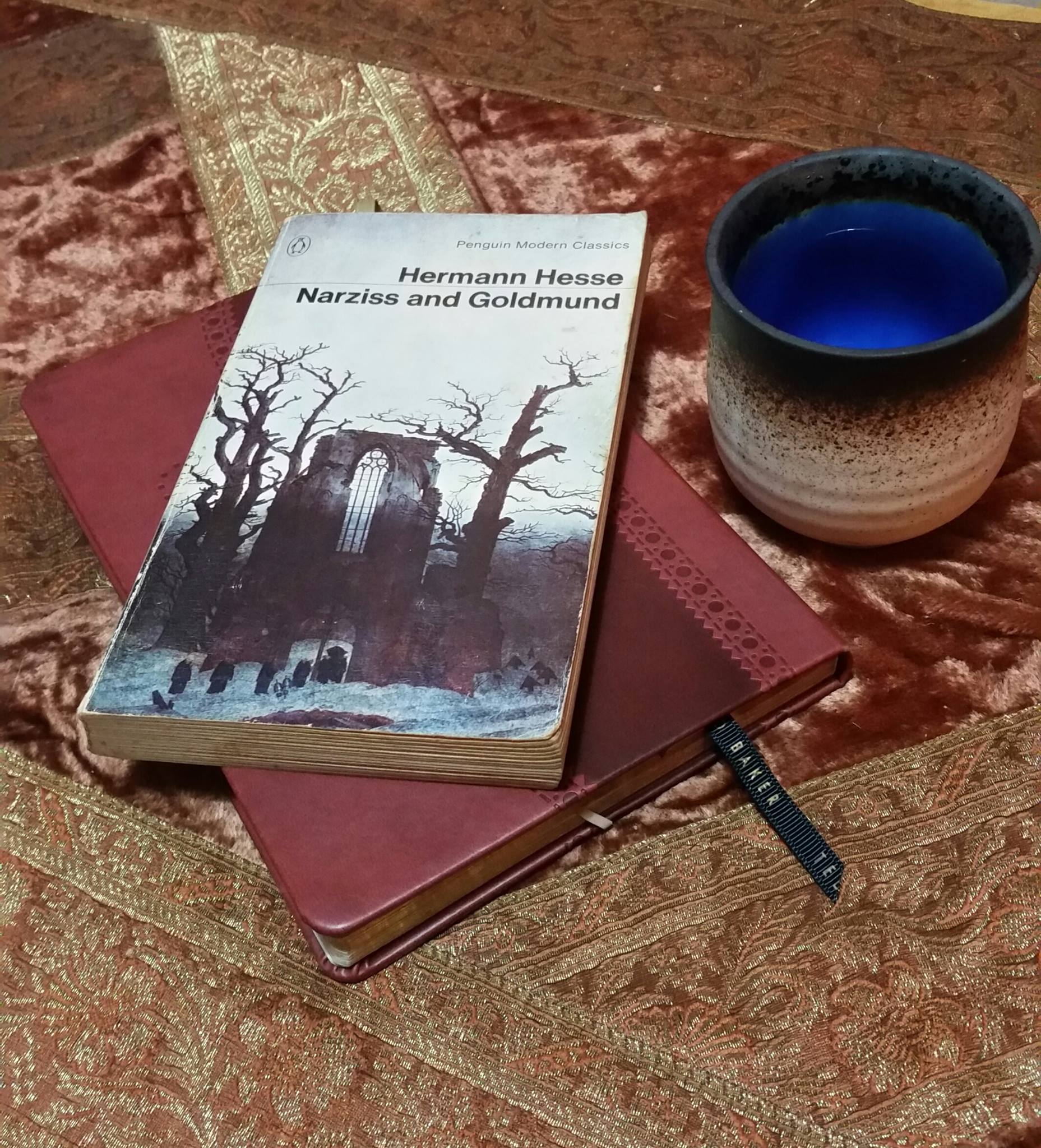
First published in 1930, Narziss and Goldmund forms part of a profoundly insightful body of work by Hermann Hesse.

13988000_1118357674910225_1049475972125467323_o

I visited Goodreads and was not surprised to find well over a thousand reviews. I’ve only read the first few, and I’m left wondering what I can add that would contribute to the collective understanding of this work.

I will admit I am not a scholar of literature or history, nor have I read any biography of Hesse. I first came across his work in my twenties and devoured Steppenwolf and The Glass Bead Game among others. Back then I had not a clue about the spiritual path or western esotericism. But decades have passed and now I do, and it is with fresh eyes that I can perhaps see what Hesse might have been trying to achieve.

In Narziss and Goldmund, Hesse presents the reader with two sorts of spirituality and the two paths that unfold from each. Narziss is destined to be the Abbott of a cloister. He is a philosopher, a thinker, living close to God in the realm of the abstract mind. He is the archetypal master of wisdom.

His pupil, Goldmund, is at odds with himself. Memory of part of his childhood is denied him and when he awakens to it, he begins a journey of self discovery that takes him away from the cloister and out into the world. Not the ordinary world of duty and work and family and community. His reality is akin to Arjuna in the battlefield, as written in the Bhagavad Gita; a journey through the realm of extreme emotions, with desire and lust on the one hand, and death in all its forms on the other.

So intense are Goldmund’s responses, that at first he cannot find meaning. But eventually, as he journeys into and through the experiences that befall him, he does. He is a seeker, and the journey is an initiatory one, culminating in the realisation that we transcend the ravages of the emotions through the faculty of imagination, and its finest expressions in art.

Those who resonate with this story are engaging with a work of visionary/metaphysical fiction of enormous profundity. Those who see past the compulsions and shallow satisfactions of the flesh; detect the irony in Goldmund’s relentlessly questioning mind; see into his frustrations and emerging detachment; may understand that through his character, Hesse is portraying the most fundamental pairs of opposites upon which human experience is cleaved: woman and man; lust and death, passion and intellect, good and evil.

And the esoteric thinker will also understand Hesse’s portrayal of the transmutation of the emotions through the faculty of imagination; the image maker within, existing on the plane of intuition, sees in patterns, in completed wholes; thus it is through the harnessing of this faculty of the soul through the imagination that the artist stills the emotions and imbues them with the stamp of something transcendent and universal. And so it is through this process that the pairs of opposites may sit in loose unity.

I’ve long admired Hermann Hesse’s work. I resonate with it now more strongly than ever. As an author I’m in awe of his achievement.  Narziss and Goldmund is not a piece of entertainment; it’s a literary portrayal of the spiritual path.

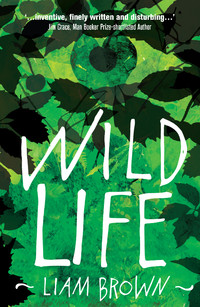
Liam Brown’s Wild Life

61801563c6cbd655b5e97cd4059bac01_w200

As the title suggests, Wild Life by Liam Brown is not a sober story comfortable within the confines of the ordinary and the every day. Instead, protagonist Adam Britman takes the reader on a downward spiral into a nightmarish underworld.

Adam is an accounts manager for a digital marketing company, husband, and father of two. A self-made success it would seem, only his work style and his own propensity for addiction lead him, with the assistance of his little plastic bag of white powder, headlong into alcoholism and gambling. Adam is Dionysius gone wrong. He doesn’t seem to know it but he’s on the archetypal hero’s journey, one filled with the trials and tests and tribulations of the initiatory transition to manhood. His fall is sudden, dramatic, and absolute. He loses his job, walks out on his family, and ends up, drunk, on a park bench.

He’s found by a trickster figure reminiscent of Santa Claus, and welcomed into a cult of homeless men ruled by a bully bent on back-to-earthing, boot camp style. These are not wild men. They are feral, a by-product of shallow, hedonistic, consumption-driven late-capitalism. And as the story unfolds, the reader wonders if Adam will ever find his way out.

Composed in the style of an older, wiser man looking back on a younger, foolish self, Adam’s is an acidic confession. The wry and self-admonishing prose, laced with gritty hyperbole, makes for a face-paced and intense read.

“No, the pros understand that the best way, the only way, to tell a lie is to swallow it yourself. Better still, you have to let the lie swallow you. You have to commit to it totally; to eat, breathe and shit the lie twenty-four hours a day until it becomes part of you, inscribed not only on each and every strand of your being, but on the genetic code of future generations of relatives yet to be born.”

There’s a forward drive to the writing, and a punchy, urban beat. Little space given over to introspection; Adam is not an especially thoughtful narrator. Yet this is the story’s appeal. And while Adam may not be all that reflective, there is much for the reader to reflect on, not least the nature of depravity.

It’s hard to pull off what is essentially a coming of age story, albeit of a man suffering a kind of arrested development the result of his decadent lifestyle. Brown succeeds with a story of betrayal and brutality, that serves as the antidote to Robert Bly’s Iron John.

(Big thanks to Legend Press for my review copy)

9ed026fe32f3b7bc886eb7f0703c9696_w200

Liam Brown is a writer, filmmaker and former-life model. His debut novelReal Monsters was published in 2015 and long-listed for the Guardian’s Not the Booker prize. He lives in Birmingham with his wife and two children.

http://www.liambrownwriter.com

@LiamBrownWriter

@legend_press


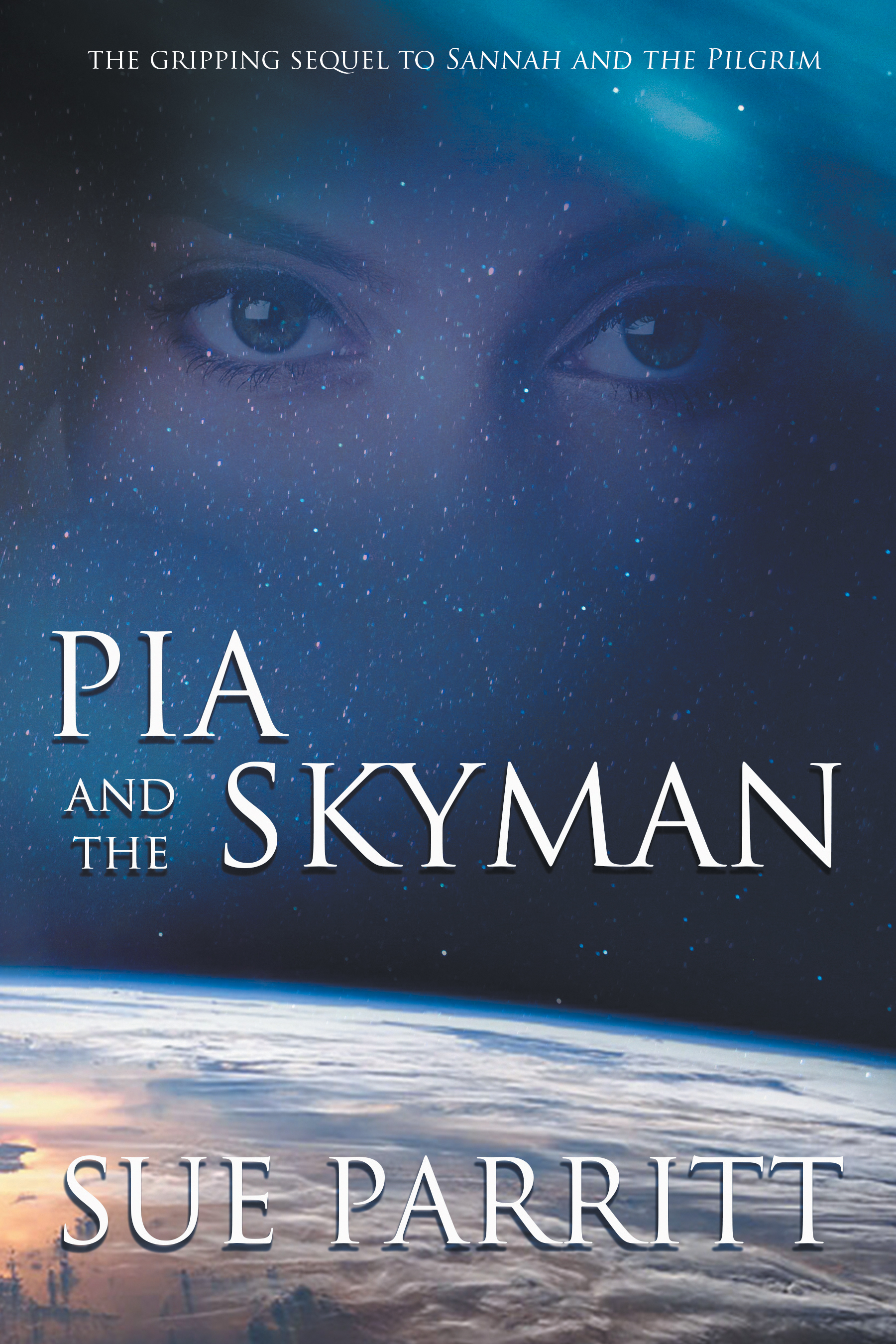
Pia and the Skyman by Sue Parritt

Sue Parritt’s Pia and the Skyman is the second in her Climate Fiction trilogy, following on from Sannah and the Pilgrim, which I reviewed last year.

PIA AND THE SKYMAN

From the very first sentence, Pia and the Skyman engages the reader in the action, Parritt quickly and skilfully establishing the backstory carried over from Sannah and the Pilgrim. Sannah’s daughter, Pia, and her former lover, Kaire, are thrown together to help maintain ‘the women’s line,’ a resistance movement in a climate changed future, set up to help free prisoners doomed to a lifetime in underground desert prisons in what has become an ‘Apartheid Australia.’

Then there’s the matter of Kaire the Skyman and his cohort of clones languishing on a space station that was launched many centuries before with the aim of seeking another planet for humanity. Kaire is not without criticism. “How arrogant to imagine they could wreck one planet then move on to another without a backward glance.”

Lies, deceit, betrayal and tragedy along with a healthy dose of passion carry the narrative along in what turns out to be a remarkably engaging read.

Pia and the Skyman is a thoughtful, carefully considered work.   Parritt’s writing is assured, confident and commanding, a steady pace maintained, the use of passive voice creating an emotional detachment befitting the stark conditions of a climate changed dystopia. “Desert desert go away…let us live another day,” the children in the playground chant.

Parritt is adept at creating an edge-of-survival atmosphere without recourse to over dramatisation. Her setting is vividly real, painted with a simple palette, and fine craftsmanship and attention to detail. Her characters are deftly portrayed and immediately recognisable.

The scenario Parritt depicts is not far removed from our own current reality, the story a metaphor for our times, and a logical extrapolations of successive Australian governments’ commitment to off-shore detention of asylum seekers in gulags. Environmental refugees are among us now. How many more will there be if we don’t amend our ludicrous dependence on fossil fuels?

There’s a deeply pacifist moral undertone that runs right through the story, carrying forward values of peace and right human relations, values elevated partly through Kaire, who in a fashion represents the higher moral ground. “Down there [in Aotearoa] his fellow settlers were doing their utmost to live a sustainable life, yet still found time to help those at risk in Australia. He wanted to shout out his admiration, tell them never to give up the struggle.”

Pia conveys values of compassion and goodwill. She acts, decisively and sometimes impulsively, exemplifying the determination and resilience of all the women who sacrifice their own safety for the sake of others in the Women’s Line – a powerful symbol of cooperation, collaboration and resistance founded on principles of solidarity and trust found amongst women in all situations of oppression and hardship the world over.

Through Pia and the Skyman Sue Parritt makes an important statement about the myopia that seems to have befallen our political leaders, especially in Australia. Humanity will be faced with harsh choices if environmental conditions become as brutal as they are in Parritt’s reality. As well they might. And I very much doubt humanity would have the capacity to respond all that differently to that of Parritt’s Apartheid Australia. On the whole we seem incapable of transcending our own selfish, divisive and hate fuelled beliefs. We’ll need a lot of goodwill and far-sightedness to avoid the scenario contained in this trilogy. Sue Parritt might as well be a soothsayer.

Port of No Return by Michelle Saftich

9781922200280-300x450

There are stories that need to be told, stories sidelined, destined to languish on the periphery of our knowledge of history, stories eclipsed by bigger, more sensational stories. Until an author like Michelle Saftich comes along.

Port of No Return is a work of historical fiction, set at the end of WWII, which tracks the stories of four families as they flee their war-ravaged city of Fuime, Northern Italy, for the refugee camps in nearby Trieste, as communist Yugoslavia, under the command of General Tito, claims ownership.

Saftich leads the reader by the hand into the intimate domestic lives of Contessa and Lena and Bianca, and Ettore, Edrico and Roberto, with all of their children, and of course Nonna. Their homes are bombed, their lives under threat. When Fuime was under German occupation, many locals were required to work in the arms factories. The Partisans created lists of the traitors. When they seized control, those men were rounded up and shot, or imprisoned and tortured, and then shot. It’s a familiar story. I’m easily reminded of current times in Syria and Iraq. And to that end alone, this book is an important read.

And as we face a refugee crisis second only to World War II, in Port of No Return Saftich depicts the struggles of millions of refugees displaced across Europe and the challenges they faced finding a place, any place, to live.

The hunger, the awful conditions, and the waiting, endless waiting, are portrayed through the eyes of the characters as they scratch out a day to day existence. It is a story in which hope and despair vie for supremacy.

Saftich portrays her characters with sympathy and sensitivity in confident, down-to-earth prose. The narrative is well-crafted and well-researched. Port of No Return is a story of survival, of hope, of the tenacity of those Italian families determined to have a future. And through it Saftich opens our hearts to compassion, a commendable feat.

A Single Light by Patricia Leslie

ASingleLight_hi-res_2x3in

With A Single Light Patricia Leslie melds city grit and ethereal myth, the twin demands of Urban Fantasy, to form a perfect unity. The plot is simple, a good and evil battle to save humanity from extinction. Yet there is nothing simple in its execution, Leslie demonstrating both a depth of knowledge of her subject and writerly finesse.

Protagonist Rick Hendry, along with a federal agent, a doctor, an archeologist and a journalist, are thrust into a realm of angels and ghouls through a spate of mysterious deaths and disappearances in suburbs surrounding one of Sydney’s natural parklands. They are joined by a Hunter, one of the Afflur whose eternal task is to protect humanity from the evil Bledray. On the face of it, scarcely a unique tale, but as with most stories that comply with the strictures of genre fiction, the originality is all in the telling.

Urban Fantasy is a blend of crime and fantasy fiction. In A Single Light, Leslie displays mastery of both genres. As I was reading, I could imagine the author producing a fabulous crime novel one moment, an epic fantasy tale the next. Yet A Single Light also contains elements of horror, the reader forgiven for sensing echoes of Stephen King. It’s a fair comparison, Leslie’s storytelling, imbued with a mounting dread, and her detailed depictions of the acts of the Bledray, easily sit inside the horror genre, the quality of writing, fairly compared to King’s.

“A shift in the light; shadows moving across the room, horrendous and distorted, and then settling into a more recognisable form as they reached the windows. The curtains dropped as the window closed. The back door opened with a creak and the shadows left. Only the fan kept moving, blowing warm air and a trail of dust around the room, back and forth back and forth …”

Leslie’s characters are well-crafted and come alive on the page with all their foibles. Equally so, the otherworldly figures, the Afflur and the Bledray. Each shift in perspective clearly defined. Each scene carefully crafted.

“At once her whole form relaxed, hair-neat and pulled back in the cab of the truck-escaped its bonds to caress her shoulders, bright eyes became tired and lined, tight lips softened into a tanned face well-used to travelling at the whim of a hooked thumb and a driver’s caprice.”

The narrative is well-paced, the reader carried along by the dramatic tension established from the first page. A perfect mix of action and introspection, held together with vivid descriptions, never overdone, enshroud the reader in a reality so convincing, the very existence of A Single Light’s fantasy figures endures beyond the page.

Leslie’s prose is commensurate with the Urban Fantasy sub-genre, which demands both the earthy realism of crime and the imaginative transcendence of fantasy. It’s a fine balance, one that Leslie achieves with flair. The voice is unselfconscious, mature and poised, absent the pretensions of over-adornment, or the stilted prose the result of an overuse of Occam’s razor, one that plonks the reader in an emotional desert. Evident in Leslie’s writing, is a balance of sophistication and simplicity that will satisfy those after a work of substance while remaining immediately accessible to the page turner reader.

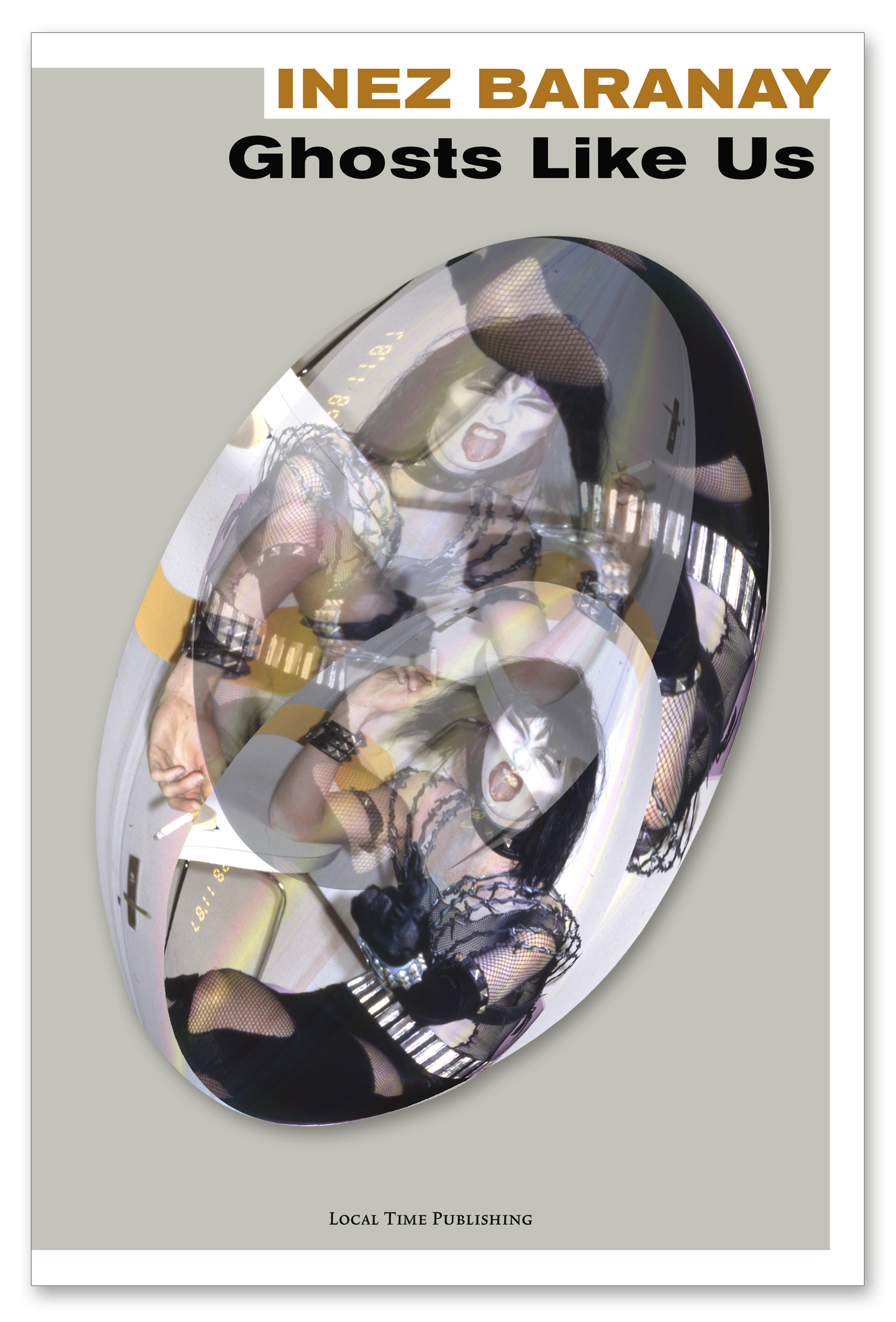
Ghosts Like Us, Inez Baranay

Lately, I’ve started getting into book reviewing. I hadn’t expected to enjoy it so much and it’s becoming something of a compulsion.

Sometimes I post my reviews here on my website. I reviewed Inez Baranay’s Ghosts Like Us, for Newtown Review of Books.

coverGLU_promo

“Ghosts Like Us is a poetic, ambiguous and subversive exploration of the nature of history and remembering.” Read the whole review here: http://newtownreviewofbooks.com.au/2016/06/09/inez-baranay-ghosts-like-us-reviewed-isobel-blackthorn/

If you are of an intellectual bent, you love the 1980s for its second-wave feminism, or you are into the processes artists go through in their acts of creation, then this is the book for you. I thoroughly enjoyed it.

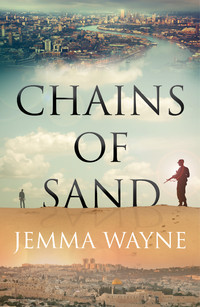
Chains of Sand by Jemma Wayne

ac7c49b4bf0fb37c39206bf3a1dc9ced_w200Legend Press, June 2016

A work of contemporary fiction, Chains of Sand by Jemma Wayne is a timely and important portrayal of a realm of Middle Eastern conflict made familiar to most of us in the West through the distorted lens of news and current affairs coverage, a lens too often smeared with the Vaseline of prejudice, its purported wide angle little more than a pinhole. Perhaps it is only through the lived experience of people to some degree inside the context of Israeli/ Palestinian tensions and conflict that our awareness can broaden and deepen. Set against the backdrop of another looming conflict with Gaza, Chains of Sand offers the reader a chance to share in the lives of an endearing cast of characters rendered as vivid and as real as the reader’s intimate friends, and through this cast, to consider perspectives from within what is widely considered the aggressor nation: Israel.

The architecture of the narrative is in essence simple, two young men hankering for a better life: Iraqi-born Israeli, Udi, craving a life in London; and Jewish Londoner, Daniel, bent on moving to Tel Aviv. Neither is religious, they represent a generation pulling away from orthodoxy, yet they are each influenced by and wrestle with the beliefs, customs and rituals of the Jewish faith as it impacts on their lives through their families and friends.

The story begins with Udi, fresh from the army, unemployed, listless and frustrated, his application to reside in Britain a source of constant anxiety and hope. Despite the third person narration, the reader is beside him, in his home with his mother and father, out in the streets of Ramat Gan with its cosmopolitan vibe, caught in the mayhem of the traffic, hanging out with his friends on the beach or in a cafe, and sharing in his flashback memories of fighting in Gaza. Udi is a young man haunted and determined to rise above it.

He is also is a man loyal to the Israeli state and keen to defend it. Yet through lessons learned from his own troubled past, Udi understands the need to keep the human actor present in descriptions of conflict. In questioning an army friend’s statement that his brother was killed by a bomb, and not a bomber, Udi states, “The semantics allow him to hold a whole people to blame and salvage at least some opportunity to put things right: a tooth for a tooth.” Yet it is Udi’s unreflective habit of rolling bits of shrapnel in his palm, “like prayer beads,” that confronts the reader with the realisation that in Israel, war is in danger of replacing religion as a system of faith.

The reader is soon in London and introduced to the headstrong, self-analytical, angst-filled and not entirely likeable city banker Dan, the narrative switching to first person to fully exploit his egocentric introspections. Through Dan, Judaic believing and practice in London in all its variants is depicted with wit and warmth, no better conveyed than when Dan describes his father’s consternation over changing attitudes to the customs of faith, the same father who helped found a cross-cultural London dialogue group. “Perhaps this is why he speaks now like a man clutching desperately to a stream of water escaping from a tap that he himself turned on.”

Written in clear, unsaturated prose, the narration remains close, calm and measured throughout, the story’s horrors, tragedies and triumphs depicted with just enough detail and never overplayed. There are echoes of Howard Jacobson’s The Finkler Question, both novels delving into the complexity of being Jewish in London. Yet refreshingly, Wayne’s Dan lacks the intense and almost stereotypically neurotic introspection of Jacobson’s protagonist. Instead, and especially through the eyes of her female characters, Wayne conveys the realities that confront ordinary people struggling to exist and find work and love and fulfilment in cities prone to attack, where prejudice can turn to violence with little provocation.

Both Udi’s and Dan’s mothers reflect more orthodox perspectives, their anxieties those of any mother agonising over the welfare of the son she is about to lose. It is through the two men’s sisters and girlfriends that the reader is presented with progressive, sophisticated, complex responses to a Jewish identity in crisis. Dan’s sister Gaby is emphatic that she is British first, and Jewish second; that in matters of identity, nationality is paramount. Dan’s girlfriend, talented artist Urli, speaks of the diversity and elusiveness of truth. And Udi’s sister Avigail, wife, mother and daughter too, is a cross-cultural intellectual feminist activist campaigning for peace and taking risks with her own life to achieve it.

A parallel narrative takes the reader back in time, before the wall went up in Jerusalem, a time when a naïve young Jewish girl snuck into the Arabic quarter of the city searching for inspiration and finding love. It is an intoxicating, acutely observed depiction of the Romeo and Juliet scenario, for Dara’s love is surely forbidden, Kaseem’s just as surely doomed. Here, Chains of Sand becomes almost a whispered narrative of the immutable social strictures that separate Muslim Arab from Jew.

The Muslim Arab perspective is again explored with the softest of brushstrokes in Dan’s girlfriend, Safia, who serves as his moral stanchion, quietly goading, quizzing, testing, as he defends his prejudices, and his decisions.

The female characters in Chains of Sand are positioned somewhat in the shade cast by the male protagonists, yet this shade is not obscure. It is shade made all the richer for being beyond the harsh rays of the stark either/or realities of Udi and Dan. In the shade are the textures, the nuances, the depths, and the deeper the reader ventures into its recesses, the closer she is to the truth.

Chains of Sand is a brave book, one that reveals the complexities of being Jewish and of being Israeli, of identifying with Israel as a nation, as a concept, as a home for the Jewish people, complexities hampered by a modern zeitgeist that is wont to be blindly anti-Israel. Chains of Sand challenges a viewpoint unable to see a polyglot cosmopolitan nation struggling to grow and understand itself, whilst fully cognizant that this same nation is blinkered by the politics of aggression towards its neighbours, a nation apt to stumble into overreaction through fear of losing itself. It does the reader no harm to explore perspectives born of the lived experience of those we may apparently oppose. For that alone, I salute the author.

(Review copy kindly provided by the publisher via NetGalley. A version of this review will appear in the August edition of Shiny New Books, UK)

What a sight!!!

The penultimate day of our stay on the island proved to be intriguing.

Our first stop was Arrecife, the island’s capital famous for it’s warren of narrow streets. Until this day we had taken the ring road, avoiding the confusion. This time, on a mission to deposit copies of The Drago Tree at a book shop near the Castillo de San Gabriel, we had no choice but to enter the fray.

Somehow we found our way to the Cabildo, on the southern end of town, an impressive modern building constructed in Spanish colonial style and surrounded by car parks. Not wanting to re-enter the warren of streets, we parked and walked the promenade back to Calle Leon y Castillo.

Lanzarote

The day was sunny and warm and it was a pleasant walk, first through a neatly laid out cactus garden fringed with low stone walls flanking the sea, and then around the creamy sands and sapphire waters of Playa Reducto – my kind of beach too, shallow and still. There were couples, old and young, women with strollers, the people of the city walking leisurely, relaxed. It’s a vibe you lock into, immediately.

Once past the 5 star Gran Hotel, the promenade continued on to Castillo de San Gabriel. Here, major road works impeded the flow of our walk, but the view of the old fort and the shimmering sea drew our attention.

We found the Libreria El Puente, down a side street off Calle Leon y Castillo – Arrecife’s main thoroughfare – the owner happy to take our remaining copies of The Drago Tree, to sell on our behalf.

By now it was lunch time. We had to eat. After walking around a number of side streets, passing eateries either uninspiring and notably empty, or exciting and predictably overflowing, we ended up back at the bookshop, and the restaurant next door. A small, friendly affair, with original paintings for sale on the walls and fried rabbit on the menu. Irresistible.

Arrecife

I imagined intense conversations between leftist intellectual types over salami and hard cheese. And I wondered at who the two men were who ran the joint and whether they were really from Andalucia. I doubted it.

We ambled over to the old fort along a narrow causeway, pausing at the old drawbridge for photos, staring down into the tranquil water, watching a woman taking advantage of the warmer shallows and edged by basalt walls, little beaches, pebble strewn, appearing unexpectedly.

Arrecife

The fort was closed. So we posed by the cannons, had a snoop around and strolled back along the other causeway. I told Michelle I thought I could rent an apartment in Arrecife, one facing the ocean, and write a book or two. Something about the vibe of the city aroused me. Maybe all those narrow streets filled with secrets.

We stopped for gelato near the Gran Hotel. By the time we reached our car it was 4pm.

Perfect timing for a drive to Famara. I wanted to provide Michelle with a contrast.

El Risco

It took about 1/2 an hour to drive across the belly of the island. And there we were facing north, with the cliff of El Risco towering to our east, the low rollers pushing in the tide. So we walked along the beach, pebbly and not so easy on the feet (I had rather stupidly chosen sandals for the outing), and kept on heading east, hoping that the lower the sun, the less cyclists would be on the roads when we headed back to our farmhouse in Maguez. On and on we went, in no hurry to turn around. Then Michelle stopped and asked me if I wanted to continue. I said I didn’t care either way but sensed she wanted to head back. As I turned I saw a man, naked, heading our way.

His speed was greater than ours. I turned back a few times, to admire the cliffs, say adios, or hasta luego, and there he was in all his glory. So I said to Michelle, ‘He’s spoiling my view.’

‘Complete with his semi,’ she replied.

I have to admit it took me a while to connect his half-erect penis jutting out like those of the male figurines that sometimes appear above male ablutions, or indeed abound in my friend Domingo’s studio, with her comment – semi.

Harianovio del mojon

We laughed all the way home. I was still wiping away the tears as I set about making cauliflower soup. (We’re down to using up the scraps of the groceries we’ve been buying from the local supermercado in Arrieta. Tomorrow is chorizo day. Don’t ask.)

Michelle is happy to report that we walked 16,000 steps today. She has an app. What the app doesn’t say is that they were all steps of contentment.

Long gone the old ways …

As any anthropologist will tell you, the old ways of indigenous cultures the world over are always tramped on in the name of progress. Some are decimated, wiped from the earth like unwanted crumbs. Others allowed to exist on the fringes, tolerated, ignored and oppressed all at once. Then there are smaller cultures absorbed into a larger dominant culture, seeping into language and custom. And then there are those wiped away by the dishrag of colonisation, only to be resurrected as curiosities for the edification of tourism.

Lanzaroteview of Los Helechos through our front door

Here on Lanzarote, the indigenous people, the Conojeros, blended with their colonisers, through marriage, through birth. A new sort of traditional way of life, Catholicised, yet still seated in the old ways, endured for centuries. It was a culture of survival and resilience in brutal conditions. Here, dry land farming and ingenious water capture techniques kept a small population of about a few thousand from starvation.

LanzaroteAn alcogida

Swathes of the lower slopes of volcanoes were smeared with concrete (alcogidas), funnelling water into underground water tanks (aljibes); large fresh water ponds (maretas) were built along with wells and dams; in the 1920s, tunnels were gouged into the cliff of El Risco to access the water in the water galleries of the Famara massif; roofs of dwellings and patios built high, were designed to channel water into farmhouse aljibes – the people went to ingenious lengths to capture what little rain there was.

Up until the 1960s and beyond, farmers terraced the mountainsides right to the top to capture any water should it rain, creating moist micro-environments along the stone wall edge. The terraces also took advantage of the moisture provided by morning mist.

LanzaroteMaize growing in little cinder pits

The Conojeros were a people accustomed to breathtaking views, at ease in the wind, strong enough at times to knock you over.

The people built their farmhouses strategically, the north facing wall windowless, rooms inside facing an interior courtyard. Farmers lived alongside their animals. They grew what they could, hardy plants able to tolerate high amounts of wind. For a long time only two villages existed, Teguise and Haria, the other villages were more like localities where a few farmhouses, spread well apart, took advantage of a valley, a mountainside, a plain.

Fish were plentiful and a small fishing industry grew up around Arrecife. Some farmers grew prickly pear for cochineal. Salt works providing another source of income for a sparse economy.

In the 1960s up sprang a hotel. And then another …

YaizaCamel sculptures on a roundabout in Yaiza.

Now, the tourists can see the old ways, as displayed in museums courtesy of CACT (the local government’s Centre for Arts, Culture and Tourism). Or they can visit the alcogidas, now in disrepair, or poke their heads down an abandoned aljibe, or well – the water below polluted by effluent and no longer safe to drink, or check out the dam at Mala, the wall now cracked and leaking, or puzzle over the site of the grand mareta at Teguise, and witness the erosion of the mountainsides where the terraces are crumbling away.

The government knows it has a problem. Residents are entitled to have 10,000 square metres of land to farm as they wish, with access to cheap water from the desal plants – but the young are not that interested.

You can still see the old farmers at work. Up in the north there are many small farms run by the old people. Little fields of black planted up with neat rows of maize, and not a weed in sight. A farmer harvesting potatoes by hand, his wheelbarrow nearby. They still farm right to the mountaintops and the cliff edge. It’s a privilege to behold.

Haria LanzaroteThe mother volcano, La Corona, as seen from our garden.

I am glad I decided to write a sequel to The Drago Tree. I want to be taken deeper into the story of this island. And the sequel will necessitate my return. For now, as our time here draws to a close, I feel just as Ann felt at the end of her holiday, still in awe of my surroundings, wanting to celebrate the traditions and mourn their passing, at odds with the very tourist industry that has allowed my easy passage to Lanzarote’s shores.

The fire mountains

What can be said about driving down a narrow road carved through a lava plain, a road that goes on and on and on? The basalt that covers the land in every direction, thick, crusty, alive with lichen. Volcanoes or calderas 500 metres high and about 1 or 2 kilometres in diameter, rising up like cone-shaped boils, some black, others brown or red. Then there are those calderas burst open, serrated at the rim, splayed where their lava spilled to scour the land.

Timanfaya

Everywhere you look on the island, there they are, some ancient, some young, the roads on Lanzarote coursing paths between.

Lanzarote volcano

The eruptions of Timanfaya that took place in the mid 1700s and lasted for 6 years, have resulted in a landscape not of this world. A spreading mass of impenetrable rock, about 15 kilometres wide and long.

Lanzarote lava

These volcanoes emerged in fissures in the land, once a wide plain perfect for grazing. Fissures bleeding rock, cleaving open as the pressure of the volcanoes beneath forced their way above ground. This is what I have read and imagine, a primordial groaning, perhaps deafening, definitely terrifying, apocalyptic. Livestock asphyxiated, fish boiled alive, the ocean steaming, the island showered with volcanic ash and smoke. You have to know all this, to appreciate the place as it is now. But it is still impossible to take in.

The speed limit of 50 kmh is too fast. We crawled along, fascinated, not wanting to reach the end of the road.

We went to where the lava met the ocean. The road snaking along, embedded in the lava, right beside the water’s edge.

Los Helechos

We parked at Los Hervidores, a site of extraordinary beauty, where narrow basalt paths have been created to allow tourists to get close and see that meeting of rock and water. The basalt is many metres thick, chunky, descending in a vertical cliff. The ocean swells and surges, blue on black, sending forth its spume. There are holes in the lava, like wells, places to get soaked when the ocean is angry.

No one speaks. The wind, that other element, blows and blows. You either get used to it, or you leave Lanzarote behind for another clime. I love this meeting of the elements, all of them present, in the wind, the ocean, the rock born of fire. Lanzarote is a powerful place, unspoiled, a place to be revered. And as Ann found in The Drago Tree, every tourist slips into reverence in the face of such a setting.

Domingo Díaz Barrios

Sitio web de mis obras

Soul to Spirit: The New Spiritual Psychology

Becoming Human, Becoming Soul, Becoming Spirit

The Dark Side from the Inside

Writing and Reviews from Dark Places

Bookinton

Book Blogging , Short Stories , Reviews , literary web-series and EVERYTHING FICTION !

Mitch Horowitz

Author • Lecturer • Narrator

ARMAND ROSAMILIA

Author of Thriller, Horror, Nonfiction stories and more

BOOKS FROM DUSK TILL DAWN

Each night I TRAVEL THE WORLD, I LIVE IN THE MIND OF KILLERS AND WALK AT THE SIDE OF HEROES

Passport Overused

Showing the beauty of this world through the people, places and culture

BooknVolume

For the Love of Words, Art, Nature, and Spirituality

THE BLOGGING STATION

LIFESTYLE, BEAUTY AND EVERYTHING IN BETWEEN

Frankly Wright

I give you my opinion whether you ask for it or not.

a good book, a good life

comments on books by Ann Creber

Carmel Bendon

Writing tales of then and now and the in-between