Nothing has changed…

Before I came here I was informed by one and all that Lanzarote had changed in the last twenty-six years, changed dramatically, for better or worse who can say. When I landed and saw the development, the mass of white cubes where once was rocky terrain, I had agreed, and when we headed north to the farmhouse we had rented for the 18 days, it was with some trepidation in my heart.

My companion and publisher Michelle was seeing all for the very first time. And I have witnessed her reactions, her awe, her growing affection for the island. With a smile.

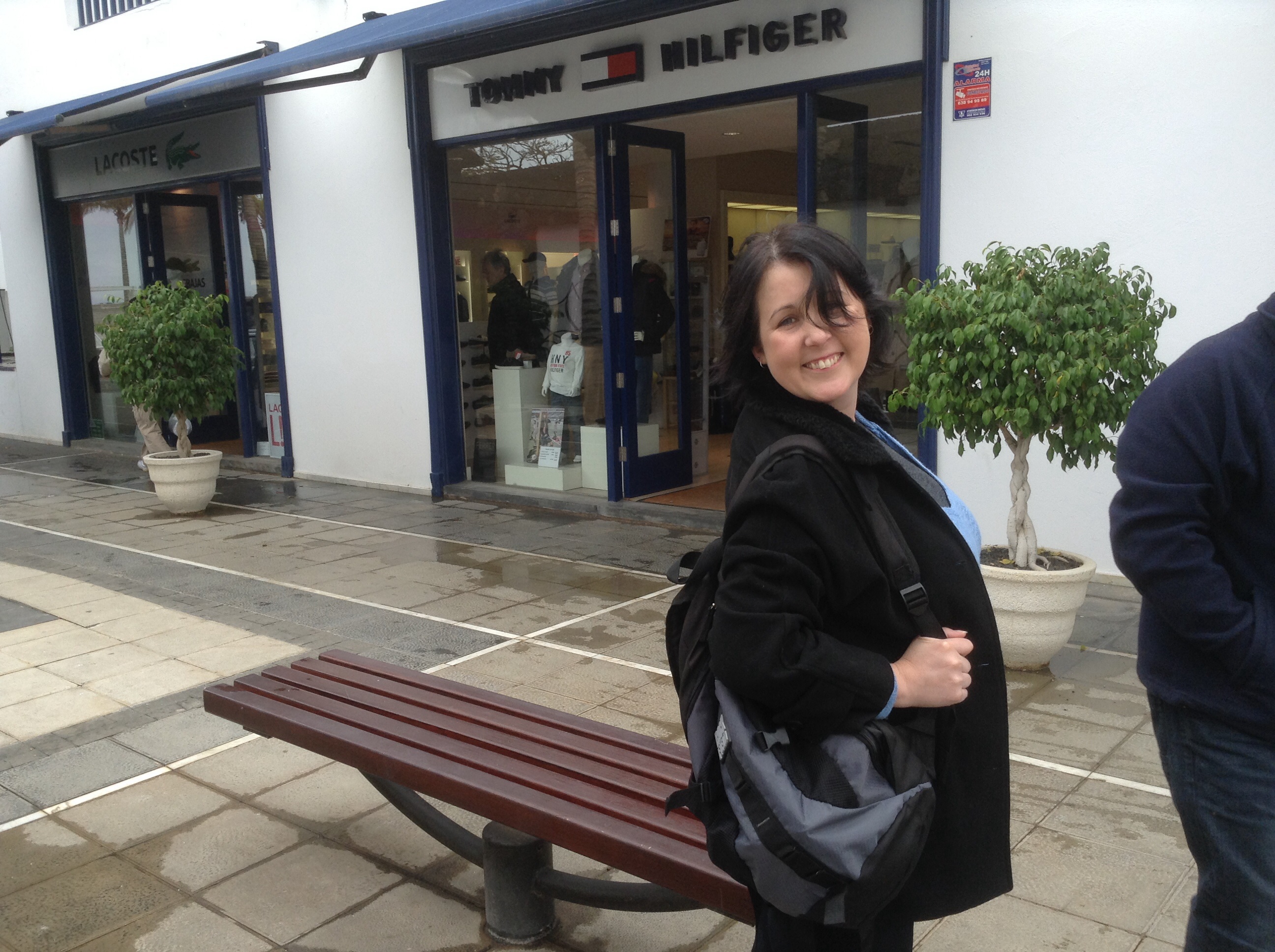
Puerto CaleroMichelle Lovi, taken as we ambled along the strip of expensive designer boutiques of Puerto Calero.

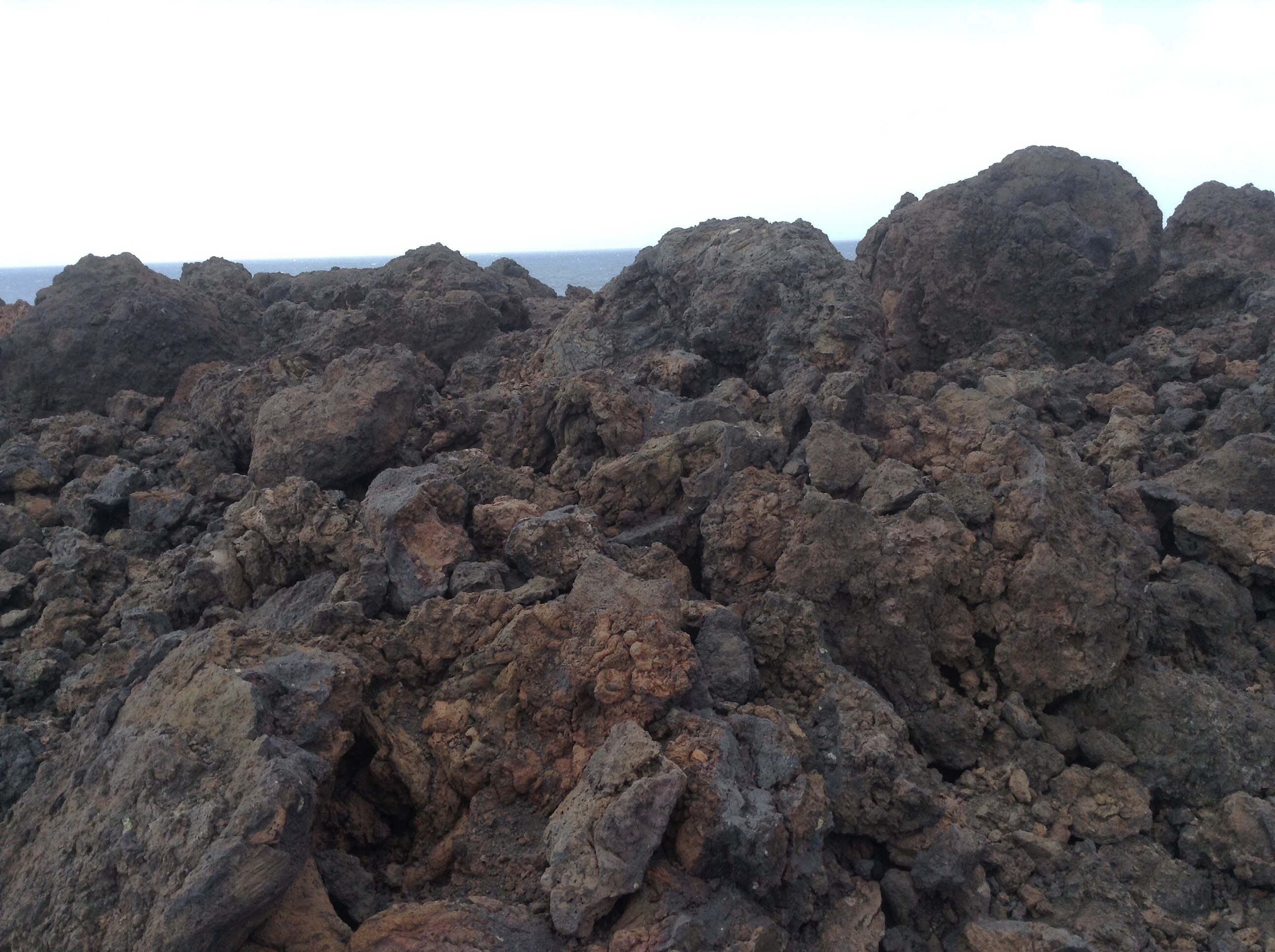
For me, the north of the island – about 7 km long and 5 wide – is my old stomping ground. Every village and every road familiar. But I’d forgotten the three dimensionality, the way the mountains and volcanoes loom, the way the old crusty lava dominates. I’d forgotten the atmosphere, at once friendly yet private, closed. For millennia the people here have farmed this land. They’ve terraced the mountainsides as high as they dare to trap the water flow, on the odd occasions it rains. The way they’ve plastered slopes with a lime wash, and funnelled that water into underground water tanks (aljibes). The use they’ve made of the basalt rock and the volcanic cinders (picon), as wind break and mulch.

LanzaroteAnother view of La Corona taken fom our farmhouse.

Despite the explosion of tourism which now forms about 90% of the island’s economy, the old farmers can still be found, tilling their land. Not as many as I recall, and certainly not as many as fifty years ago, but some cling to the old ways, some see sense in the dry land farming techniques their ancestors created.

Not much development has occurred in the north. The villages are much the same, a mix of smart new villas, old run down farmhouses, ruins and vacant blocks. A few farmhouses here and there on the land around. The restaurants cater for the people more than tourists. The shops are few and largely invisible.

So, what has changed? My answer is simple. Nothing. Unless I reduce change to a mere matter of multiplication. The population has doubled. Expats from many nations comprise about 30%. Many from Latin America. Consequently, there are a lot more houses. Tourism has boomed. Consequently, there are a lot more hotels and apartments. The roads are wider and there are roundabouts everywhere. Supermarkets and petrol stations abound. Cyclists from La Santa, athletic types wearing the correct gear, hog the roads.

There is definitely a lot more money around, going into the pockets of some, and not the many.

And that’s it.

For me, Lanzarote is the same as it ever was. There is the same north/south divide, as if those choosing the south, where almost all the development has occurred, overshadowed by the rugged dry peaks of Los Ajaches, the young calderas of Timanfaya, a landscape conjuring a certain pioneering spirit in the soul, of the Wild West perhaps, somewhere on the edge, pervades the collective psyche.

imageA small creation by indigenous artist Domingo Diaz Barrios

Those choosing the north are influenced by the softer greener peaks of the Famara massif, drawing on the comfort of its sheltered valleys, the secret of the massif, its dramatic western cliff, always hidden from view. Here the artists and artesans live, here the politics of the Left can be found, here the traditions of old are honoured, championed, preserved. The old German bakery with its sourdoughs and ryes, still sells at the markets. The French crepe stall is also still trading. Little moments in The Drago Tree that I’d inserted from memory, suddenly made real. Along with the ceramicists, painters, jewellery makers, all still here…

imageA small work by indigenous artist Domino Diaz Barrios

In a restaurant in Arrieta, down on the waterfront, we were introduced to a desert made from Gofio (toasted maize flour), ground almonds, sugar (not much) and cream. It’s a children’s desert, made in large batches. I had the idea of adding Brandy to the mix to create an adult version. It turned out to be so good we went back yesterday for more! Simple pleasures. How we like it.

For me, nothing has changed. The tiers of locals, Spanish and ‘the strangers’ from other lands exist in much the same way as they did when I was last here. The lumbering edifice of Spanish bureaucracy is more or less the same. Opportunistic ‘fat cat’ businessmen wheeling and dealing, greasing the hands of officials with brown envelopes – how is that any different to anywhere else? And the easy going, accepting, tolerant locals prepared to make space for the temporary colonisation that is tourism, mirrors the attitude adopted by their ancestors of millennia past, in the face of conquest and piratical attack. This, after all, is an island accustomed to invasion.

Shifting perspectives

Day 6 and my awe and delight at having returned are replaced by an acute awareness. Here are some of my observations.

Lanzarote is an island of contrasts. The everyday lives of the locals, with their tight knit family networks, their lives lived behind closed doors, and the tourists. Like almost all tourist destinations where the industry has planted itself in amongst a local culture and boomed, the people and their traditions, their culture, seems squeezed aside. At times tourism manifests like a sycamore in a foreign land, a eucalypt in Africa, a cane toad, a feral cat. Tourism, in essence temporary migration, fostered and serviced by a corporate edifice with no conscience.

Manrique Tahiche

I wonder, do the locals here hide? I would hide. I would be pleased the windows of my house faced an interior courtyard and not the street outside. For the island feels overrun. Only in the backstreets of the remotest villages, or the suburbs of the larger towns, can the people escape the invasion. The roads are busy, and anywhere remote is frequented by the more adventurous tourist, especially the cyclist.

It’s an impossible situation, on a small island formerly poor with a struggling economy, a backwater passed over in favour of it’s more stately sisters. Now the economy is dominated by tourism, and, just like Ann observed in The Drago Tree, there is no going back to the old days.

image

Thankfully on Lanzarote much care has been taken to preserve the island’s natural beauty spots. The malpais (lava) making it difficult to develop large areas, especially in the north. And the artist, architect and ecologist Cesar Manrique set an example of how to cater to tourists without ruining the environment, one followed by many, those respecting the island’s status as a biosphere reserve.

Michelle and I have spent the last few days witnessing the tourist-local dynamic. On remote, winding lanes, we’ve been almost side swiped by cyclists riding two or three abreast. We’ve walked the gritty paths in the island’s hidden corners, only to find others passing us, heading off and up and round and every which way.

We’ve hung out in a bar in the main drag of one of the island’s quieter tourist strips, and spoken with a group of English expats, all of them warm and friendly. They are aspiring writers, and I was giving a talk. I was one of them, in my heart the same desire to live on Lanzarote. I can’t criticise their wish.

We’ve hung out in restaurants in the north frequented by locals and a few tourists, and we’ve enjoyed the exceptional service, the generosity.

We’ve walked through Manrique’s extraordinary house in Tahiche, created in a lava tube accessed by several small jameos (holes in the lava). An artist inspired by Gaudi and Picasso, his creative impulse evident in every corner.

We’ve been to the artesan market in Haria, and wandered around the backstreets, passing couples also wandering around. I was showing Michelle where I used to live. And we were on the hunt for an old friend, Domingo.

image

We found him in his house on the edge of the village. I hadn’t seen him for twenty-six years but he’s the same. And our affinity for each other’s company was just as I recalled.

image

For the first time since we arrived, I was forced to speak only Spanish. We were talking about the past, about our lives, about the future. How I could live here again. With a good internet connection I most certainly could. And then, what would I be? An expat, an English-born Australian author championing the values, the hopes, the dreams of others. A stranger.

No. I’ll have to leave the characters I created in The Drago Tree to live that life on my behalf.

Picking up the breadcrumbs

Yesterday we took a tour of the island’s north, where the malpais (bad land) fans to the coast, the legacy of eruptions of a chain of volcanos about 5,000 years ago, two of which form the view from our farmhouse, to the west and the north. It is the route Ann took in the first chapter of The Drago Tree, only in reverse.

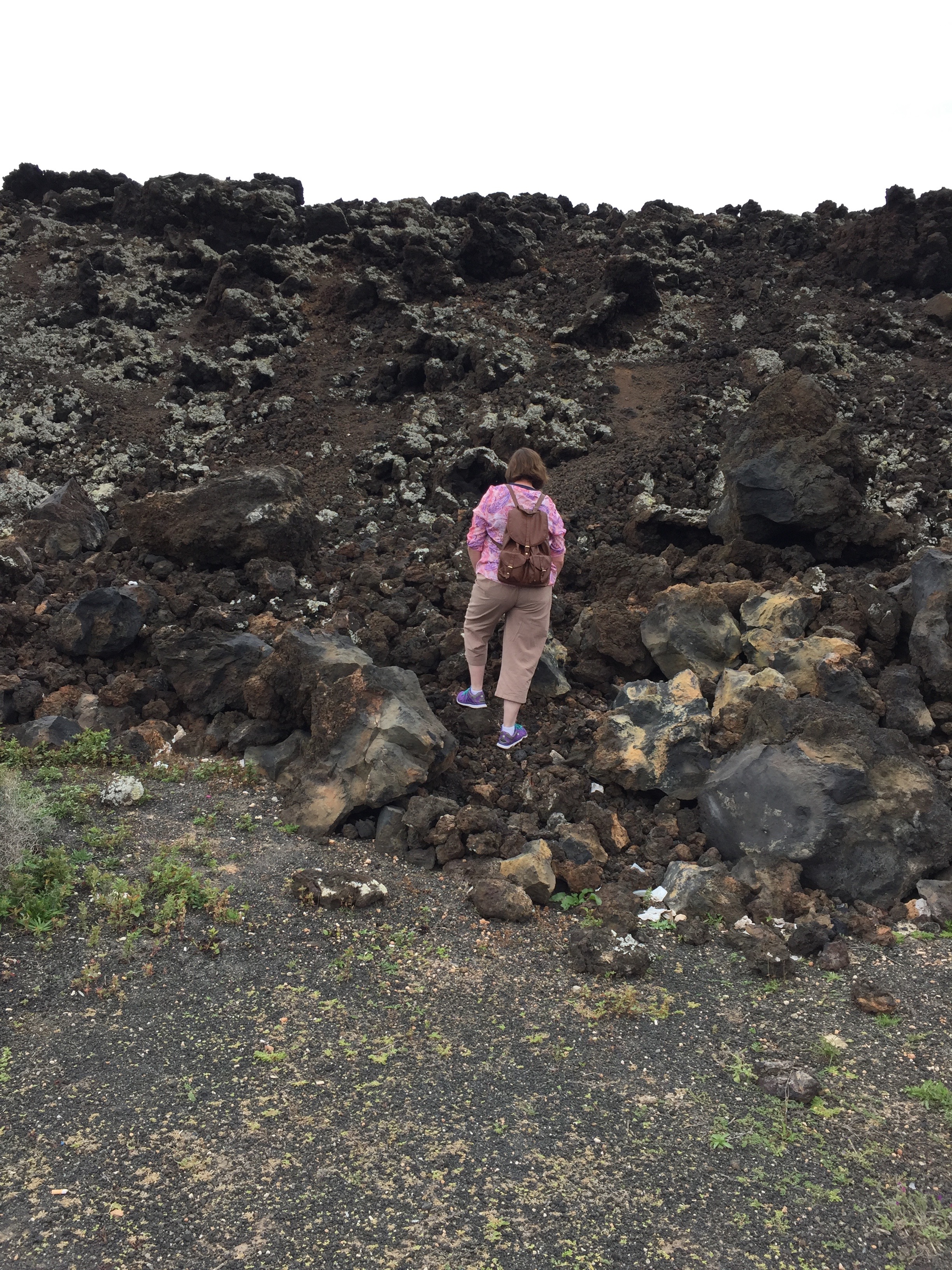
We set off, heading north to Ye, passing through a narrow valley between La Corona, the largest volcano in the chain, and the rounded peaks of the massif. The road is narrow and edged with low dry stone walls. Beyond, the fields of black were alive with euphorbias, the lichens on the rocks bright splodges of white, yellow and orange. Wild grasses and flowers everywhere, the result of recent rain. Usually, there is little green save what the farmers plant and tend.

Orzola

Ye is the same as I recall. A tiny village forgotten by the developers. A string of farmhouses, a few ruins, paradise for someone like me.

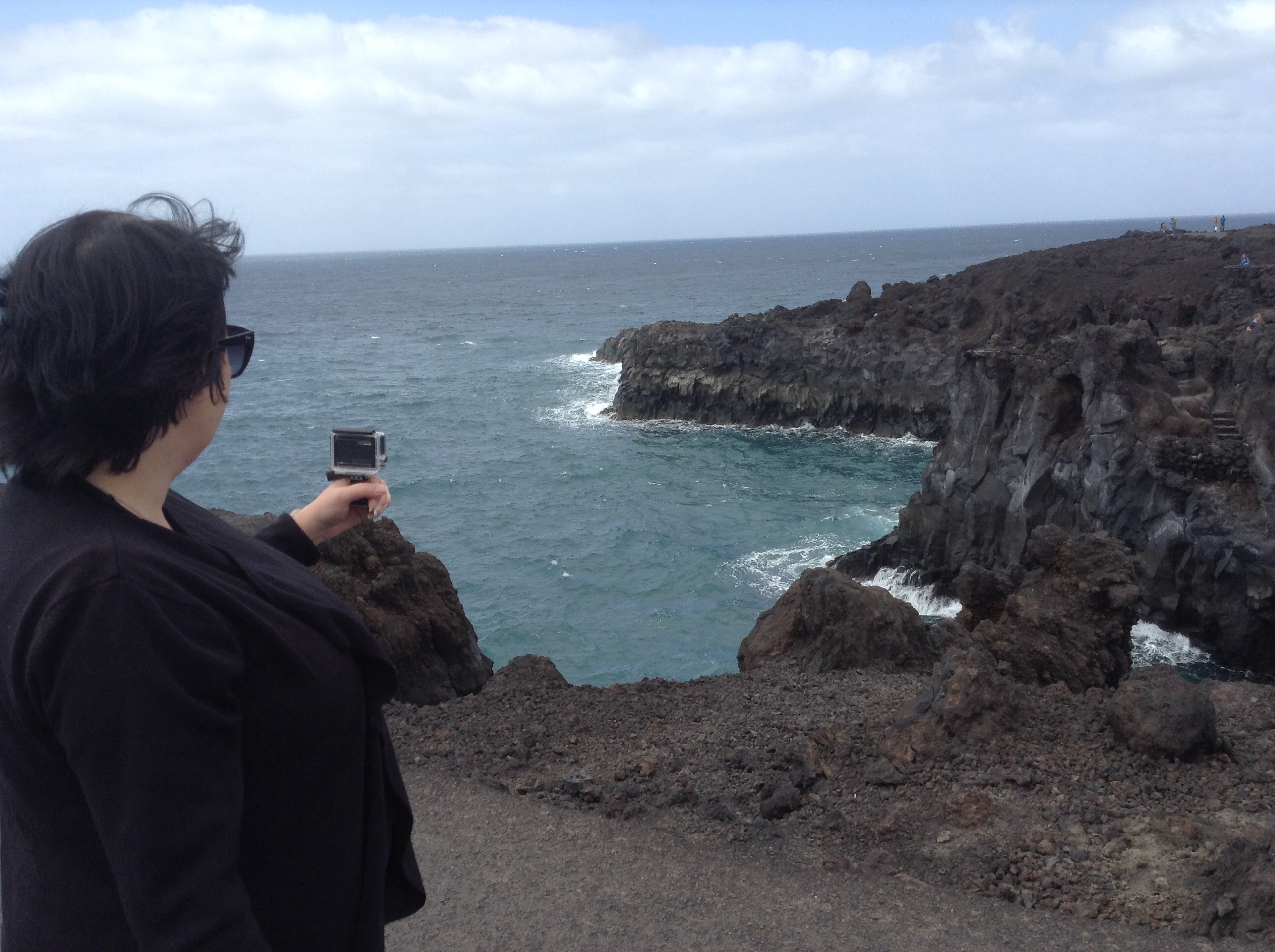
We reached an intersection and headed right, skirting La Corona, the sloping plain to the ocean coated in a lava river, onces a tumbling fury, now a landscape of rugged basalt. For 6 kilometres we drove, taking the narrow lane to Orzola, twisting down between the rock, feeling the weight of it. A primordial scene, vast pillars of basalt protruding from the mass, nature’s standing stones. Everywhere a dance of colour, the lichens and euphorbias that have secured their grip on the landscape burdgeoning. The whole a sight at once painterly and alien.

And far more impressive than I recalled. No wonder Ann drove slowly, ‘consumed by what she saw.’

We arrived at the small fishing village of Orzola, which seems today to survive on passing trade to fill its string of restaurants, as tourists take the ferry to the island of La Graciosa nearby.

Orzola

We parked beside a restaurant overlooking the harbour and took a short walk around the block. It was as if I had entered my only story, for Ann had been here, had gazed at the mountains and the cliff, had pointed out features to her companion, just as I was doing with Michelle.

Orzola

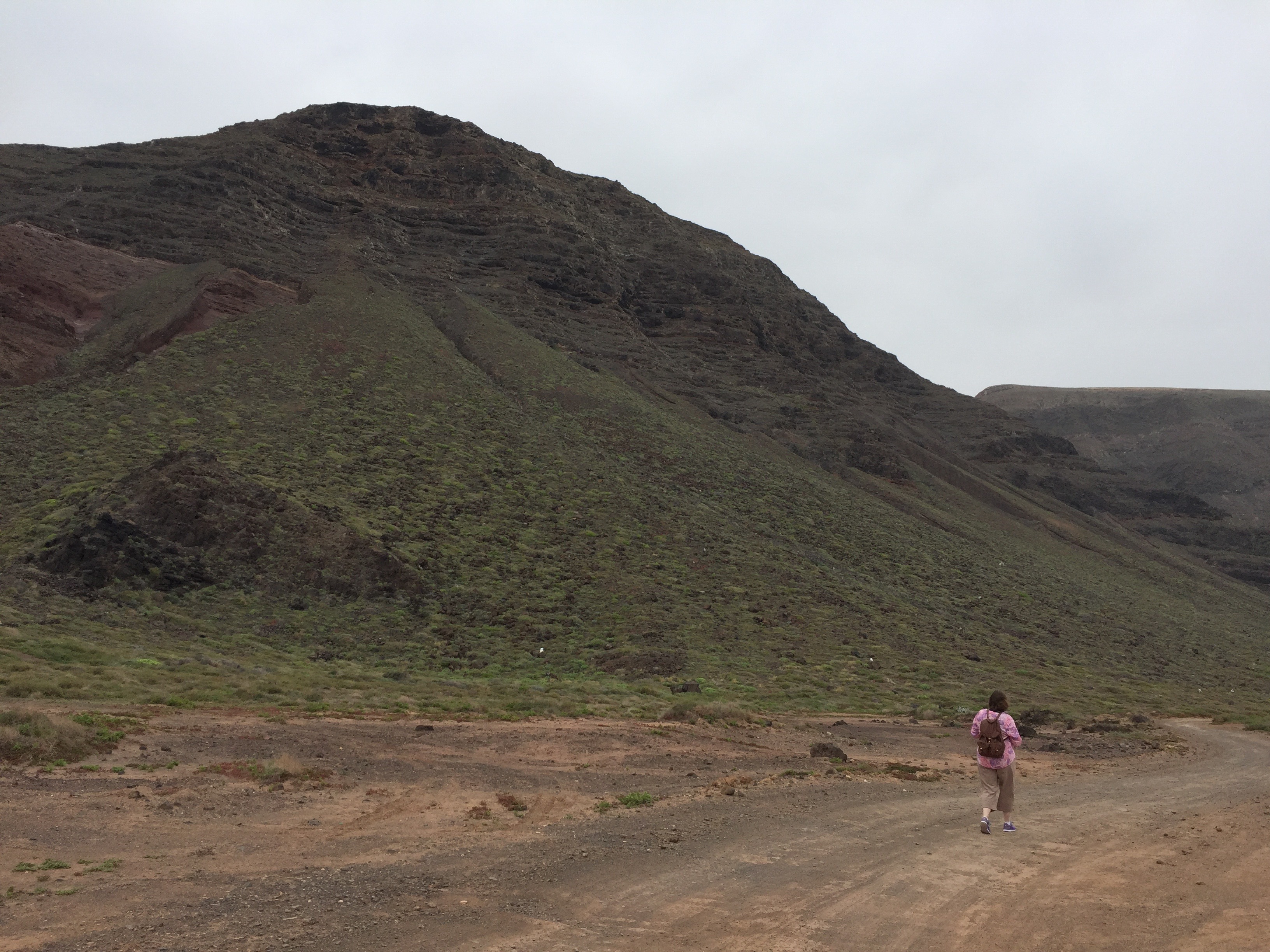
And like Ann, we didn’t hang around. Instead, we headed to a remote beach to the west of Orzola, sandwiched by the cliff of El Risco. We pulled up halfway along a narrow track and walked the rest of the way. It was a walk like no other, each step bringing us closer to the barren massif, rising steeply, about 400 metres high, baring striations of rock, the jagged razorback of El Risco silhoutted against the sky, the whole a vast wall. The beach itself arcs to the cliff base, the creamy white sand strewn with basalt pebbles of all sizes. We stood in awe watching couples scattered here and there as they also stood in awe. Two guys were ignoring the warning signs and out on surfboards.

Walking to the car was strange. I wanted to walk backwards, to watch the cliff recede a little with each step. As if to say goodbye.

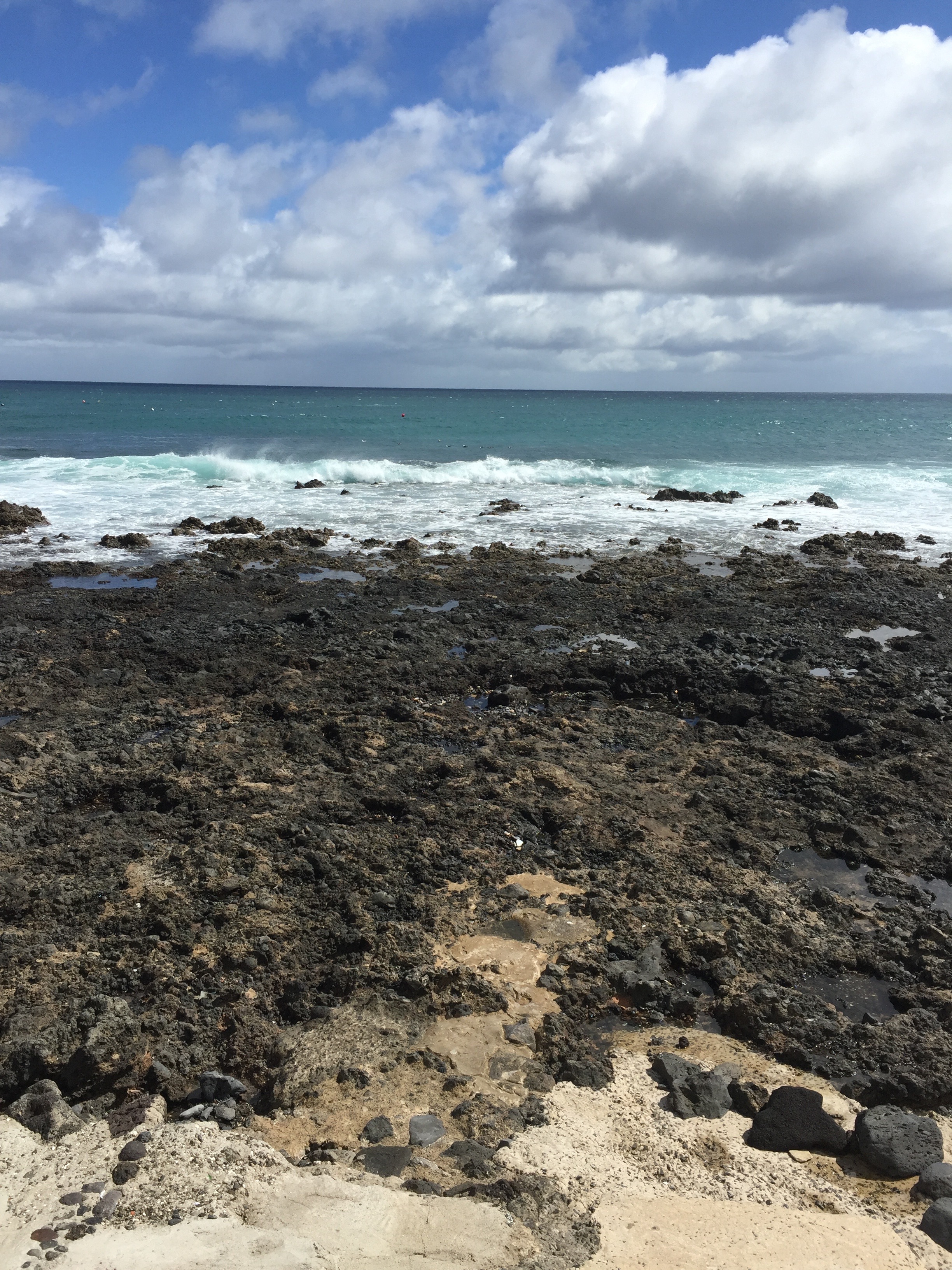
From Orzola we took the coast road to Arrieta, carved along the fringe of the lava flow. Small pebble strewn beaches appeared here and there. Beaches not for swimmers. For paddlers. For those wanting to stand and stare, at the ocean, the malpais, La Corona and the massif. For hours.

It’s a shared sentiment. Where I recalled when I was last here no human life other than me, there were cars and people. Not many. Not an amount to disturb. But to be thoroughly alone would mean either luck or a trek into the harsh rock of the malpais.

We found a small car park at one beach and stopped briefly, and walked to the shore, and I found a small pebble, the size of a bean, and pocketed it. I was being Ann, for she had done the same. It was as if I was walking in her footsteps, a bizarre feeling.

Orzola

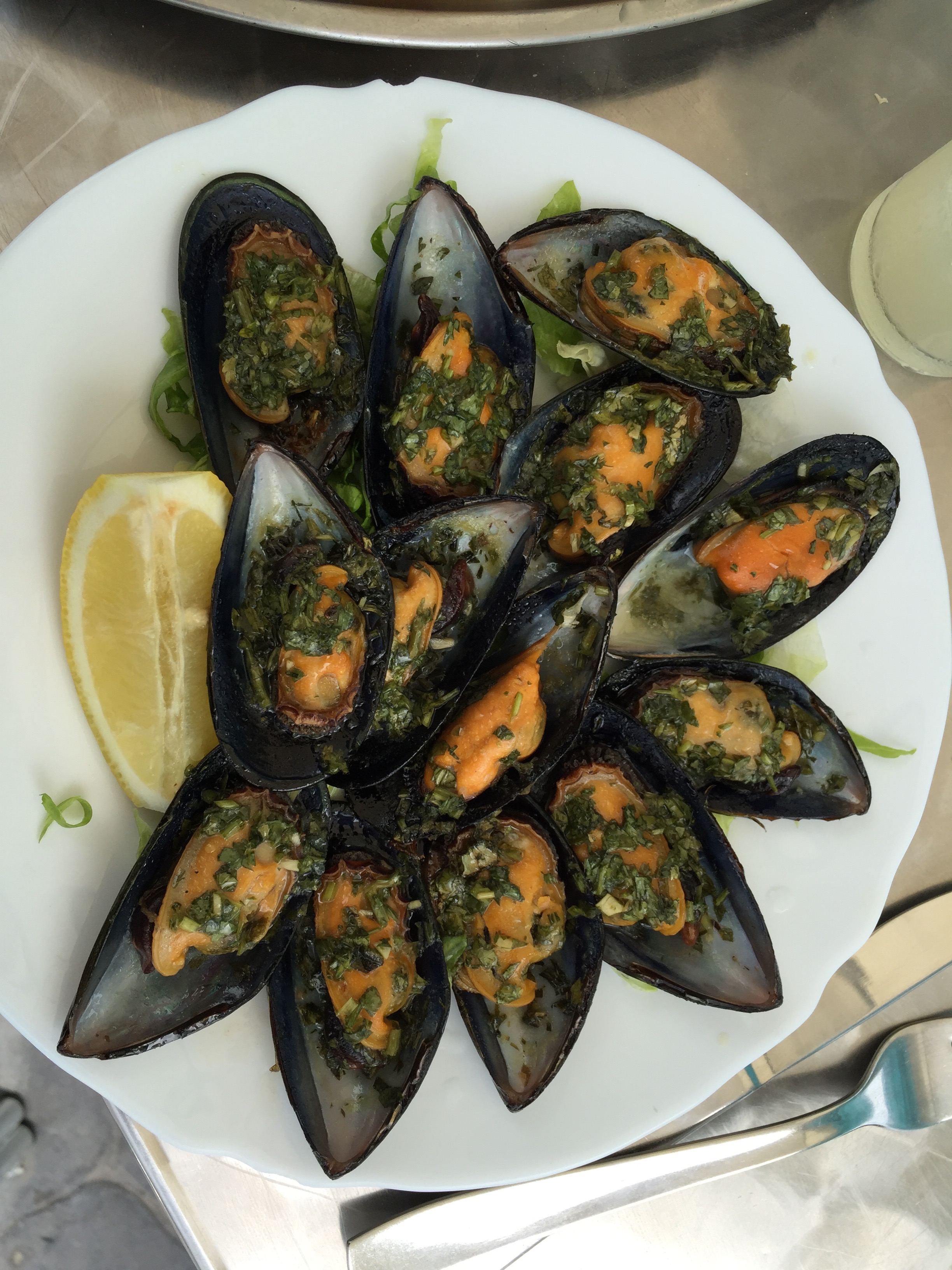
We completed our adventure with lunch beside the little wharf in Arrieta, choosing a restaurant with Spanish-speaking diners. We didn’t speak much. Both of us watched the ocean break on the low cliff to the south, sending up gushes of spume. Although I did comment on the fish I ordered, for it was the best fish I have eaten in a long time. And Michelle tells me her mussels were fine.

ArrietaArrieta

As if life were in agreement that I must return to this island, and stay not for weeks but months, I found a cheap apartment to rent, just metres from where we had sat on the wharf. It was Michelle’s doing. She wanted to check out the clothes in a boutique nearby, and as she browsed I took the chance to speak Spanish to the owner. How glad I am that I did! The woman spoke slowly and encouraged my efforts and when I explained my wish she told me of her apartment, of the cost, the location, and I knew that what I have been feeling for so long, a profound sense of belonging, was not an illusion, it was just me following life’s trail, picking up the breadcrumbs.


Of the people…?

Yesterday we were up and out of this old farmhouse bright and early. A little cloud on a warm and breezy day, and as we drove down past the saddles of the massif on our way to Arrecife I noticed the swathes of untilled land, land that used to be a checkerboard of haphazard plots of maize, potatoes and especially prickly pear. In the 80s I would see old women in wide brimmed hats in amongst all those spines, as they plucked off the beetles for cochineal. No more.

The road is long and mostly straight, gone the hair pins, the meandering, the character. A road that bypasses the villages of Mala and Guatiza. A road determined to take drivers to the sprawl that now is Tahiche, and on down to the capital with its super-fast arc of ring road taking traffic to the tourist hubs of Puerto del Carmen and Playa Blanca in the south, and Costa Teguise immediately to the north.

We were heading to the port. An unusual choice perhaps, but it is also the site of the Castillo de San Jose and the museo of contemporary international art, one of a long list of sites for the sequel to The Drago Tree.

Arrecife

The port and surrounds, as anticipated, comprises numerous large concrete storage tanks, a power station (oil fired), a desal plant, containers stacked high in a low row along the waterfront, factories, warehouses, the whole drab grey-white of it set against the undulating sea. Scarcely worth a photo.

Arrecife

The castle, set amidst this scene, is one of three located on the sea front, built to ward off pirates. A small solid building, imposing, with a small dry moat in front and turrets on each corner. A building tucked back from the street and easily missed. A building no tourist would come across except by accident, or through the determination of the lover of fine art. In other words, not at all the sort of place of interest to the average tourist the island attracts. Besides, the other two forts, located along Arrecife’s promenade, are far better suited to tourist sensibilities.

Still, whoever commissioned the fort renovations was determined to create a sense of grandeur and importance, a place worthy of the high art it houses perhaps. The quick look I took inside confirmed the fort to be a remarkable setting for a gallery. The long and low first room, with its rounded arched ceiling, the steep stairs leading to chambers above and below, the slits in the thick walls, windowed – it had an air of secrecy, of low whispers. And it was empty.

Carved into the low cliff below is a restaurant, accessed via a curving flight of cobbled steps flanked by basalt boulders and plantings of succulents in deep picon.

Arrecife

We decided to sample the food, which proved good. And as we sat in front of a wall of glass, staring out at the containers on the waterfront, the buildings on the dock, I wondered what sort of people came here. Men in suits. This was a place for private conversations. A place from which to observe the docklands and not a pretty view. A place away from the noise and bustle of Arrecife. A hidden place away from the people. Not a place for tourists. Not a place for the peasant farmer plucking beetles off her prickly pear. And not a place for us.

thumb_IMG_1060_1024

And the wind it blows

Well I cried on touchdown. It was the sight of the barren forms of the mountains of Los Ajaches, Lanzarote’s southern massif, and the villages of La Quemada then Puerto Calero coming into view, then the sprawling mass of white cubes that is Puerto del Carmen and the villages in its hinterland. Michelle had the window seat so didn’t notice my tears, but the woman seated to my right, who had been reading a Joanna Harris all flight, couldn’t have missed them. So I turned to her and said, ‘It’s my age.’

Lanzarote

I hadn’t spoken to Bernie for the duration of the 4 hour flight from Gatwick, but once she had put down her book, I struck up a conversation, asking her where she was staying and the like. When she returned the inquiry, I hesitated. But the moment I mentioned I was an author and that I had written a novel, The Drago Tree, set on the island, she took note of my name and the title and said she would buy my book straight away. Thanks Bernie!

I didn’t tell Bernie that Michelle was my publisher. That she was so inspired by The Drago Tree she’d come with me from Australia, a country where almost no one has heard of Lanzarote, to see the island for herself. It would have sounded like bragging. But Michelle has given my book the greatest endorsement any author can hope for, prepared to travel all that way with a woman she’d never met before, to see for herself why Lanzarote is so special.

Michelle designated herself as driver. What a relief! I’m a good navigator so we managed to find our way round the capital, Arrecife, and on to the northern road with ease. And I could take in the mountains, the calderas, the ocean. The first thing that struck me was the size of the calderas, made all the greater by their closeness, something lost in a photograph. When I was researching for The Drago Tree I’d spend many hours touring the island on Google maps, dredging up memories of when I lived here more than two decades before. But I could never capture that elusive depth of field. Many times on that drive north I wanted us to pull over so I could be still and stare and stare and stare. But we needed food, so we pressed on.

Lanzarote

According to my Internet searches all the supermarkets are closed on Sundays save for those in the tourist south. And since we had driven past all of that and were in open country, our only hope seemed to be a petrol station for some basic supplies. And we hoped to find something open before we reached our destination, a farmhouse on the very edge of the village of Máguez.

When we neared the fishing village of Arrieta, I suggested we take a look. And there on the corner of the main road in, was an open supermarket! And down a narrow alley, the ocean…

Lanzarote

Parking was fun, Michelle forced to drive down the narrow streets so typical of Lanzarote, bereft of pavements and lined with low-rise dwellings, all whitewashed. She was doing well, having mastered the gear box, the indicators, the strangeness of finding herself on the wrong right side of the road.

Stepping out of the car and breathing in the cool ocean air, I could scarcely believe I was here.  I was consumed with a sense of familiarity and belonging, which is hardly surprising since I’ve carried the island around inside me ever since I first visited in January 1988. Back then I fell instantly in love and by November of that year, I was living here.

Arrieta hasn’t changed that much and I knew my way around. The supermarket was well-stocked and had several aisles and a deli at the back. We bought locally grown produce, cheese, bacon cut to order on a meat slicer, wine, both local and Spanish, and other bits and pieces. It was all so inexpensive, so familiar to me. Atun (tuna backwards), champu (if you don’t know what that is, I can’t help you), leche semidesnatada (nata is cream), the whole experience of intuiting meaning came back to me. And my sense of belonging grew all the stronger.

At the checkout I tried out my Spanish, with my usual apologetic caveat about having not spoken the language for twenty-six years. Imagine the thrill when the woman smiled and chatted and I understood and she saw that I did, and we had a conversation. At the end she told me there was nothing wrong with the way I spoke. And there I stood; I’d come home.

I’ve come home to the mountains, the ocean, the wind, the ever present wind, to the picón, the lava, the buildings and the people.

We loaded up the car and headed up the steep sided valley to the little plateau nestled in the mountains, the location of Haría, and Máguez. More narrow streets, this time a warren, but with the caldera of La Corona ever present in the north, it was easy to find our way.
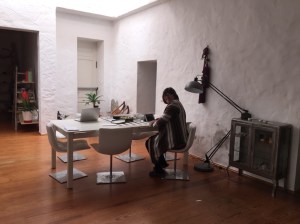
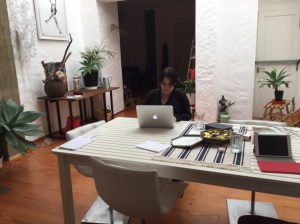
Lanzarote villa Lanzarote villa

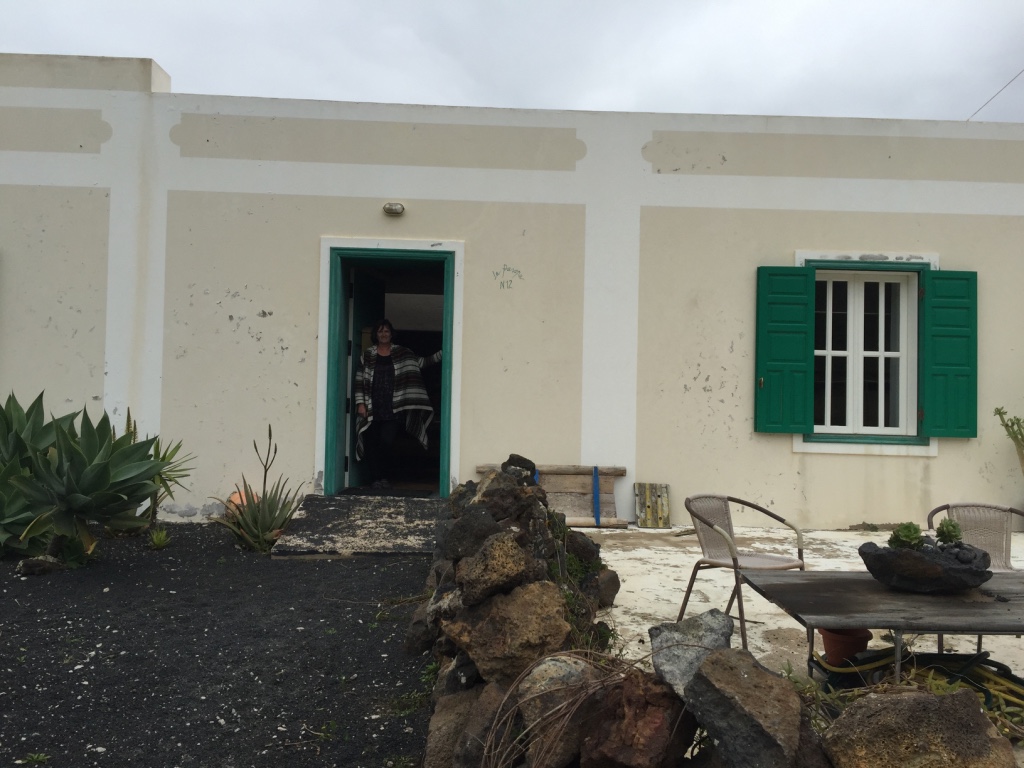
It was when we opened the front door we both knew it had been more than worth the trek, not only across the globe, but the island too, for the house we are renting for the next few weeks is magnificent. Ten foot ceilings, walls of stone two foot thick, spacious rooms, and just for us.

Lanzarote villa

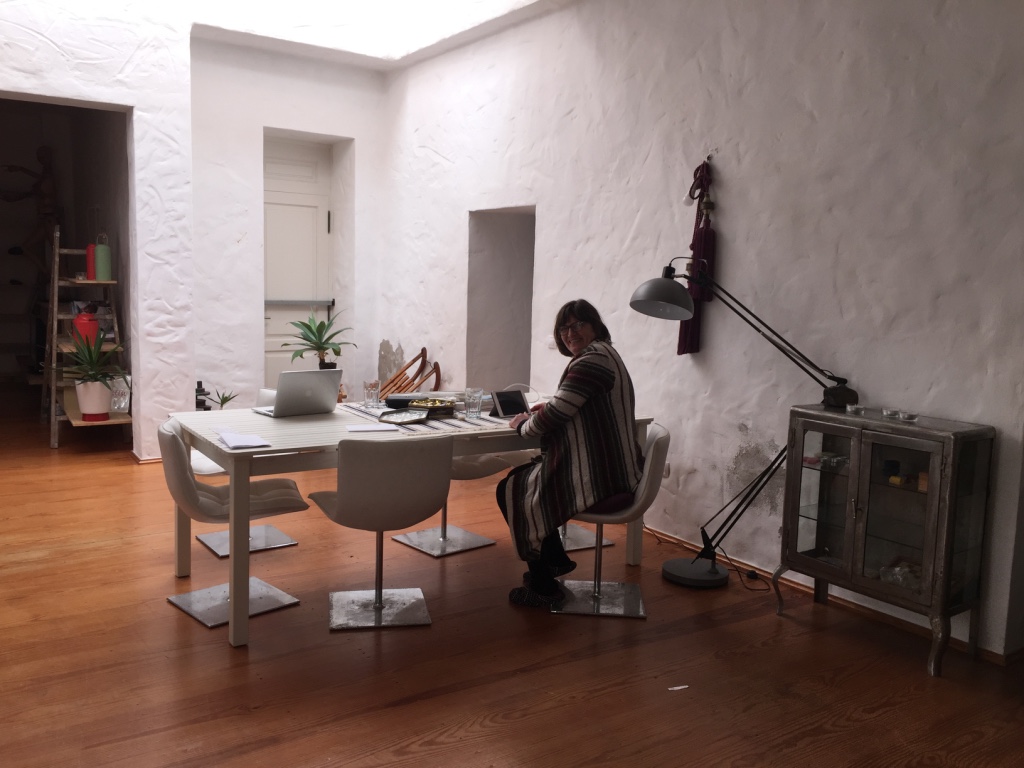
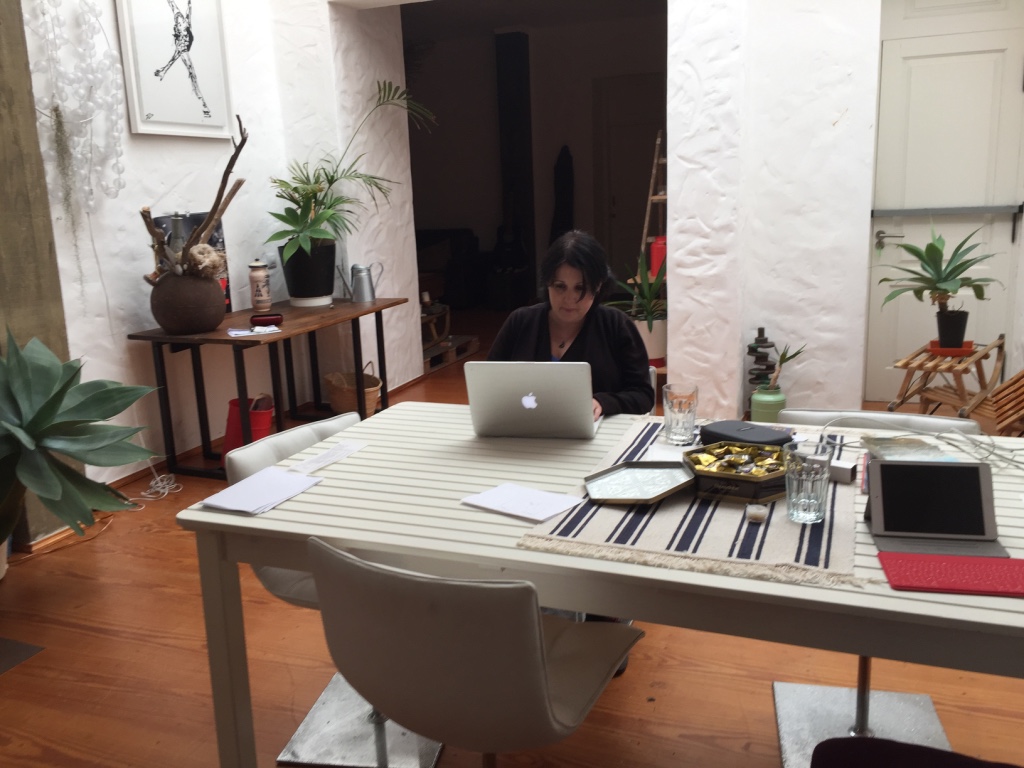
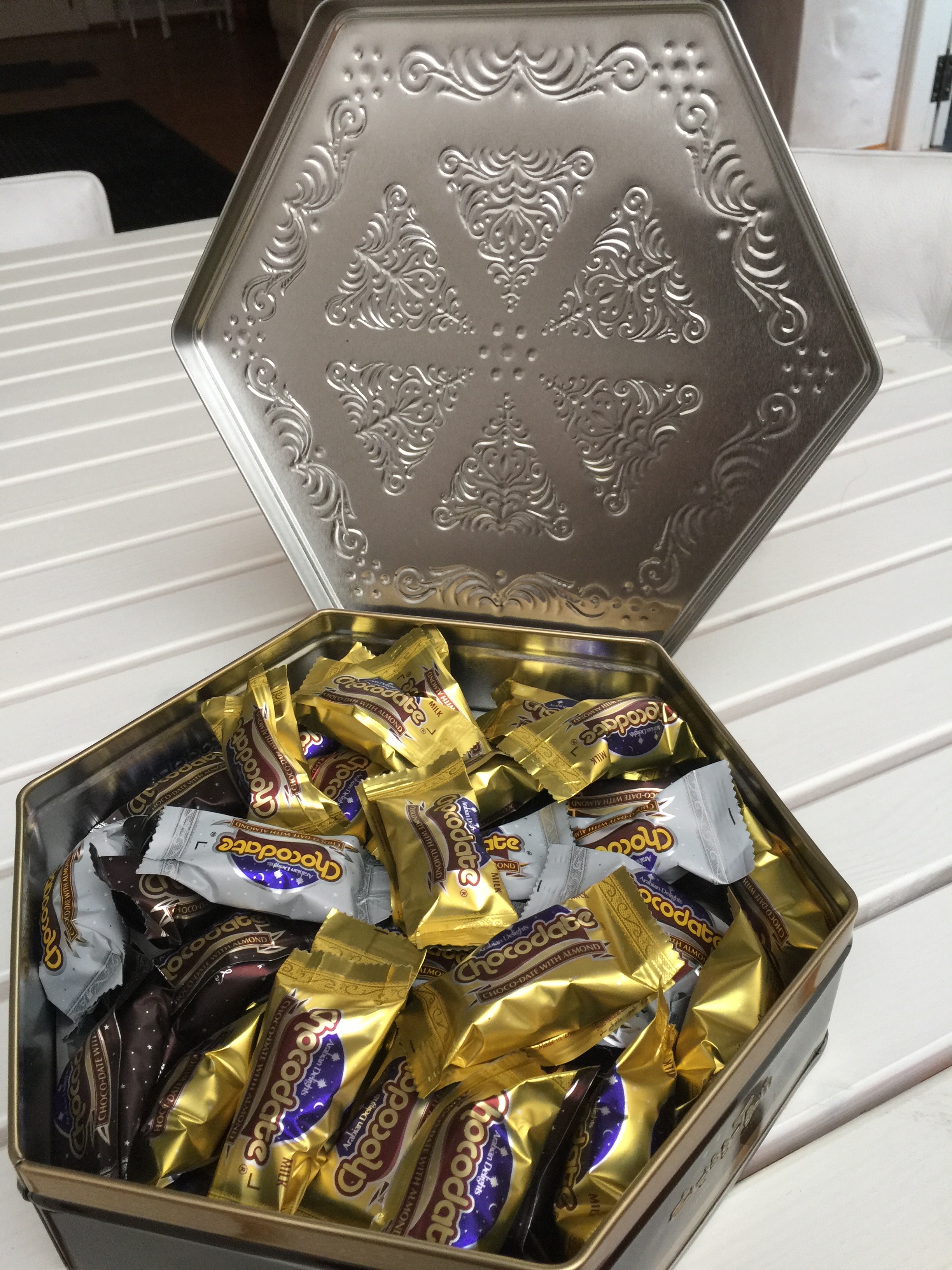
So I’m seated here at the large table, with Michelle opposite, the tin of Chocodates Michelle bought in Dubai open between us, with the cool wind howling through the shutters, the scudding clouds releasing flurries of light rain, with all of our two week stay ahead of us, happy and fulfilled. Yet already with an ache in my heart, knowing that once again, I’ll have to leave.

Hanging out in Oxford

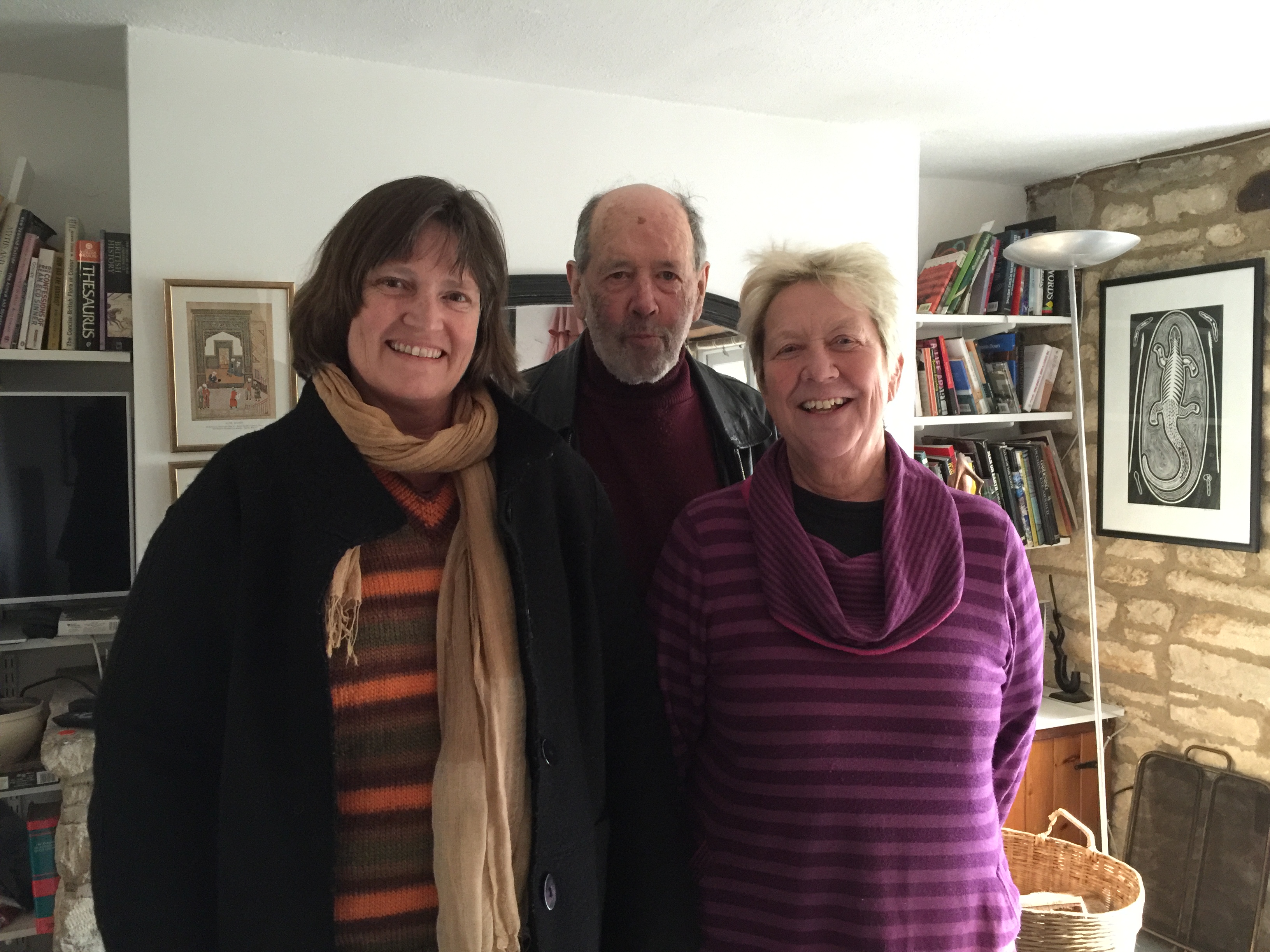
This trip to Lanzarote wouldn’t have been complete without a detour to Oxford to catch up with my oldest friends! Sue Raikes and Adrian Moyes still live in the quaint village of Eynsham, six miles west of Oxford, where I lived back in 84. Introducing them to my travelling companion and publisher, Michelle Lovi was a delight.

IMG_1026

The highlight of the flight was the refuel stopover in Dubai. Just two hours filled with queuing and shuffling about withe the carry on luggage, but it did prove just enough for Michelle to purchase a tin of Chocodates. I had no  idea why she was on a mission to buy them until offered a free sample. An almond wrapped in a date and dipped in chocolate. One of those kinda healthy intensely sugary hits. Bit of a thing in Dubai it seems.

IMG_1033

Landing in Heathrow and trekking to the coach, down endless walkways had me thinking of settings for horror or urban fantasy. But we were soon out of there and trundling through stop the green and twiggy fields of Buckinghamshire.

IMG_0972thumb_IMG_0945_1024

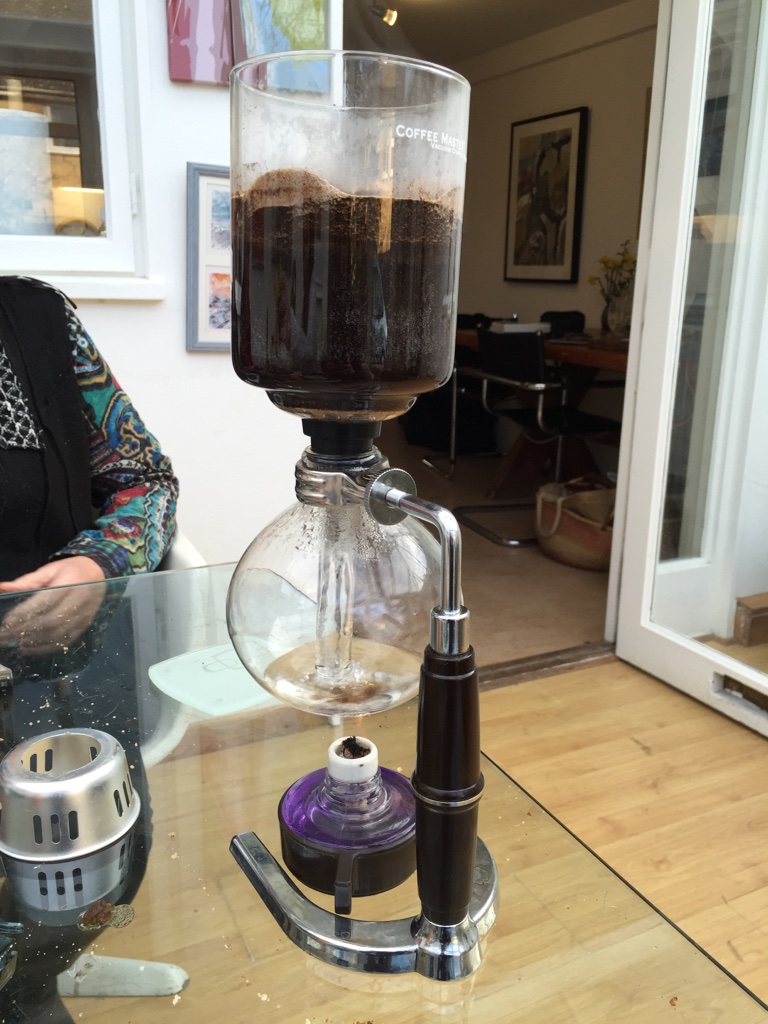
Arriving at Sue and Adrian’s cottage of old Cotswold stone it was as if I had never been away, the years shrunk to months, and everything I had known and loved about my visits was there again, in  conversation, in the sumptuous food, created from produce grown on their allotment nearby, in the seamless way time fills with activities. Including a novel way of making coffee!

thumb_IMG_0942_1024

Yesterday Michelle and I took the bus to Oxford and I gave her my personal tour, following the route I used to cycle, down Broad St to Blackwells bookstore, a vast warren of a space filled with every sort of book, on round the Sheldonian theatre, past Bodleian library, under the Bridge of Sighs and along a back lane to Magdalen bridge.

thumb_IMG_0963_1024thumb_IMG_0968_1024thumb_IMG_0965_1024

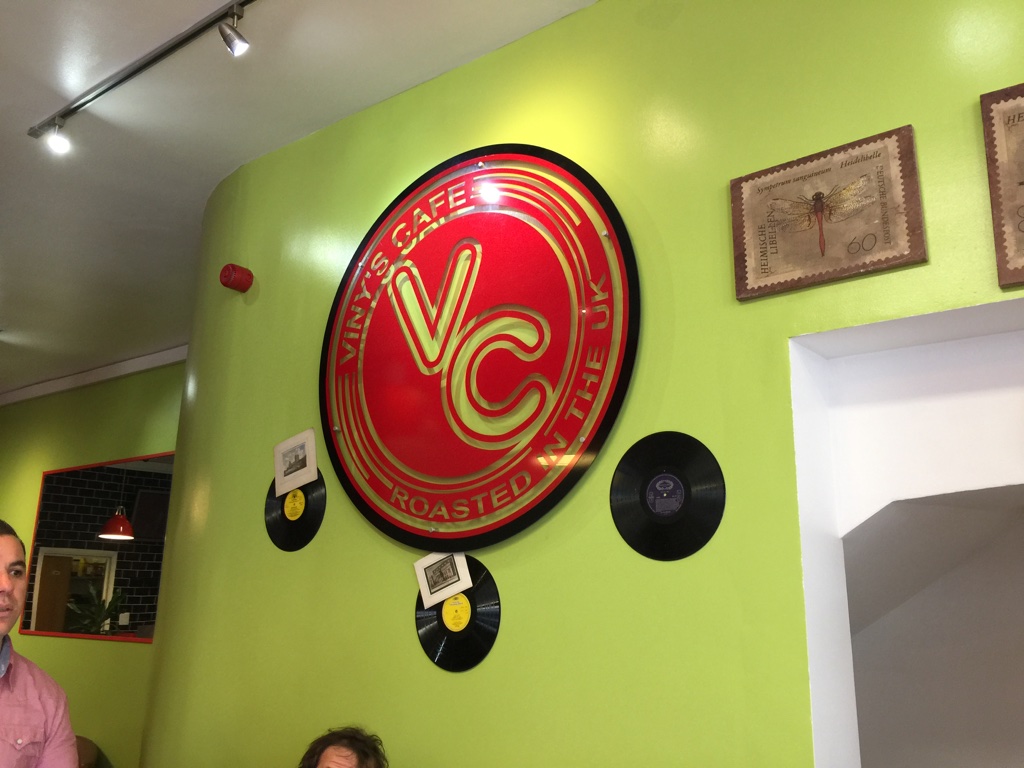
Much had changed since I lived here in the eighties, but when I went into the old whole food store Uhuru to see if anyone there recalled the former CND office, I asked the woman behind the counter, I was amazed to find she’d been working there all this time and pointed out the site, now demolished to make way for a new building housing a few shops. One of them was Viny’s cafe on Cowley Road, unpretentious and lively and serving what we took to be North African fare.

thumb_IMG_0977_1024thumb_IMG_0985_1024thumb_IMG_0992_1024

That night Michelle had her first taste of Mah Jong. She picked the game up straight away, despite the wine and the jet lag. Impressive. Sue and Adrian bought my Mah Jong set for my fortieth. Fabulous game but requiring four enthusiastic players so I don’t get to play that much.  I lost.

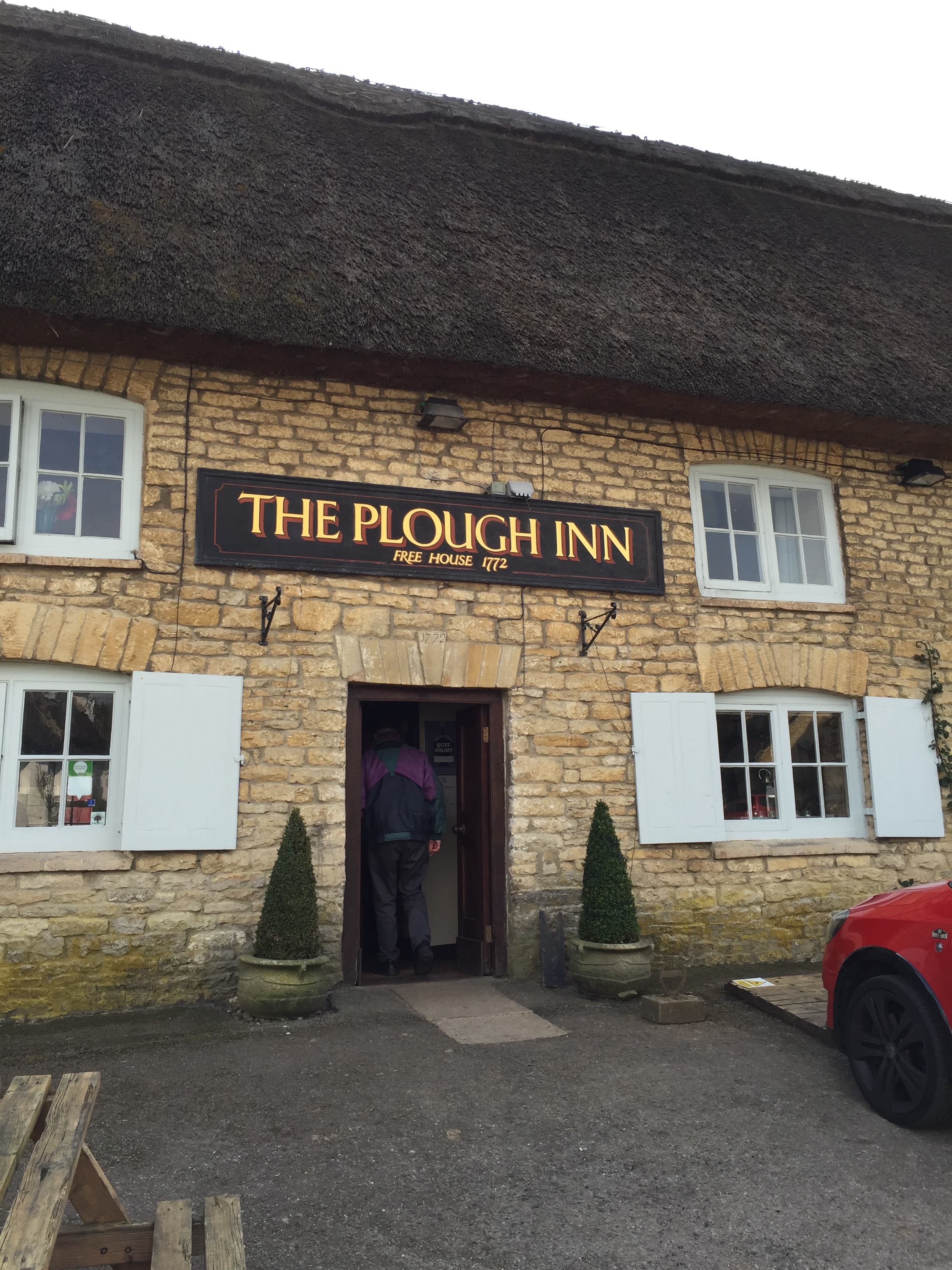
Our stay wouldn’t have been complete without a pub lunch. We went to The Plough in Finstock. Low ceilings, thatched roof, and traditional fare. I had bangers and mash, Michelle cod and chips. And oh what chips! Triple fried!
IMG_1021 IMG_1024 IMG_1025

It was a terrific introduction to England. Michelle has remarked on the friendliness and generosity of all we met. Not at all what she anticipated. And we drove right by the location for Midsummer Murders.

taking flight

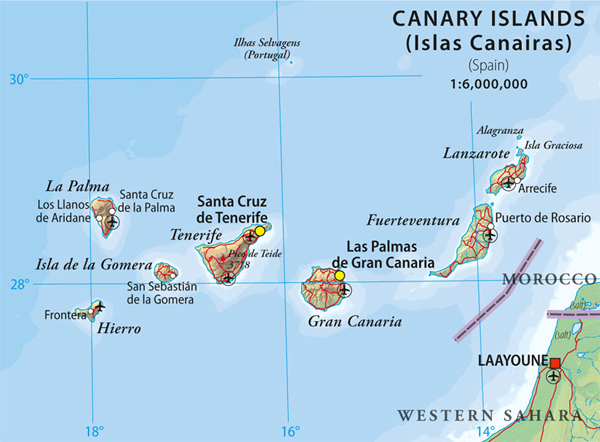
canary-islandsTomorrow begins a grand adventure, although it feels like it has already begun. I am flying to Lanzarote, Canary Islands after a twenty-six year absence, and I will be accompanied by my publisher, Michelle Lovi.

And  I have only met her once.

It is hard to say when this journey began. I could say it was the day I left my sleepy little village for Melbourne, a ten hour bus ride. But that is a trek I have done many times. Better to say  this adventure had it’s beginnings back in 2013 when I conceived an idea for a book that would be set entirely on Lanzarote. That idea turned into The Drago Tree, a tragi-comic romance released by Odyssey Books in September 2015.

Canary Islands

The novel has become my wings. I had been hinting on social media that I would love to return but it seemed like a pipe dream. After all, I hadn’t managed to visit after I left in 1990. Besides, I knew privately that I would never travel alone. I’m just not cut out for it. Months passed and The Drago Tree was launched. Then one day I posted how much I yearned to go back and I received a message from Michelle. It said, “Can I come?”

At first I thought she wasn’t serious. I said, “Yeah sure,” to be polite.

Two weeks later she repeated the question, which wasn’t a question at all. It was an offer of companionship and even though I had only met her the once, I wasn’t about to pass it up. Besides, Michelle is my publisher – what an honour that is! – and she has a sweet manner to boot. Perfect.

So we set a date and booked the flights and I have been saving my pennies ever since.

Tomorrow we fly to London. A couple of days later we will be on Lanzarote. And our adventure will begin. But of course it already has…

I will be blogging this special journey with lots of photos. My first ever travel diary. Travel with us if you wish and experience, albeit second hand, why Lanzarote is such an extraordinary island.


On Gilgamesh by Joan London

I’m about halfway through Joan London’s Gilgamesh and toying with writing something on Goodreads. Just now I scrolled through the reviews to read what others were saying but stopped when I realised there were over 1,800 of them. I really only have one word to add – bleak.

9780802141217

And I realise much of the bleakness comes not from the story itself but from an absence of emotional reaction on the part of the main characters, along with a paucity of introspection. As is typical of much Australian writing the feeling in the story is embedded in the action as the main character, Edith, goes through the motions of her difficult life. She isn’t the responsive type and I’m left feeling empty.

The story is straightforward. In 1937, on a tiny farm in the town of Nunderup, in far southwestern Australia, seventeen-year-old Edith lives with her sister Frances and their mother, Ada. One afternoon two men, Edith’s cousin Leopold and his Armenian friend Aram, arrive, taking the long way home from an archaeological dig in Iraq. Among the tales they tell is the story of Gilgamesh, the legendary king of Uruk in ancient Mesopotamia. Gilgamesh’s great journey of mourning after the death of his friend Enkidu, and his search for the secret of eternal life, is to resonate throughout Edith’s life, opening up the possibility of a life beyond the farm.

Alongside the myth of Gilgamesh, there is a motif of perversion running through the narrative, stated almost in passing in the most matter-of-fact manner. It’s a motif that evokes revulsion and a sense of doom. 

Overall the narrative is restrained. I think the idea behind this style of storytelling is that the reader is free to have their own emotional reactions, unimpeded by those of the characters. The downside is that the characters are more like automatons. The rich roundness of their beings duly muted in the rendering, they are at risk of appearing one-dimensional.

In it’s favour I have to say that the narrative is superbly crafted and poised, the prose elegant. Gilgamesh is definitely a book I would recommend.

Well, that was more than one word!

Narrative as Navigation Through the Self: Isobel Blackthorn’s Asylum

(‘Narrative as Navigation Through the Self: Isobel Blackthorn’s Asylum’ by Ness Mercieca was originally published in the October 2015 edition of  The Tertangala)

Featured Image -- 736

They say the mind does not create, and that it only cuts and pastes the stimulus it receives from the outside world.

Author Isobel Blackthorn has a talent for this, in fact, I often get the feeling with her that she is cataloguing my idiosyncrasies. I suspect I am not the only one to suspect this, and that she has an arsenal of our traits and habits to be appropriated for the right character at the right time. It’s the literary skill that brought us Plath’s The Bell Jar, and it goes by the name of semi-autobiography.

When I asked Isobel about her creative process, her words confirmed what John Cleese (whose name my computer insists I correct to Cheese) once said about creativity, that the subconscious will reward you with an idea if you spend long enough contemplating a topic. Here it is in Isobel’s words; “I let the story brew inside me for a while, sometimes years, and when some other far larger part of me has it all figured out, I have a powerful irrepressible urge to write. And I go into lockdown and give that other self total freedom.”

The true art to Plath and Blackthorn’s (Plath-thorn’s, if you like) literary style, however, is dissecting the self. Most authors do it; a mood or thought is isolated. It becomes the embryo from which a new self germinates, and it becomes a complex character. (Ever wonder why writers think of their characters like children? Well, there you have it.) Entire books can be populated by these alternate selves of the author, and a narrative becomes the ship through which the self is navigated.

Who’s at the helm, you ask? Isobel speaks not only of smaller selves, but of a larger one who personifies her creativity; “I prefer to think of my source of inspiration as some other greater me deep inside,” she says, “and every time I write a first draft, I’m paying homage to her, to the muse.”

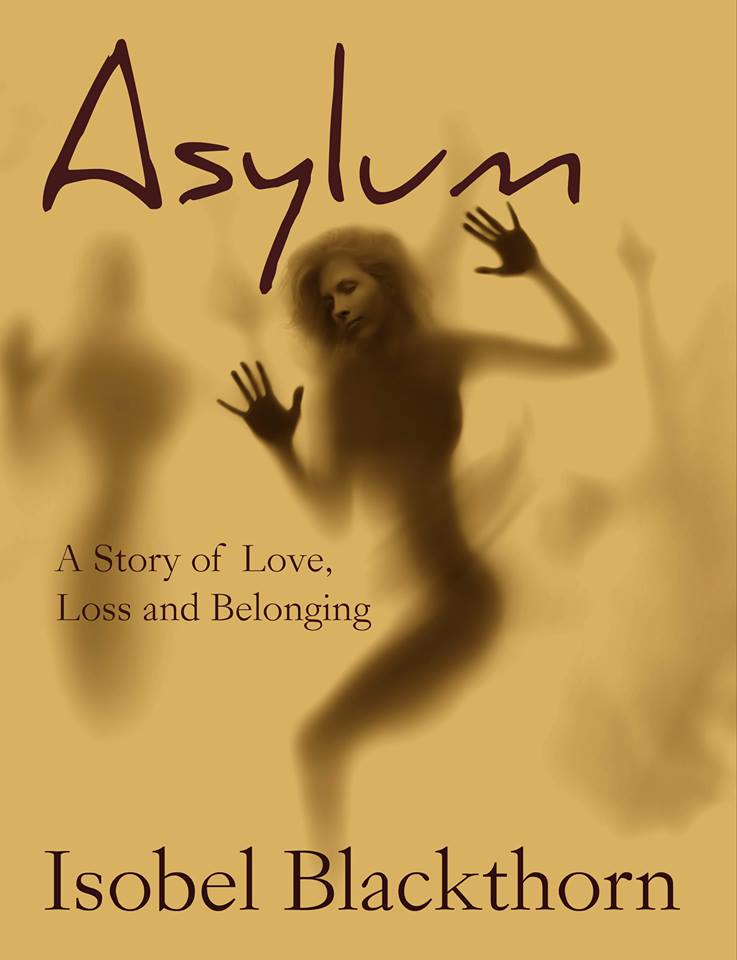
Isobel’s most recent book, Asylum, is the story of such an alternate self. Yvette Grimm speaks with an incredibly honest voice from the perspective of an illegal immigrant waiting to be told to leave Australia, but having no-where else to go. She has been given a personal prophecy that she will meet the father of her children in Australia, and her hopes of permanent residency depend on meeting him very, very soon.

What resonates the most with me, however, is the creative block that all of this brings about in Yvette. Blackthorn made me want something, as a reader, that a book has never made me want before; I wanted Yvette Grimm to paint. Blackthorn played on a knowledge we all have that when you find inspiration, it’s probably because you’ve found something else too.

Lanzarote: the fulcrum of an empire

The history of the Spanish conquest of the Americas upon the famous voyage of Christopher Columbus in 1492, pivots on an earlier conquest, that of Lanzarote and the Canary Islands.

canary-islands-jpg-183

Sailing is largely dependent on ocean currents. The Canary current sweeps down from Spain and Portugal along the West African coast, until it reaches the Equatorial current and shoots off into the Atlantic all the way to South America. Lanzarote is the first island in that current’s path.

Lanzarote had long been favoured by marauding Spanish adventurers covetous of the profits procured from dyes and slaves, when, in 1402, Norman knight and ambitious conqueror, Jean de Bethencourt left La Rochelle with Gadifer de Salle and a retinue of men-at-arms. Bethencourt and Gadifer were determined to take possession of the “Fortunate Islands” on behalf of any Kingdom willing to strike a good deal. Following in the tradition of Church-sanctioned conquest, they took with them two priests, Pierre Bontier and Jen Le Verrier, who documented the conquest in a journal that would later become, The Canarian.

And in The Canarian the priests depict Lanzarote as wooded with brushwood, olives and higuerilla. There were natural springs in the foothills of the mountains. There were plains and broad valleys of tillable land. And plenty of rocks to build shelter. And a small and amenable indigenous tribe, (later known as los Conejeros, or Guanches). 

After ‘subduing’ with empty promises the tribal leader, King Guadarfia, Bethencourt sailed back to Cadiz to strike a deal with Henry III of Castile that would make him conqueror and owner of all the islands.

images

Bethencourt was a greedy opportunist who knew the islands would bring ample wealth. He’d been keen to acquire the blue dye of the orchilla that clung assiduously to the malpais, and the sanguine sap of the drago trees, for use in his mills back in France.

After much betrayal, treachery and a series of attacks and counter attacks worthy of a Johnny Depp movie, King Guadarfia was a hero defeated. When Bethencourt returned with provisions, men and arms, and of course his permission by King Henry III to conquer all the Fortunate Islands in the name of Castile, Guardafia and his people were worn out and demoralised.

Bethencourt returned to a hero’s welcome. According to the priests, the natives surrendered and were duly baptised. At this point the priests claimed that all present had rejoiced, the heathens brought to salvation at last and a legitimate society born on this beleaguered land.

Of course the priests were biased. Guadarfia had no choice but convert or die.

The stage was set for a later conquest, that of the Americas. Lanzarote was the trading post. Ships laden with gold and silver and other treasures  would put in to harbour en route to Spain, and so began a new wave of piracy.

We’d know a whole lot more about Lanzarote had the island’s official records not been destroyed in 1586, when renegade Jan Janz – Dutch privateer taught by the infamous Red Beards, turned Algerian pirate, Morato Arráez – went on a bloody carnal rampage.

Drago3D-1

Based on extensive research for The Drago Tree
Domingo Díaz Barrios

Sitio web de mis obras

Soul to Spirit: The New Spiritual Psychology

Becoming Human, Becoming Soul, Becoming Spirit

The Dark Side from the Inside

Writing and Reviews from Dark Places

Bookinton

Book Blogging , Short Stories , Reviews , literary web-series and EVERYTHING FICTION !

Mitch Horowitz

Author • Lecturer • Narrator

ARMAND ROSAMILIA

Author of Thriller, Horror, Nonfiction stories and more

BOOKS FROM DUSK TILL DAWN

Each night I TRAVEL THE WORLD, I LIVE IN THE MIND OF KILLERS AND WALK AT THE SIDE OF HEROES

Passport Overused

Showing the beauty of this world through the people, places and culture

BooknVolume

For the Love of Words, Art, Nature, and Spirituality

THE BLOGGING STATION

LIFESTYLE, BEAUTY AND EVERYTHING IN BETWEEN

Frankly Wright

I give you my opinion whether you ask for it or not.

a good book, a good life

comments on books by Ann Creber

Carmel Bendon

Writing tales of then and now and the in-between