The Great Amazon Review Chase

Amazon reviews

Why Book Reviews on Amazon Matter

Every author knows book reviews posted on retail giant Amazon matter. Amazon owns about 50% of the global book market and a book’s Amazon ranking is a major determiner of its success. The Amazon ranking is based on an A9 algorithm involving various factors including the quality of the cover, relevance of the blurb and the use of keywords. You can read up on Amazon’s A9 algorithm and how it works online.

Number One – Sales matter. The more the book sells, the higher the ranking. No surprise there!

Click throughs from searches to your book’s page also matter.

Editorial reviews are next in line as they are posted in the book’s description, appear high on the page and are a strong endorsement of the value of the book. Editorial reviews are those published by industry reviewers and critics from reputable and relevant publications.

When it comes to regular reviews, there are two kinds – verified purchase reviews and those that are not. Only verified purchase reviews count in the ranking algorithm, and they are weighted so that the most recent reviews matter more. This puts pressure on authors to keep finding fresh reviews for their titles.

Less than ten verified purchase reviews on a single Amazon site and the book may (or may not!) rank poorly.

Under ten reviews, verified purchase or not, is simply not a good look. A minimum of ten Amazon reviews is a requirement on some book promo sites.

All non-verified purchase reviews posted on Amazon count towards social proof. Around 40-60 on one Amazon site (preferably .com) are needed, we are told.

(Why Amazon chooses to compartmentalise reviews is a mystery to me. Amazon .com is blind to reviews on other Amazon sites, and reviews on Amazon UK are not visible to Amazon AU shoppers for the same book! They really couldn’t make things harder.)

When a customer or browser clicks on the Helpful button on any of the reviews on a book page, I understand this also helps to bump the ranking of that book.

Ranking high means greater discoverability. Your book will be much more visible to future browsers. This in turn leads to more sales. Little wonder authors and publishers have seized on every aspect of the Amazon algorithm in order to elevate books above the rest. Seeking reviews has become a major part of this scramble for ascendancy.

Sadly, the situation has become toxic.

The Amazon Book Review Scramble
They say if you want to succeed as an author, write another book. Keep writing and keep publishing. Don’t worry about what has gone before. Forge on and have faith. These maxims are all well and good but if you follow them you may end up with a large number of titles to promote and little energy left to do so, especially when book promotion is reduced to the Amazon review hunt.

In a swamped global marketplace, authors will do all in their power to raise their heads above the crowd. Out of the gamut of possible ways to market your book, the most obvious and expedient of all book promo is seeking reviews on Amazon. This can be done in a variety of ways.

You can kick back and hope that those buying your book on Amazon will leave a review. This is what Amazon want you to do. It is a hit and miss approach that may or may not yield results.

You cannot demand reviews from anyone ever. Amazon bans it and besides, it is unbecoming if not downright rude!

You can submit review requests to book bloggers. There are many thousands of them. The take up rate is generally between 5-10% and there is no guarantee a book blogger will share their review on Amazon. Bloggers generally won’t be posting verified purchase reviews and therefore their reviews will only count as social proof. If you only want 5 star Amazon reviews, move on.

You can pay some book bloggers for reviews and they will generally gush praise in return and post on Amazon. This approach is expensive and Amazon bans it.

You can pay for a book tour operator to line up a bunch of reviews for you, saving you the trouble of finding and emailing many hundreds of book bloggers. Again, said bloggers may choose not to share their review on Amazon and you probably won’t get the glowing 5 star reviews you are looking for. What you will get is a relatively stress free and overall honest and critical appraisal of your book with tons of content to share and re-share forevermore.

You can suggest to all of your family and friends that they buy your book and leave a wonderful 5 star review. If you do this you better hope Amazon does not pick up on the fact that said verified purchases are those made by your family and friends as this is a forbidden practice. Further, each of your family and friends will have to spend a minimum of $50USD on Amazon before they can post a review.

You may find other more surreptitious ways of creating fake reviews but I would not advise it.

In our current age of opinion where every company from a motel to a supermarket is seeking product and service reviews, authors are up against it. Consumers are getting review fatigue. Authors are wearing themselves out. Seeking Amazon reviews at the expense of investing time and energy in the rest of the book marketing industry is buying into corporate dominance. For this reason alone, we need a rethink of attitude.

Why Authors Need to Adopt a Different Attitude

Exclusive focus on Amazon book reviews is toxic. Here are some ways we are damaging ourselves as authors and people.

Stress

Stress

The Number One destructive consequence of the Amazon review chase is stress. Authors who are under or put themselves under pressure to keep up the chase risk emotional and mental harm. The review chase too easily becomes an obsession. In no time fixation takes hold. We do a daily review count. We hunt out new reviewers. We fret and get frustrated. Our daily mood is determined by whether or not we have received a new Amazon review. None, and we grind our teeth. One star and we are gutted. Five stars and we go wild with joy.

This mindset creates an overly narrow focus. All other tasks are pushed aside. We stop thinking expansively and we stop valuing all other forms of book marketing. We have become diminished. It is no way to live.

Self esteem

Chasing reviews may result in attaching our self worth to the number of reviews we have on Amazon. Too few reviews means our books are no good and therefore, since we wrote them, neither are we. We may question not only the lack of reviews but our own inability to get them.

The converse is also true. Those who are good at soliciting reviews may gain an inflated sense of self worth to the detriment of those around them. Self criticism is an essential aspect of being a writer. We need to criticise our own output. Scores of 5 star reviews may result in self-delusion. We may believe we have penned a high-quality product when it is not necessarily the case.

Creativity

The ultimate loser in the Amazon review chase is our creativity. All time spent on admin is time not spent writing. Chasing reviews is a time consuming and draining admin task. Stress will place us in a state of mind not conducive to being creative. If we attach too much importance to Amazon reviews, a lack of them means we may lose confidence in our ability to write good works. A demoralised author is not in a good space. An over-inflated author is not in a good space either. Authors need humility and poise to be creative. Dedicating our lives to the Amazon review chase potentially spells death to our creativity.

Integrity

The Amazon review chase compromises our integrity as authors. We debase ourselves every time we go on the hunt and every time we try to buck the system. By allowing ourselves to become a corrupt part of the Amazon machine, we have sold out to the corporate giant to the detriment of ourselves and the industry as a whole. It is about time authors and publishers took a stand against Amazon and its algorithm. We need psychological distance from a singleminded focus on Amazon reviews. We need to re-evaluate who we are as authors and not allow ourselves to become slaves to a system driven by numbers and rankings. We need to elevate quality over quantity and the issue of Amazon reviews is a good place to start.

Isobel Blackthorn is an author and book reviewer. You can find her books and reviews by clicking around this site.
How I came to write a doctoral thesis on Alice A. Bailey

It was 2001 and the twin towers had fallen the month before. 9/11 marked an event in my own personal story as my mother chose that day to migrate back to Australia, leaving me alone with my twin daughters in the UK. I was a high school teacher at the time, and that year I was teaching a small group of students A level Religious Studies. For the coursework component, they all chose to write an essay on the New Age, or alternative spirituality, as it is now known. They had no idea the woman teaching them was an esoteric thinker with a profound interest in Theosophy and the occult, and one figure in particular: Alice Bailey.

New Age

A Turning Point

I was dedicated as ever to being the best teacher I could be, but while I worked hard at my job something nagged at me, some part of me that remained unfulfilled. I wanted to strive for higher things, maybe teach at tertiary level. I thought I would undertake a PhD. I could study part time and somehow fit it in to my already overloaded life.

I searched for universities with a progressive religious studies department offering distance education and ended up emailing my old university, The Open University, where I gained a First-class Honours degree many years before. I received no reply. Then I was told there was a fault in the system and would I re-send. I did. Still nothing. I sent another email. Silence. I waited. Months passed. I had just about given up on the idea. Then, one day in February 2002, I took my students to Warwick University to research their coursework essays. We visited the library and then browsed the bookstore.

On a bottom shelf, looking a bit battered, was a book on alternative spiritualities, co-edited by a Dr Marion Bowman, based at the University of Bath. Realising its value to my students, I bought the book (scoring a discount because of its poor condition) and we all went home.

Marion Bowman

I still have the receipt!


That afternoon, in my inbox was an email from the same Dr Marion Bowman. To my astonishment she now worked at the OU! She said she had received my email but she couldn’t open it and would I re-send it. I did, going into a ramble about how I wanted to research something on the nature of god, throwing in Alice Bailey as an afterthought. She emailed me back within the half hour. Then came the phone call. Alice Bailey, she said, you must do a PhD on Alice Bailey. She urged me to study full time. Apply for a scholarship. I could scarcely believe it. I gazed at the row of Blue Books on my shelf. It felt like fate.

A Crisis

But the workings of fate are mysterious and not always straightforward. I did apply for that scholarship, but before I could tell my school what was happening, the OU contacted them for a reference. Ouch. By now it was March. The headmaster was understanding but my head of department was not. It was Mother’s Day when she phoned me and gave me a piece of her mind. She was so angry I had to hold the phone away from my ear. As she ranted, something in me snapped. I had been putting up with her shenanigans for years.

I went on stress leave. I contacted my union. I was about to put in a grievance. I wanted to quit and study but the scholarship was a pittance and I would never have survived. I was in a real quandary. Then life started intervening and everything went wrong. My whole back fence fell down in a storm. I had problems with tax. My daughters missed their grandmother and one was especially unhappy. Everything was pointing to me returning to Australia.

A life-changing decision

I arrived in Australia in May 2002. An old friend put me onto the School of Social Ecology at the University of Western Sydney who offered distance education. I contacted them, found a marvellous supervisor in Dr Lesley Kuhn, applied, and secured a handsome scholarship, far in excess of what I had been offered in the UK. It almost made up for the sadness I felt at leaving my home, my career, my friends, my life – all of it, especially my A level students. I still have the farewell card they gave me (the school kept the true story quiet and word went around that I was ill).

I have never been sure if I made the right choice leaving England, but that first university residential school in Sydney I was walking on air. Everything about it was surreal. The people I met, the friendships formed, the chance encounters on the long journey there and back – the entire experience had a definite charge to it. I felt endorsed, sanctioned and somewhat revered as those who knew of Alice Bailey also knew what an enormous undertaking I was embracing. (My thesis, The Texts of Alice A. Bailey: An Inquiry into the Role of Esotericism in Transforming Consciousness, is available online)

In 2007, a year after I received my doctorate, I secured a job working for a high-profile literary agent. It was Mary Cunnane who urged me to write a biography of Alice Bailey. Instead, years later and after much hesitation I wrote The Unlikely Occultist: a biographical novel of Alice A. Bailey. The novel is a labour of love and service, in honour of a truly remarkable woman who deserves to be far better known and appreciated.

Alice A. Bailey


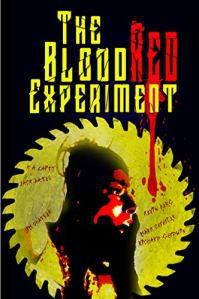
Book review – The Blood Red Experiment: A Neo-Giallo Anthology

Giallo fiction

About The Blood Red Experiment

Inspired by the genius of Hitchcock and his films, latin luminaries such as Argento and Bava directed macabre murder-mystery thrillers, that combined the suspense with scenes of outrageous violence, stylish cinematography, and groovy soundtracks. This genre became known in their native Italy as giallo.

Giallo is Italian for yellow, inspired by the lurid covers of thrillers, in the way that pulp fiction was derived from the cheap wood pulp paper of the crime stories, or Film Noir came from the chiaroscuro of the German Expressionistic lighting.

Craig Douglas and Jason Michel bring gialli-inspired stories together from some of the best crime writers on the scene today to a wider audience, giving birth to a new literary movement in crime writing, NeoGiallo, and drag this much maligned genre screaming and slashing its way into the 21st Century.

My thoughts on The Blood Red Experiment

The six stories contained in this anthology are exemplars of the sub-genre of giallo. The pages ooze sensuality, the writing is slick and the horror stylised and graphic. After a useful introduction to the terrain by Richard Godwin, the anthology opens with K. A. Laity’s ‘Madonna of the Wasps’, a gruesome tale of ritual killings in a Bohemian Parisian world, enacted to sate the hunger of a bloodthirsty dominatrix. Like all the authors in this anthology, Laity’s writing is poised and masterful. The author provides an interesting and diverse cast of characters and the protagonist, Mira, an artist with a fantastical imagination, is especially well-rounded. ‘Madonna of the Wasps’ is a fast-paced tale with some unexpected and shocking twists. Ultimately satisfying and provocative, this story is a terrific opening not just to the anthology, but to the sub-genre of neo-giallo.

For the uninitiated, Mark Cooper’s ‘Quaenum In Illis’ is the most accessible read in the anthology. Here, a former scholar of linguistics is invited by a mysterious woman to translate the pages of an ancient text. Cooper draws the reader straight into the intrigue in true thriller style, saving the blood for later. Moody, dark and fascinating, the mystery and tension unfold from shifting perspectives.

‘Canvas of Flesh’ by Jack Bates will bring out the voyeur in the best of us as artist Preston completes his art exhibition using a particular portion of the body of Jessica. Sensuality and horror blend beautifully in this tale, the reader enchanted and disturbed all at once, compelled to turn the pages. As the story unfolds the initial wonder soon shades into revulsion, as Bates confronts the reader with a portrait of obsession.

Urban, noir and mysterious, Jim Shaffer’s ‘Blood of the Lamb’ is a superb example of where giallo takes a crime-thriller. The story opens in a church then follows the observer to a shabby hotel, then back out on the streets, for the kill. The story switches to Frank, a feature writer quick with his camera. What unfolds will be read in one sitting, the eyes never leaving the page.

‘The Impermanence of Art’ by Kevin Berg is probably best not read while eating. Graphic horror is rendered sensual, the storytelling intense and unrelenting until the final twist as an art student is seduced by some illicit videos streamed on her phone by a maverick art instructor. Berg’s offering is at the extreme end of the sub-genre and not for the faint of heart, yet it is a gripping tale told with imagination and wit.

Bookending the anthology is Richard Godwin’s ‘Machine Factory’, an exposé of a deranged psychiatrist. In taut, rhythmic and urgent prose, Godwin thrusts his readers inside the mind of a serial killer. The extent of the protagonist’s insanity is boundless, his fanciful and quasi-intellectual rants alarming and all too real. The story is brutal, confronting and disturbing. There is no redemption here.

Find The Blood Red Experiment on Amazon

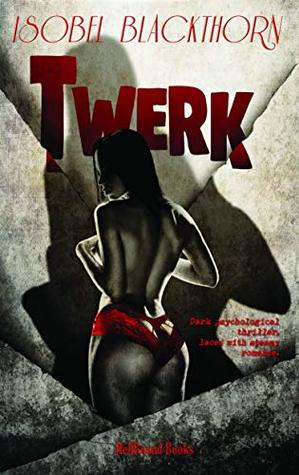
Twerk by Isobel Blackthorn @IBlackthorn @HellBoundBooks #BookReview #PsycholgicalSuspense #Dark #Twerk

This fabulous review of my dark and steamy psychological thriller, Twerk, came in while I was travelling. Finally able to share it. Made my day! 🙂

booksfromdusktilldawn's avatarBOOKS FROM DUSK TILL DAWN

42268431BOOK DESCRIPTION

“Dark, delicious, and fit to be devoured. Yummy.”
CJ Roberts

“This author is one to look out for. The writing – excellent. The story – raw, gritty, sexy and intense.”
Bonny Bennett

A regular Sunday night in a Las Vegas strip club is rocked when a local oddball dies mysteriously, during his private dance.
Amber falls immediately in lust with the hot paramedic who arrives, and follows him outside, anticipating sizzling romance. But, her casual encounter quickly descends into a terrifying, twisted nightmare from which she is
unable to escape.
Five days later, and it’s Lana’s next shift at the club; she’s a fly-in-fly-out stripper paying her way through law school – she’s also Amber’s best friend.
Where is Amber? And what about the dead client? Was it an accident? Suicide? Or murder?
Finding neither the police, nor the club are taking much interest, Lana conducts her own…

View original post 795 more words

Book review – Three Hours Past Midnight by Tony Knighton

Three Hours Past Midnight

About Three Hours Past Midnight

His last job a disaster, a professional thief teams with an old partner eager for one last score – a safe in the home of a wealthy Philadelphia politician. But they are not the only ones set on the cash.
His partner dead and the goods missing, he hunts for his money and the killer only to find out whether this may have been a job best left undone.


My thoughts

The title alone, ‘Three Hours Past Midnight’, a reference to Johnny “Guitar” Watson’s 1956 Blues classic, will flag the sort of book this is. The track could just as well be playing in the background throughout the whole story, a backbeat that echoes, even amplifies an ever-present gritty urban vibe.

The reader dives straight into the action as an unnamed professional thief accepts an impromptu job from an ex-cop, George, who has stage 4 cancer and wants to leave a little extra for his wife. When the theft of a safe from a high-profile politician goes belly up and George is shot, the narrator goes on the hunt for the culprit. Only, he soon discovers he is also being hunted. What unfolds throughout that night is an edge-of-seat ride filled with action, menace and intrigue.

Social realism in Three Hours Past Midnight is strong. Philadelphia’s underbelly of corruption and organized crime is laid bare, noir-style. The point of view is narrow, focussed, sharp and Knighton’s prose is confident, taut and economical. The author sucks the reader right into the narrator’s reality. An atmosphere of urgency and justice, or the lack thereof, pervades every page. There is a touch of Hemingway and Chandler in the writing. The plot and pacing are excellent and twists come bang on cue. Knighton crafts his supporting characters deftly, slotting in enough to give an impression, the reader’s loyalty always kept firmly in the narrator’s pocket.

In all, hard-boiled noir thrillers do not come any better than this.

Book review – Twerk by Isobel Blackthorn

I had to share this stunning *****5 Star review of Twerk. The reviewer has summed up the essence of this novel much better than I could.

Stripper club

“With “Twerk”, Isobel Blackthorn has written a suspense novel set in the milieu of strip dancers with a superior mélange of brazenness and subtlety that, in my eyes, would be unattainable for a male author writing about the same theme. I’ll be short about the suspense aspect of the novel: Mrs. Blackthorn knows how to captivate a reader with a tale that is getting eerier with every page. The lust-driven killer in Twerk is a deeply sinister character. Mrs. Blackthorn describes his sadistic nature in scenes that definitely will chill your bones. Near the end of her story, she unveils the reason why this man is so ruthless and scary, and then you realize that the seeds of enjoying the fear, humiliation, and pain of others lie in all of us. Isobel Blackthorn has the gift of weaving tension in a spiral through her novel: she lets it smolder for a while, and then suddenly jumps to hair-raising levels. Afterward, she cuts back a little, only to go full throttle again when you don’t expect it.

But the high-grade suspense in Twerk isn’t the most important ingredient that makes this novel special. It’s the candidness with which Mrs. Blackthorn writes about the way the sex workers of the bar “Hot Foxies” think and feel when they’re dancing seductively around their poles, or about their relationship with their own bodies, and the differences in using sexual power between men and women. In showing the small intrigues, backbiting, and slander behind the podium, where the dancers behave like an extended family, she proves her understanding of the dancer’s lives. I wondered how she had done such thorough research until I read Blackthorn’s daughter Vicky’s Foreword: Vicky is a dancer in a club, and her stories have inspired her mother to write this unusual thriller. I was intrigued by this openness and visited Mrs. Blackthorn’s website where I read under the title “Society, Strippers and Shame” a beautiful and heart-captivating text about how she handled the fact that her daughter chose to be an exotic dancer. I tip my hat for the courage and strength of both mother and daughter, and in my eyes, the authenticity that is tangible in Twerk, making the novel extraordinary, is a result of that courage.

But “Twerk” gives more than a detailed insight in a strip dancer’s life: for a male author like me, it was equally fascinating to read how Isobel Blackthorn dissects the distorted male sexuality in the killer’s character. Blackthorn knows that underneath the virility and macho veneer of the male, lurks manhood’s eternal proof pressure to squash insecurity. I like well-written books that present a reader with more than suspense alone: “Twerk” is definitely such a novel.” – Bob Van Laerhoven, Belgian novelist

Read more about Twerk here.

Read more reviews on Amazon

Book review: The Unknown by Phil Price

About The Unknown

It happens every year. A select few disappear, never to return.

From The Falkland Islands to the Himalayas, Puerto Rico to England – people are vanishing without trace or explanation. A young man who’s lost everything stumbles across an ancient secret.

Can he unlock the mystery? Will he find those who need him?

…can he escape the Unknown?

My Thoughts

I rarely read fantasy/horror, but when I stumbled on The Unknown I decided to try it out. I was surprisingly entertained and even didn’t mind the vampires, which is a real credit to Price as I would normally stop reading the moment they appear. Writing with exceptional imagination, Price has a knack for luring his readers into his story world.

There can be no doubt Price ticks all the boxes of the genre. Strange and spooky happenings in far flung lands. A preternatural child with glowing yellow eyes. Vampires. Doors into other worlds. A looming sense of dread. And a black cross edged with silver on a black rope chain. The scene is set for a seriously creepy read.

Good characterisation, and Price is at pains to endear his protagonists to his readers. Effective world building is critical in the genre and Price has crafted a realm that is at once enchanting and menacing and convincing. I certainly lost myself in it.

After an engaging set up, The Unknown is filled with dramatic tension, with new plot lines and twists and plenty going on to hold the attention. Very well thought out, The Unknown is a visual feast and a gripping read. I would recommend to all who enjoy dark fantasy.

Book Review: Death Sentences by Michael Zimecki

Introducing Death Sentences, a novel written in the form of a memoir and narrated by a guy on death row.

#Death Sentence

About Death Sentences

Peter “Pop” Popovich is a 24-year-old unemployed glazier, anti-Semite and white supremacist who is pushed over the edge by his chaotic mother, his unresponsive lover, an uncaring stepfather and a right-wing hate machine that tells him liberals want to take away his guns and his liberty.
While ‘POP’ waits to be executed for his crimes, he squibs sentences, whole paragraphs, a novel about life on Death Row in which he reprises the life that landed him there.
Death Sentences is loosely based on an incident in Pittsburgh, Pennsylvania in April 2009, when a lone gunman, convinced that the government was coming to take away his guns, had a four-hour standoff with police.
This explosive novel, reminiscent of the works of Ed Bunker and Charles Bukowski, is a hellish story from the American underclass, its disenfranchised characters long abandoned by government and society and prone to constant failure and excessive violence.

My Thoughts

I wasn’t sure what to expect when I opened Death Sentences. This could have been the sort of book I would pass by as not that entertaining or interesting. I am glad I stuck around and delved in, for this is quite a gem of a book for a number of reasons, not least it is well written and instantly engaging.

Meet the bizarrely likeable “Pop”, who is on death row for murder, as he outlines his life of incarceration in a penitentiary in Pennsylvania. There isn’t much to say. Living is limited, humiliation and deprivation are constants and it is little wonder that most inmates commit suicide before they ever get to meet their prescribed death.

What drives this story is Pop’s past and how he came to end up on death row. It is a past that applies to a lot of disenfranchised men in the US.

Pop grows up in Pittsburgh in poverty, surrounded by dysfunction. His mother is an alcoholic who lurches from one disastrous liaison after another. Pop is not stupid but he drops out of school feeling alienated and harbouring deep resentments. He  absorbs the racial hatred that surrounds him. He has a love affair with guns. After a spell in the marines his far-right paranoia is fed by conspiracy theories, expounded by the likes of Alex Jones. It is a potent mix that is not going to end well. Pop is just not capable of being anyone other than who is he, because there is no one in his life to show him another way.

The narrative is fast-paced, raw and punchy. Zimecki applies a cold, hard realism, drawing the reader into a world they would probably rather not have to think about and holds them there as the all-too familiar descent unfolds. By the end of it, the reader will be forgiven for wanting to put on trial the system that led Pop to commit his crimes.

Death Sentences takes the reader to places This Boy’s Life would not dare to go, but could have, if the protagonist/narrator had been more like Pop – especially when it came to bad luck – and made one or two different choices along the way. Zimecki has penned a necessary read; Death Sentences ought to be a set text in high school English.

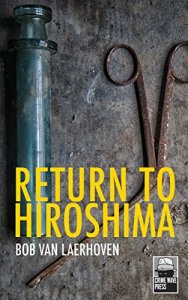
Book review: Return to Hiroshima by Bob Van Laerhoven

There is fiction that is entirely make believe. Then there is fiction that has its basis in fact and the historical record. Return to Hiroshima by Bob Van Laerhoven, in the tradition of political thrillers, is situated firmly in the latter group.

Return to Hiroshima

About Return to Hiroshima

Xavier Douterloigne, the son of a Belgian diplomat, returns to Hiroshima, where he spent his youth, to come to terms with the death of his sister.
Inspector Takeda finds a deformed baby lying dead at the foot of the Peace Monument, a reminder of Hiroshima’s war history.
A Yakuza-lord, rumored to be the incarnation of the Japanese demon Rokurobei, mercilessly defends his criminal empire against his daughter Mitsuko, whom he considers insane.
And the punk author Reizo, obsessed by the ultra-nationalistic ideals of his literary idol Mishima, recoils at nothing to write the novel that will “overturn Japan’s foundations”….
Hiroshima’s indelible war-past simmers in the background of this ultra-noir novel.
Clandestine experiments conducted by Japanese Secret Service Unit 731 during WWII are unveiled and leave a sinister stain on the reputation of the imperial family and Japanese society.

My thoughts

I have a healthy appetite for noir fiction and found Return to Hiroshima a sumptuous and wonderfully grotesque feast. Centred in Hiroshima and written for a Western audience, Van Laerhoven paints a vivid and dark portrait of Japan, its culture and society, and an equally vivid and dark portrait, both immediate and fifty years on, of the aftermath of Little Boy – the atomic bomb that fell on Hiroshima on August 6th, 1945.

Through the eyes of a diverse cast of characters, the reader enters a deep-state reality, shadowy, deceptive, peppered with lies and brutality. The author slowly reveals in short sharp chapters, the twisted and corrupt interplays at work behind the scenes as Japan endures a cataclysmic economic crisis. The novel is set partly amid the abandoned high rises built atop the coal mines of Hashima Island near Nagasaki, where Mitsuko wrestles with the reality she is forced to endure, dominated by her monstrous father and mafia-boss, so-called Rokurobei. She escapes to Hiroshima and forms a friendship with Yori, whose drug-crazed and maniacal boyfriend, Reizo, is at work on his novel in a squat in a disused warehouse.

Soon, the reader meets German photographer Beate Becht, Belgian graduate Xavier Douterloigne and maverick police inspector, Takeda. Each shines a spotlight on Hiroshima, and each is of course instrumental to the plot. What unfolds is on one level a straight ahead race to save Mitsuko from danger and reveal hidden truths. On a deeper level, Return to Hiroshima challenges authorised versions of events and their causes and perpetrators, those versions reported by the press.

Superbly written in an easy, fluid style with characters that are complex and believable, Return to Hiroshima contains a taut and artfully constructed plot. The reader is kept on edge. At any moment the tension will release. Eventually it does, dramatically yet incrementally, intertwined with revelation upon revelation, carrying the reader through to the last page.

While there are a few confronting scenes in this novel, with various victims meeting their awful ends, the ultimate victim in Return to Hiroshima is truth, at once laid bare by the narrator and distorted by the characters. Driving the plot are themes of memory and remembering, childhood trauma and unhealed wounds. Gruesome mutations caused by the atomic bomb are set alongside those caused by secret medical experiments. In all, Return to Hiroshima is an elaborate and insightful depiction of obsession.

Younger readers may not recall the sarin attack in a Tokyo subway that took place in March 1995, and the religious cult, Aum Shinrikyo who claimed responsibility. They may not know of Unit 731 and the atrocities the Japanese meted out in WWII on their prisoners of war, atrocities ignored by the West as we focus all our attention on the Nazis. Cruelty is a global phenomenon, then as now. In addressing this, Return to Hiroshima and its author deserve to be acclaimed.  An intelligent and compelling read.


Find a copy of Return to Hiroshima on Amazon

Book review: The Ka by Mary Deal

 The Ka by Mary Deal  

About The Ka

California archaeology student Chione has vivid dreams about the discovery of an opulent tomb. After the founder of the Institute of Archaeology learns that Chione’s dreams might be connected to events in Egypt, he accepts an offer to examine a mysterious site in Valley of the Queens.

After they discover an ancient burial site, spells encoded into the hieroglyphs on the tomb’s walls transport Chione and her former boyfriend, archaeologist Aaron Ashby, 3,500 years into the past: to ancient Egypt. There, they learn of Tutankhamon and Tauret, a priestess in Pharaoh’s Court.

Meanwhile, the other team members are affected in unfathomable ways by the Ka: the spirit of the entombed.

Chione and Aaron learn that Tauret plans to provide Tutankhamon with a living heir… and that they have been chosen to play a crucial part in completing their destiny.

My thoughts on The Ka

From the opening scenes in which a group of hot-tempered academics prepare to uncover a forgotten Egyptian tomb, The Ka draws its readers into a mystery centred in the ancient history of the pharaohs, one that pivots on mysticism and the paranormal. This is undoubtedly a potent mix.

Distinct and believable characters fumble and tumble their way through discovery and danger. The author clearly knows her subject, and provides a vivid and detailed portrait of the tombs and pyramids of ancient Egypt, along with the stories, the tragedies and cruelties, and the betrayals that went on. The historical exposition is cleverly woven into the narrative in the conversations among the party and in the mind of the protagonist, Chione.

The story maintains a good clip and is well-plotted with plenty of twists and surprises. The plot is driven by Chione, who endures many dreams and visions, at times clear, at others murky. Through Chione, Deal blends the present with the ancient, all the while imbuing the narrative with a looming sense of dread. Danger, is everywhere, as pervasive as the sweet odour that so enchants Chione.

Questions prevail, not least what is it between ex-lovers Chione and Aaron and will they re-unite? As the story unfolds the past and present collide in a dramatic way. Suddenly, ancient Egypt is a lived reality, not something dead and buried, but alive and influential, having lured Chione and Aaron back in time and trapping them there. What unfolds makes for a highly engaging read.

Original, refreshing and captivating from first to last, The Ka will appeal to historical fiction fans with a fascination for the supernatural.


Domingo Díaz Barrios

Sitio web de mis obras

Soul to Spirit: The New Spiritual Psychology

Becoming Human, Becoming Soul, Becoming Spirit

The Dark Side from the Inside

Writing and Reviews from Dark Places

Bookinton

Book Blogging , Short Stories , Reviews , literary web-series and EVERYTHING FICTION !

Mitch Horowitz

Author • Lecturer • Narrator

ARMAND ROSAMILIA

Author of Thriller, Horror, Nonfiction stories and more

BOOKS FROM DUSK TILL DAWN

Each night I TRAVEL THE WORLD, I LIVE IN THE MIND OF KILLERS AND WALK AT THE SIDE OF HEROES

Passport Overused

Showing the beauty of this world through the people, places and culture

BooknVolume

For the Love of Words, Art, Nature, and Spirituality

THE BLOGGING STATION

LIFESTYLE, BEAUTY AND EVERYTHING IN BETWEEN

Frankly Wright

I give you my opinion whether you ask for it or not.

a good book, a good life

comments on books by Ann Creber

Carmel Bendon

Writing tales of then and now and the in-between