Book review: Darkest Sunlight by Xtina Marie

What a novelty it is for me to review Darkest Sunlight, a poetic narrative by Xtina Marie.

“The heart was made to be broken.” – Oscar Wilde
To allow your heart to soar, you must risk the depths. Darkest Sunlight is the third poetic narrative from Xtina Marie. In this journey, readers will begin in the darkest of places yet revealed to us by this critically acclaimed poet, only to then find themselves thrust into the brightness of love before their eyes and minds can fully adjust. It is this shocking contrast which best conveys what it is to love, lose, and love again.
In Dark Musings, Xtina explored sadness. In Light Musings, she explored the intricacies of a loving heart. In Darkest Sunlight, Xtina Marie compares the opposite ends of the spectrum, and in doing so, she found a place darker than black.

My thoughts on Darkest Sunlight

Darkest Sunlight is a collection of poems exploring inner torment, lust, obsession, malice, revenge, rage and insanity, as well as heartfelt and erotic love. Marie delves into the underworld of dark intentions and their fulfilment, but also into the nature of love, of longing, of satisfaction and completion. Throughout are touches of dry humor and clever twists, as the reader is taken on an inner journey that is sure to evoke memories and reflections.

Among my favorites are ‘Junkie’ and ‘His Muse’, both demonstrating Marie’s incisive wit. In Darkest Sunlight Marie displays her profound understanding of what it is to be fully human, with all of our depravities and secret desires laid bare.

The entire collection employs the simple form of the classic nursery rhyme with its pairs of rhyming couplets. The meter varies, Marie employing various combinations of dimeter and trimeter lines, but always with that rhyme that harkens back to childhood. Using this poetic form to convey very adult themes is an ironic move, one that draws the reader into the verse almost like an enchantment. Further, Marie’s compositional style displays considerable prowess, for who can compose an entire book-length collection of prose and sustain such a rhyme with finesse? Poetic form constrains; the poet must function within it and create meaning whilst maintaining fluidity and flow; all this, Marie achieves with aplomb. Darkest Sunlight is a triumph and one that will appeal to lovers of this form of poetry.


If this poetic narrative had to be summed up in one word it is ‘passion’.


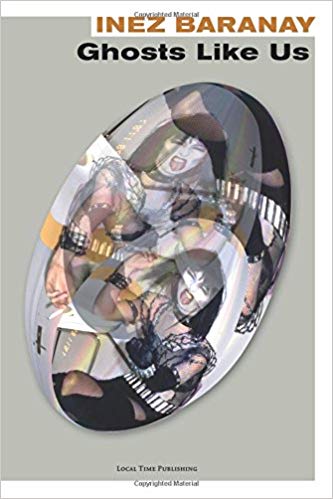
Book Review: Ghosts Like Us by Inez Baranay

I’m delighted to share my review of Ghosts Like Us by Inez Baranay (originally published by The Newtown Review of Books, June 2016)


‘the air of the present moment here’ This puzzling opening line embodies the essence of a fine literary work: a little obscure for some, fresh air for others. Ghosts Like Us requires a literary reader, one with sensibilities for art, for feminism, for poetry, for magic realism; a reader who might enjoy Susan Sontag’s The Benefactor more than Philip Roth’s Indignation.

In Ghosts Like Us, Baranay deftly enters into the haphazard and self-justifying reasoning processes of her young protagonists. We meet 1980s post-punk singer Trudi, an East Berliner performing her final gig; sensitive visionary poet, Erika, reciting a poem dedicated to the woman she loved in a Berlin Salon in the late 19th century; and Australian performer Lottie, searching for ways to express her artistic impulses in Berlin. The three women, each in her 20s, are bound by a vow.

For Erika did not recite more than a few lines of her poem, and neither did Trudi, both women having fallen foul of different murderous Gustavs, the murderous Gustav – he might as well have the same name because he is in essence always the same – a man ‘whose fakery comes so easily to him it is his authenticity’. Through the Gustavs, Baranay explores the way history, his story, is made up of a dominant narrative, one that eclipses other, less prominent narratives — those uttered by softer voices, even or especially when those narratives are true. This past is also made in the present, out of all manner of falsities. Yet, ‘a true history would be as large as the world, take more time than all of time to tell’.

In part, Ghosts Like Us is a satisfying exploration of the nature of history and remembering. It is an introspective work, one that pulls the reader into the distinctly astute and observant voice of the narrator, who articulates the uncertain musings of each protagonist; like pebbles turned over and over in the palm, their every bump and crevice is considered.

Two of the women are ghosts. Trudi’s life is framed by the Berlin Wall, which went up the day of her birth and came down the day of her death. One wall came down, but not the other walls, especially that of sexism. Trudi, of the successful underground band the Trudi Zahn Trio, is on stage one moment, flat on the floor with her neck broken the next.

Erika looks on. Erika, who had lost her life a century ago. Erika watches from an upstairs window as the free thinkers of the day filed into her patron Frau Stern’s renowned salon. Erika, enamoured with the Traveller, Sibel Hanım, a radical thinker who would go on to influence generations. Erika, who all but went up in flames.

The two women meet in death and their preoccupations focus on another woman: Lottie.

Lottie’s concerns, anxieties and passions are for her performance art and the piece she unexpectedly and spontaneously volunteers to perform at a cabaret night to commemorate the 20th anniversary of the fall of the Berlin Wall: ‘You have to do something, say something that demands to be said before you even know what it is.’

And she decides, with a sweeping palm landing flat on a pile of papers, to perform one of Trudi’s songs. Once the decision is made, the narrative explores the way Lottie absorbs and is absorbed by her art:

Can an actor be apart from their part? Does not acting, performing, make the self another self?

Does it?

Through Lottie, it is apparent that Ghosts Like Us is written by an author well travelled, and keen in her observations of Australia; how this nation is perceived and perceives itself – as a multicultural mosaic:

They chose, the country chose, a mosaic, Lottie came to learn, so that it would not have a melting pot. Anglos don’t want to melt.

The story is filled with such observations on culture, art, creativity, history and a curious realm of ghosts.

The present-tense narrative, with its propensity for intimacy and immediacy, makes the space between narrator and reader whisker-thin, smaller still when the reader is addressed directly, with a question striking at the gender bias of language itself: ‘Why is there no feminine form of the word avuncular in English?’

The prose is not only poetic but often ambiguous and subversive, with echoes of Jill Johnston or Jenny Brookes, the forgoing of strictures of punctuation allowing multiple impressions that draw forth a feminine as much as a feminist response in the reader. There are elements of punk pastiche, of disjointed prose commensurate with disjointed realities. The writing is atmospheric, stream-of-consciousness in places, the flowing sentences mirroring the hesitancy and fluidity of youthful thought, and the flow between this world and other ghostly worlds.

Thankfully, Baranay’s magic realism is not dressed with paranormal fancies.  There is nothing mystical or otherworldly about Erika and Trudi. Rather, the ghosts are a device, one that allows a fresh approach to a narration that, for all its fluidity, remains controlled and in control throughout — evidence of an assured author.

Ghosts Like Us is a sharply intellectual work, poised, and as avant-garde in its construction as the worlds it depicts. The avant-garde is there for what it attempts to shatter breaks and, ironically, even when the Herr Gustavs of the world seek to destroy the creative soul through jealousy and hatred, Baranay shows that the creative soul will persist, if only as a ghost like us.


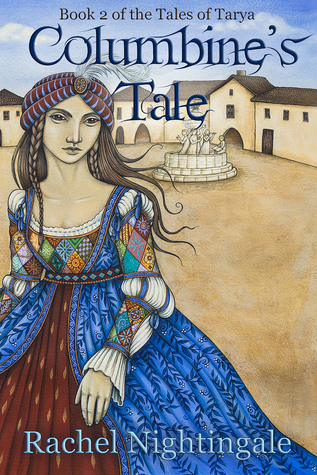
Book Review: Columbine’s Tale by Rachel Nightingale

Having read and thoroughly enjoyed Harlequin’s Riddle, the first in the Tales of Tayra series by debut author, Rachel Nightingale, it was with much anticipation that I opened the second, Columbine’s Tale.

“For three hundred years the travelling actors of Litonya roamed the land entertaining crowds, but secretly leaving devastation in their wake. Is Mina the only person with the power to stop them?

In the ethereal otherworld of Tarya, Mina begins to master the rare, inexplicable powers  attached to her gift for storytelling. She discovers she can touch dreams, influence the real world, and perhaps find out who is manipulating Tarya for dark purposes. In the waking world Mina is on the run, beset by divided loyalties between the travellers, and caught between two men she could love and a brother who desperately needs her help.”

My thoughts:

As with all series, the reader should have read the first Harlequin’s Riddle. In Columbine’s Tale a short prologue provides a concise and engaging summary for the purposes of catch up, with many useful reminders of the story so far. Columbine’s Tale opens with Mina on the run, determined to find her brother, Paolo, and this time, she believes she knows where he is. She’s being pursued, too. Thinking she knows who by, she’s in terror for her life as she tries to escape the clutches of the Gazini players who are determined to keep her. Then Mina encounters Sofia, a master story teller, and together with their team, the two travel the countryside and, through the power of telling stories, hand back dreams stolen by the players. Mina is determined as ever to undo the wrongs of others, and her quest leads her into increasing danger. Mina’s quest is thwarted by menace and betrayals and as the story unfolds, petal by petal, old betrayals are healed and new secrets revealed.

Through Mina and Sofia’s eyes, Nightingale portrays story telling as a gift, one that gives something to the listener, which she juxtaposes with the approach of the players who steal peoples’ dreams and hand them back to audiences as entertainment. But that is only the tip of this complex, intriguing and beautifully told novel.

Columbine’s Tale is told from multiple points of view and the main plot lines are carefully interwoven. The use of jump cuts works well as does the building of suspense, culminating in a dramatic edge-of-seat flourish and a denouement that leaves the reader wanting the third and last in the series.

Nightingale’s characterisation is impeccable, and with the fewest words she conjures a convincing three-dimensional cast. Descriptions are detailed and evocative, providing the reader with a powerful sense of place. Nightingale makes not only her imaginary Italy alive in the mind of the reader, but also her etheric realm, Tarya, in all of its layers and complexity. The prose is gentle, soft and acts on the psyche like balm. Tales of Tarya is a series to sink into and savour.

Nightingale plays with the fourth wall as Mina learns to tell stories from master story teller, Sofia, and here the reader is introduced to the craft of story telling and finding the heart of a tale from a special and mythic perspective. The metafictional element works and invites the reader to consider the true value of the narrative form.

Ultimately, Columbine’s Tale is about creativity and healing, of good versus evil, of the use and misuse of magical powers – the power to create and to destroy – and the all-important moral message underpinning the series, that creativity should be life-giving, not life-taking. In all a delightful and insightful read.

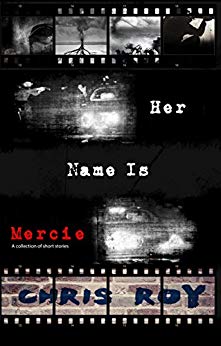
Book review: Her Name is Mercie by Chris Roy

The joy of writing book reviews is stumbling on good stories, well told. When the stories take your breath away, all the better! Here is my review of one Her Name is Mercie, a collection of short stories by Chris Roy.

“Mercie Hillbrook lives a simple, quiet life working as a gas station attendant. Then her parents are killed. Her home is taken. The people responsible are excused for just doing their job. When an attempt to get justice her way lands her in trouble with the law, Mercie realizes she still has something to lose: her own life.

Then she finds reason to believe her parents were murdered… and she doesn’t care anymore.”

My thoughts:

As the cover suggests, Her Name is Mercie is a dark and thrilling ride, the lead story, almost novella length, an edge of seat experience that demands to be read in one sitting. Roy does not let his readers stray from his pages. He has you right there with the action, living it, feeling it. Mercie and her sidekick are likeable characters, and through their eyes, from the initial story set up to the dramatic ending, Roy explores the theme of injustice. Hard and racy and thoroughly entertaining, ‘Her Name is Mercie’ contains a perfect story arc. The writing is vivid and controlled, Roy demonstrating poise and restraint even as he delivers the gruesome details.

All the elements of a good short story are present throughout the collection; with writing that is taut and punchy, sparse and edgy, and with plenty of twists and turns and unexpected and satisfying endings. There are moments of visceral horror yet the horror element is never overplayed. A good craftsman, Roy sets his scenes with acute observations and a minimum of detail and a healthy measure of wit.

The second story, ‘Re-Pete’ is a gem. Told from the perspective of a young child with OCD, the result of a ghastly and recent trauma, the tale is funny and absurd, and packs a delightfully wicked punch, if ‘delightful’ can be used in the context. Roy enters the mind of young Pete with sensitivity and compassion. Pete, like the other protagonists in the collection, deserves better than the life he has been given.

Themes of justice and corruption and revenge against wrongdoers dominate the collection. In Her Name is Mercie, Roy’s protagonists, the victims of bad deeds, step into their own power.

Roy clearly has a gift, invoking in his readers immediate and deep engagement. With this collection he has thrown down the gauntlet, meeting the challenge of originality and displaying prowess across multiple styles – spooky, sinister, surreal, brutal and ironic – each story is distinct. I look forward to reading more from this author.

Book review: The Torcian Chronicles: Defiance by P.J. Reed

I very rarely dip into dark fantasy, so it was a treat to read P. J. Reed’s debut.

“Mesham sits dejectedly in a tiny garret above an inn, as the lands of Torcia fall to the magically-enhanced army of the infamous Mivirian Horde. One of the last surviving ancient warlocks of Torcia, Mesham knows he is marked for death.

The Torcian king knocks on Mesham’s door later that evening and offers him the chance of rejuvenation in return for a seemingly impossible mission into the heart of Mivir. Mesham reluctantly agrees, only to realise the evil of Mivir has spread to the very top of the Torcian government.

As Mesham undertakes his quest to complete the mission, he finds himself hunted by his king, by the mighty Torcian warbands, and by the Horde.

But he cannot fail, for the fate of Mesham’s beloved Torcia rests in his hands.”


My thoughts:

The novel opens with a battle scene, more a massacre, providing the reader with a good sense of what is to come as a party of Mirivian Outriders descend on Sicam and his men. Realising the danger of complete annihilation, the Torcian king rejuvenates a decrepit warlock and sends him on a mission to save the kingdom. Mesham gathers around him a motley crew who are forced to defend themselves against all manner of monsters. Nowhere is safe. Even the trees are alive and menacing.

Reed writes well, building her world with the minimum of fuss, drawing in her readers with all the elements of a good dark fantasy novel, not least evocative descriptions of decaying cities and carnage, the horror unrelenting. Reed has created characters that are convincing and vividly portrayed, with enough betrayal, treachery and intrigue to hold the attention, and oodles of action and adventure right to the very end. Reed takes her readers on a frenzied ride through a kind of hell, terrifying, disturbing and jaw-dropping by turns. The magic in the story works well. Imaginative and gripping, with strong writing overall, I would recommend this book to appreciators of the dark fantasy genre. I enjoyed finding the spell list at the end.


Book review: The Erotic Odyssey of Colton Forshay by James H Longmore

What a naughty and absurdly dark novel this is!

“Colton Forshay dreams himself into a bizarre sexual dystopia, a world in which nothing is as it should be. Sickening sex acts and sexual violence are the norm and in which the currency is deviant sexual acts. At first disturbed, then intrigued – and aroused – by his dreams of this other world, Colton is drawn deeper in and begins to spend more and more time there; so much so that his wife forces him to visit a psychiatrist. The psychiatrist encourages him to explore the dream world – and our hero goes on an odyssey with his dog/son, Eric, to discover the disturbing truth behind his dream world.”

My thoughts:

What could be more normal than a weekend party at a neighbor’s house? James H Longmore’s The Erotic Odyssey of Colton Forshay is anything but. The story opens at a neighborhood barbecue, where a guest is sacrificed in an unimaginably gruesome fashion amidst wanton depravity. Everyone is there, from housewives lounging in the altogether to a teacher from a local high school and a reverend. Colton, mourning the loss of his wife, Alicia, and somewhat disturbed at having fathered a child-dog, Eric, goes along and participates in the orgy.

When Colton wakes from a wet dream beside his real-world wife, Zeenah, she insists he see her psychiatrist to deal with his sex addiction. He agrees, but the therapy is to no avail. Every time he sleeps he returns to the same dreamscape, peppered with characters taken from his waking life. The two realities bleed into each other as Colton’s dreaming takes over his waking reality in what amounts to a bizarre possession.

Things slide downhill in his dreamworld as Colton is coerced into attending an orgy at the Presidential palace, to participate in a version of Devil’s Roulette. The narrative reaches a steamy and grotesque climax as Colton attempts to escape with his life.

The Erotic Odyssey of Colton Forshay follows a traditional story arc, cleverly constructed, the intertwining of the two realities well-executed. Every sort of debauchery is interwoven into the action, the natural realism of the prose underscoring an incisive critique of middle-class suburbia, its shadowy desires laid bare, along with a fascinating insight into the nature of consciousness. Fast-paced, hilarious and unrelenting, with a satisfying twist at the end, Longmore has penned a thoroughly entertaining and intelligent work of bizarro fiction. I recommend this book to lovers of horror and dark erotica, and to those interested in discovering the best the bizarro genre has to offer.

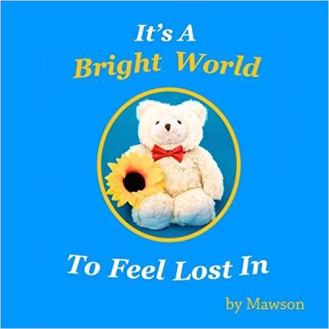
Book review: It’s a Bright World to Feel Lost in by Mawson

I could not resist reviewing this charming picture book for adults by the irresistibly cute Mawson bear!

“Are you feeling a little lost? Got that ‘left in the spare room’ emptiness about you? Mawson does too.
He sits atop his cushion and ponders about baffling things.
The world is a baffling place for a curious teddy bear to live in. Friends approach him about their own dilemmas. They seek instant answers that will make everything all right. Mawson does his best. But after he ponders deeply, most things remain for him just as baffling as they were before.
Take a moment out of your day to pawse with him and explore the world. For the many frazzled readers who feel, secretly, much the same, he offers the comfort that the world is a bright place to be.”

My thoughts:

Mawson has penned a simple and moving tale of love and devotion, of belonging and losing the one you were born to protect. Brief text explains charming and evocative photographs of Mawson and his friends. Mawson is the most ponderous and baffled of bears. He tries to make sense of the world around him, but is challenged at every turn. Each page contains a message to dwell on and there is a satisfying twist at the end.

The shift in perspective as a loveable teddy bear reflects on how he needs to be loved stimulates a different way of viewing the world, encouraging us to put ourselves in the bear’s shoes. When we do, we are suddenly faced with our own selfishness and lack of empathy. Sure, Mawson is just a bear, a fluffy toy, and not a real animate being, or is he? Isn’t he a metaphor for all those living creatures we neglect? And what about those times when we feel neglected? Where do we turn?

It’s a Bright World is a meditation on the nature of love, missing, grieving, solace and healing. The story contains a powerful message: those who provide comfort are too often taken for granted.

It is possible to read this little book in about ten minutes, but then, you might find yourself dipping back in, again and again, leaving your copy on the coffee table to return to at whim. It’s a Bright World is that sort of book.


Book Review: The Keeper of the Way by Patricia Leslie

I’m delighted to share my latest review. I’m a fan of this author after reading a previous work, A Single Light, which inducted me into Urban Fantasy. Her latest, Keeper of the Way (Crossing the Line Book 1), is historical urban fantasy.


“After news of grave robbing and murder in Dún Ringall, the ancient stronghold of Clan McKinnon on the Isle of Skye, Rosalie realises it is time to share her family’s secrets. Descendants of the mystical Ethne M’Kynnon, Rosalie tells of a violent rift that occurred centuries earlier, splitting Ethne from her sisters forever and causing relentless anguish and enmity between ancient families.
Meanwhile, Algernon and Clement Benedict have arrived in Sydney searching for the lost relics of their family. They are driven by revenge and a thirst for power, and will take what they can to reinstate their family heritage. Their meddling with ancient magic will have far-reaching effects, as they fail to realise ther role in a far greater quest.
In the grounds of Sydney’s magnificent Garden Palace, danger grows as an ages-old feud of queens and goddesses heats up. The discovery of arcane symbols bring the distant past in a foreign land to Australia and will cause a profound struggle with tragic results, a surprising new recruit from an unknown world, and the complete destruction of the palace.
Set around stories and characters in 1882 Sydney, Keeper of the Way includes current affairs, people and buildings long gone, and gives a voice to people history doesn’t always listen to.”

My thoughts:

From the opening scenes, Leslie takes the reader back to the ancient customs of the Scottish highlands while making full use of Scotland’s tempestuous weather as Lord Algernon Benedict sets off for the Isle of Skye to find out what happened to his great-grandfather who disappeared after reaching the shores of Loch Slapin. Three decades later, in Sydney in 1879, Rosalie Ponsonby wanders through The Garden Palace in the Botanical Gardens on the eve of an international exhibition. There she pauses to observe the statue of Queen Victoria. She’s the proprietor of The Garden Arms and she’s a witch.

Much of the action plays out in the The Garden Arms. Here, Leslie creates a homey feel, female and strong. The story unfolds from multiple viewpoints, the reader sharing in the perspectives of Algernon, his son Clement, Rosalie and her daughter, Florentine. All the characters, major and minor, are well-crafted and convincing. The pace is slow but never falters. Sydney in the late 1800s is brought to life with evocative and sharply crafted descriptions. The writing style suits the era yet avoids flowery writing or laboured sentences.

“The Botanical Gardens were a forest of trees and shrubbery, drawn from England and forced into a lifetime of servitude on the other side of the world where winter was as summer in their homeland.”

Through such prose Leslie provides a portrait of the emergence of Australian society in Sydney, a bustling southern city delightfully tinged with decadence, receiving waves of migrants as its indigenous population is thrust aside. Leslie handles this transition with sensitivity and insight.

Descriptions of fantastical transfigurations are portrayed with equal finesse. The reader is lured into magical realism, the transfixed observer. Grimoires, incantations, invocations, sigils and demonic spirits infuse the historical narrative, as the ancient ways of witchcraft – healing and life-giving – are pitted against a male counterpart that is dark and destructive.

In all, Keeper of the Way is a pleasurable read from start to finish. I recommend it to lovers of historical fiction, magic realism and urban fantasy alike.

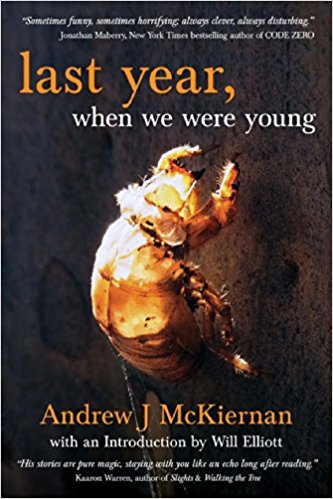
Book Review: Last Year, When We Were Young by Andrew J McKiernan

Here’s my review of yet another terrific collection of horror shorts, this time from award-winning Australian horror writer, Andrew J. McKiernan.

“WINNER: 2014 AHWA Australian Shadows Award, Collected Work

‘Last Year, When We Were Young’ brings together 16 tales that defy conventions of genre and style, every one with an edge sharper than a razor and darker than a night on Neptune.

From the darkly hilarious “All the Clowns in Clowntown” to the heart-breaking and disturbing title story, this debut collection from multi-award nominated author and illustrator Andrew J McKiernan pulls no punches.

“A troubling collection of weird and twisted tales. Sometimes funny, sometimes horrifying; always clever, always disturbing. Highly entertaining!” – Jonathan Maberry, New York Times bestselling author of CODE ZERO

“McKiernan’s stories are hauntingly dark, evocatively written and viscerally compelling. With little regard for genre boundaries, McKiernan creates utterly convincing characters who will take you on a journey through fully realised worlds, and every journey is more than worth it.” – Alan Baxter, author of Bound and Realmshift

“These clever, compelling stories explore the dark edges of human existence. Utilising deceptive, often colloquial prose and an array of startling imagery, McKiernan has staked his own claim in a dark corner of imaginative fiction. Start reading him now; this guy will go far.” – Gary McMahon, author of The Concrete Grove

“McKiernan is a magician. He performs magic tricks in every story, spinning us around, making us believe one thing before showing us we were wrong all along. His stories are pure magic, staying with you like an echo long after reading.” – Kaaron Warren, author of Slights & Walking the Tree.”

My thoughts:

Last Year, When We Were Young contains some of the finest horror writing I have come across. Edgy, intelligent in conception, and delivered with poise in an easy and engaging literary style, McKiernan has penned a compelling collection of shorts brimming with darkness and menace.

My favourite is ‘Daivadana’, a story of  Mark Reynolds, a son sent to Tajikistan to do his father’s bidding and discover what is going on inside a new high rise development in a city rebuilding after war. He meets Jahandar and his son, Kurshed and through each, learns of the ancient religion of Zoroastrianism, its power and particularly its propensity for summoning evil. Here is one of those perfectly balanced stories, containing all the elements of a well-written thriller with all the elements of well-written horror, at once elegant, stylish, intriguing and fast-paced. McKiernan displays a deep knowledge of his subject and makes use of that knowledge to full effect, peppering his story with insights:

‘He realised, what really matters is not what colours the players wear, but who gets to hand out the costumes in the first place.”

Throughout this collection, the reader will encounter the weird, the unusual, the grotesque, the disturbing and the tragic. McKiernan never slips into horror for horror’s sake. Instead he exercises restraint. Each story is unique and strong, the reader taken to a variety of settings, the collection diverse and rich and haunting. Highly recommended.


Book Review: Crow Shine by Alan Baxter

I’m delighted to share my review of this short story collection by Australian horror author, Alan Baxter.

“The dark fantasy collection features 19 stories, including the Australian Shadows Award-winning “Shadows of the Lonely Dead”; and original title story “Crow Shine” in addition to two other never before published stories.

“Alan Baxter is an accomplished storyteller who ably evokes magic and menace. Whether it’s stories of ghost-liquor and soul-draining blues, night club magicians, sinister western pastoral landscapes, or a suburban suicide–Crow Shine has a mean bite.”—Laird Barron, author of Swift to Chase.

“Crow Shine, by Alan Baxter, is a sweeping collection of horror and dark fantasy stories, packed with misfits and devils, repentant fathers and clockwork miracles. Throughout it all, Baxter keeps his focus on the universal problems of the human experience: the search for understanding, for justice, and for love. It’s an outstanding book.”—Nathan Ballingrud, author of North American Lake Monsters.

“Alan Baxter’s fiction is dark, disturbing, hard-hitting and heart-breakingly honest. He reflects on worlds known and unknown with compassion, and demonstrates an almost second-sight into human behaviour.”—Kaaron Warren, Shirley Jackson Award-winner and author of The Grief Hole.

“Buy your tickets, step up, and enter the world of Alan Baxter’s debut collection, Crow Shine. Here fates are brutal, justice is swift and merciless, yet even the most ruthless characters are sometimes – just sometimes – strangely touching. Crow Shine will terrify, surprise, and stun you.”—Angela Slatter, World Fantasy and British Fantasy Award winning author.”

My thoughts:

Alan Baxter has penned a collection of gritty, sharply written tales filled with dread. The horror seeps from every paragraph, often simmering just behind the scenes. Baxter creates a strong sense of place and atmosphere, drawing on both urban and rural settings in the USA and Australia. There are the satisfying twists readers of horror shorts expect. There’s the unwavering prose and moments of poetry indicative of quality horror writing.

The title story, ‘Crow Shine’ is an ironic tale whose antagonist, the crow, ever the watcher, will have its way. There’s an allusion to Mephistopheles selling his soul to the devil through the demon drink, when protagonist Clyde uses his grandfather’s recipe to make moonshine and thence is able to play the Blues.

‘Crow Shine’ sets the tone for the rest of the collection, Baxter in full control of his characters as they tumble into darkness, decadence and the pits of hell.  In ‘The Darkest Shades of Grey’ David is possessed by demons after meddling with ouija, and drifts further and further into inner conflict and torment. Here, Baxter is concerned with the possible consequences of using the occult for entertainment, a warning to us all.

I would recommend this collection to all who enjoy good horror shorts and especially to those wanting to discover the best in Australian horror today.


Domingo Díaz Barrios

Sitio web de mis obras

Soul to Spirit: The New Spiritual Psychology

Becoming Human, Becoming Soul, Becoming Spirit

The Dark Side from the Inside

Writing and Reviews from Dark Places

Bookinton

Book Blogging , Short Stories , Reviews , literary web-series and EVERYTHING FICTION !

Mitch Horowitz

Author • Lecturer • Narrator

ARMAND ROSAMILIA

Author of Thriller, Horror, Nonfiction stories and more

BOOKS FROM DUSK TILL DAWN

Each night I TRAVEL THE WORLD, I LIVE IN THE MIND OF KILLERS AND WALK AT THE SIDE OF HEROES

Passport Overused

Showing the beauty of this world through the people, places and culture

BooknVolume

For the Love of Words, Art, Nature, and Spirituality

THE BLOGGING STATION

LIFESTYLE, BEAUTY AND EVERYTHING IN BETWEEN

Frankly Wright

I give you my opinion whether you ask for it or not.

a good book, a good life

comments on books by Ann Creber

Carmel Bendon

Writing tales of then and now and the in-between