Book review: Wanderers No More by Michelle Saftich

Having read and thoroughly enjoyed Port of No Return by Michelle Saftich, I am delighted to share my review of its sequel, Wanderers No More.

“The war may be over, but the fight to belong is just beginning.

Left homeless, starving, and almost killed by the Second World War, the Saforo family are refugees fleeing Italy for a better life. The shores of Australia are calling to them and they head off, packing dreams of jobs, a home and … soccer.

But from the moment they get off the boat, adapting to the Australian way of life is harder than

it seems. Their family doesn’t speak right, eat right or even look right. As they struggle to build a simple life against the backdrop of 1950s racism, they start to wonder if they will be outsiders forever.

A true family affair, Wanderers No More will make you laugh, remind you of your family, and warm your heart.”

My thoughts:

Stories of migrant refugees form an important part of the fabric of Australian, and indeed global society, as many many millions of us have been or are refugees, refugees of war, oppression, famine or environmental catastrophe. Port of No Return describes how a small group of families from northern Italy become refugees in World War II, and in Wanderers No More, Saftich portrays the everyday life for these families from the moment they set foot in Australia. The novels fall into the genre of family history memoir, as they are based on true events and real people.

Wanderers No More is an endearing coming of age story sure to put a smile on every reader’s face. Told mostly through the eyes of young Martino Saforo, who arrives with his family in Newcastle after spending four years in various refugee camps in Europe, the novel engages from the first page. The early part of the novel describes the harsh life for European migrants sent to government-run labour camps where they are bonded for two years, the men working on infrastructure projects, including the Snowy River hydro-electricity scheme, mining and roadbuilding. Or on farms slashing sugar cane and the lucky ones in factories. Accommodation was Nissan hut style.

Wanderers No More centres on the trials and tribulations of Martino, his brothers and their friends. The women in the story, the sisters and the mothers, have lesser roles which are not developed but provide texture nevertheless. The cameo role of Martino’s ever-present Nonna represents not only the female element, but Italy itself, with all of its traditions. Through Nonna and Martino, Saftich depicts the homesickness, the coping skills, the resilience and the determination to learn Australian ways and language with enormous sensitivity and insight. Simple acts of kindness are juxtaposed with relentless ethnocentric bullying, mostly in the schoolyard. For Martino, Australia seems a harsh and unforgiving land filled with harsh and unforgiving people. Yet hope is ever present, as is Martino’s passion for soccer, which consumes much of the narrative as the novel progresses. Tragedy is ever present, a ghost at first haunting between the lines, and when it finally manifests, it strikes hard.

Throughout the novel which spans two decades, Saftich deploys emotional restraint, the narrative voice commensurate with the heart and mind of a young boy finding his way, a boy who grows up lost, confused, alienated and hurting in so many ways. Anyone familiar with This Boy’s Life by Tobias Wolff will understand the narrative approach. With its easy, engaging style, and themes of migration, alienation and belonging, this novel belongs on the set text lists in Australian schools.

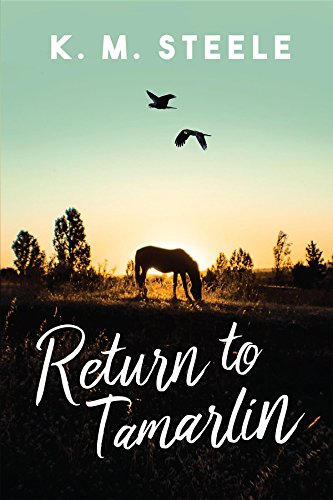
Book review: Return to Tamarlin by K. M. Steele

It is rare that I read a general fiction novel set in rural Australia. I thought I better spread my wings a little, so here’s my review of Return to Tamarlin by K. M. Steele.

“When Tamara Slender disappears from an isolated property in Western NSW in 1975, gossip runs wild with rumours she has run off with a local man, Roger Bryte.

Months later, Tamara’s teenage daughters, Nancy and Mary, realise they encountered Bryte in caves on their property the day before their mother disappeared. Despite their suspicions, their father refuses to involve the police, and the girl’s grief, fuelled by the town gossips and their father’s inaction, drives them apart.

In 2007 a stranger arrives at the farm seeking information about Roger Bryte. His questions give Nancy a reason to contact her estranged sister. The sisters are reunited, and their mother’s disappearance is finally solved when Mary returns to Tamarlin.”

My thoughts:

K. M. Steele has penned an intriguing novel of two sisters and the dark mystery that separates them. Return to Tamarlin is well-written, slow-paced and rich in sense of place. Steele’s rendering of a sheep farm in crisis as its owners battle drought and plague, along with the prejudices and gossip of a small country town are spot on. This social realism provides the perfect back drop for a story involving the disappearance of Nancy and Mary’s mother on the very day they decide to try to re-enact the disappearance of the schoolgirls in Picnic at Hanging Rock, at some caves on their property called the Limeholes. Two weeks earlier, another local disappears, a local the girls encounter when they visit the caves. Are the two disappearances connected? What is it about their mother and her past that troubles both her daughters, and causes one to fiercely defend their father, and the other to flee the farm for larger horizons?

Good characterisation and a well-crafted plot hold the story together and the various tensions within the family and in the local community are convincingly portrayed. Tragedy, loss, grief and belonging are the emotional themes underpinning Return to Tamarlin, themes many a reader will relate to. This novel will appeal to those who want to lose themselves in an Australian rural setting and re-visit Australia in the 1970s, with all of its social prejudices intact.


Book review: Them by James Watts

Continuing my run of horror novel reviews, I am delighted to share my review of Them by James Watts.

“Ray Sanders returns home from Florida to bury his mother.
Soon, the supernatural evidence behind his mother’s demise begins to surface in the form of dreams and mysterious happenings.

During all of the madness, Sanders must face his destiny and vanquish the generations-old evil that has plagued his family since the 1800’s…

In 1854, Louis Sanders, with the help of Elias Atkins, dug a well to provide water to the family farm. What they did not anticipate was the water to be infested with Odomulites – ancient sins. These malevolent beings – were trapped in our world on their way to the spirit world – formed a pact of protection with both Sanders and Atkins; the families would serve as guardians of the Odomulite nests and in return, a blind eye would be cast when the Odomulites took host bodies to inhabit and feed upon.

It was this pact, which in 2016 would propel Sanders and Julie Fontaine – a young woman with a special connection to the Spirit World – into the heart of the last active nest to rid the town of its insidious Odomulite population.”

My thoughts:

It is impossible not to be hooked by this story; dread underscores every page, thanks to a gripping prologue. Watts has penned what I would describe a straight-ahead horror novel reminiscent of Stephen King’s The Stand. Fast paced, emotionally real and raw at times, at others almost wistful, Watts fills his pages with close observances and small details that bring his cast of characters alive and builds a warm, down-home wholesome feel that is juxtaposed with the menace lurking all around.

The prose is vernacular and pleasant to read with satisfying descriptions of a grotesque evil that haunts and taunts those dwelling in Maple Grove, Alabama. Watts’ characters are gritty, many have attitude and the setting of Maple Grove is vividly portrayed. I could smell the air and hear the characters speak.

Watts gives his readers what they want, solid, four to the floor horror that never misses the mark. Told from multiple points of view, the plot is peppered with little twists and turns, the pace kept fast as the story flits from character to character. Adding texture to the narrative, Them brims with 1970s popular cultural references, which I found charming.

As for the menace that pervades Maple Grove, I thought the way ‘they’ invade the characters’ dreams was clever.  Them contains an interesting mix of supernatural possession and creature horror, which I found Watts handled well, especially when he offers the reader a full explanation.

Gruesome and terrifying, Them is not a book to read in a basement.

The Legacy of Old Gran Parks’ Book Tour wrap up

First, I would like to thank Faye Rogers for her efforts in organising this book tour and all those book bloggers who read my book and wrote some fabulous reviews. The tour has had its highs and lows. Here are my reflections:

When a new book comes out, it is the job of authors and publishers to go on the hunt for reviews. The more the better and the one place we want them all to end up is on Amazon, because Amazon counts reviews and based on the number (not the quality) it will activate its own internal promotion of your book. We need 20-25, or better still 50, to be taken seriously. Less than 10 looks sad. To make matters even harder, Amazon splits the reviews up, so a review posted on the UK site or the AU site does not appear on the US site. Dedicated book reviewers will take the trouble to post on all three Amazon sites, cos that’s what it takes these days, and every book blogger worth their salt knows this.

In the past, when I’ve had a new book coming out, I have written hundreds of individual emails to book bloggers soliciting reviews. I’ve trawled the internet on the hunt for reviewers, joined Facebook groups and kept my eye on Twitter. It’s exhausting and the average take up rate is about 5-10%. On the blogging side, book bloggers are swamped, the good ones especially.

To take the pressure off authors and publicists, some bloggers have set themselves up as book tour organisers and for a fee they will organise a tour. When I started to investigate these service providers I was hesitant, but I began to see it as the only way forward. I would still solicit reviews, but at least some of the strain would be off my shoulders.

I had no idea what to expect when I hired a book tour organiser to set up a 14-stop review-only tour. I wasn’t prepared for the disappointment. Despite the organiser’s best efforts, out of 14 bloggers, 2 chose to post an extract and 4 chose to do nothing at all. That has left me with 8 reviews and out of that 8, only 6 have so far shared their review on one of the Amazon sites.

However, all is not bad news. Those reviewers who did read my book wrote honest reviews and there are many delightful comments peppered throughout their paragraphs. I’m grateful to each and every one of these bloggers, and to the tour organiser, who cannot be held responsible for the actions of those book bloggers who agreed to be part of the tour and then failed to follow through. Here are some of the highlights:

“This was my first time visiting the mind of Isobel Blackthorn, and it certainly wasn’t boring! The dark humour, gritty scenes and unusual characters all combine to make an entertaining read….Like the recently successful Jane Harper (author of The Dry and Force of Nature), Blackthorn knows how to convey the sinister nature of the Australian setting, making blistering heat tangible, the seaside seem lethal, and the all-encompassing forests claustrophobic….Overall, this is a darkly humorous tale expressed through brilliant prose and intriguing characters!”

Get Litty – https://www.getlitty.co.uk/single-post/2018/04/18/BLOG-TOUR-The-Legacy-of-Old-Gran-Perks

“This is the first book I have read from Isobel Blackthorn and it won’t be my last. It is such a well written book that I was gripped from the first few pages.The strapline of the book is ‘A Dark Comedy to Tickle Your Spine…’ and it lives up to your expectation.”

Helen Loves – http://helenloves.co.uk/blog-tour-review-the-legacy-of-old-gran-parks-by-isobel-blackthorn/

“The Legacy of Old Gran Parks has a wonderfully dark, nasty feel to it…The legacy of Gran Parks is a legacy of fighting back against abuse, and taking responsibility for dealing out your own style of justice.”

Liam of Book-worm-hole – http://book-worm-hole.blogspot.com.au/2018/04/review-legacy-of-old-gran-parks.html

“The Legacy of Old Gran Parks is a very unique, very fascinating but ultimately savage and dark read that I very much enjoyed. If you are a fan of Tarantino movies, you are more than likely going to enjoy this book which starts out a little bit eerie and odd and then turns violent and dark. It was a book unlike any I have read before but I actually really loved it.”

Faye of Big Little Books – http://www.bigbooklittlebook.com/2018/04/legacy-old-gran-parks/

“showed me an insiders view of rural Australia which I easily pictured even though I’ve never been.”

Parchment and Quill – https://parchmentandquillchronicle.wordpress.com/2018/04/12/blog-tour-book-review-the-legacy-of-old-gran-parks-by-isobel-blackthorn/

“The Legacy of Old Gran parks—is one of the rarest piece of story I ever read. It was unique and got an eerie exotic feel. A truly remarkable, and an unforgettable piece. Highly recommended to everyone.”

Bibliophile Angel – https://bibliophileangelblog.wordpress.com/2018/04/15/blog-tour-the-legacy-of-old-gran-parks-by-isobel-blackthorn/

“I really enjoyed the writing and plot ”

Read Between the Scenes – http://www.readbetweenthescenes.com/2018/04/blog-tour-legacy-of-old-gran-parks-by.html

“a marvellous read and I’d recommend it to anyone who asks.”

Infinite Pages – https://infinitepagesbookreviews.wordpress.com/2018/04/19/the-legacy-of-old-gran-parks-blog-tour/

If you want to review any of my books, I will give you a free electronic copy.

Book review: The Amnesia Girl by Gerri R. Gray

The horror genre is vast and catches comedy in its net. Gerri Gray’s The Amnesia Girl is a shining example of top-class comedy-horror.

“Filled with copious amounts of black humor, Gerri R. Gray’s first published novel is an offbeat adventure story that could be described as One Flew over the Cuckoo’s Nest meets Thelma and Louise.

Flashback to 1974. Farika is a lovely young woman who wakes up one day to find herself a patient in a bizarre New York City psychiatric asylum. She has no idea who she is, and possesses no memories of where she came from nor how she got there.

Fearing for her life after being attacked by a berserk girl with over one hundred personalities and a vicious nurse with sadistic intentions, the frightened amnesiac teams up with an audacious lesbian with a comically unbalanced mind, and together they attempt a daring escape.

But little do they know that a long strange journey into an even more insane world filled with a multitude of perilous predicaments and off-kilter individuals waiting for them on the outside. Farika’s weird reality crumbles when she finally discovers who, and what, she really is!”

My thoughts:

The Amnesia Girl is a witty, vivid, off the wall read that grips the reader from the first. The narration is so good, two paragraphs in and I had to set my kindle aside and pace the floor, waiting for my excitement to settle. An early reference to Sylvia Plath’s The Bell Jar sets the tone, although Gray’s rendition is the earlier work’s alter ego, the antidote to all the suffering and injustice mental patients are forced to endure. A whacky and terrifying array of mental patients in the asylum is trumped by the even whackier and sinister psychiatric nurse and doctor.

Farika has no memory of who she is:

“But whatever memories her brain might have retained of her now-forgotten past were as grayish-white opaque as the smokestack clouds that rose high into the air with the promise of forming into something substantial, only to dissipate into nothingness.”

To my mind, such writing is gold, pure gold.

Thankfully, Farika and her friend, Mara, manage to escape, and they embark on a wild ride from New York to San Francisco, encountering many bizarre characters along the way, from prostitutes to religious fruit loops to radical extremists; everyone’s a nut job, no one can be trusted and the macabre is ever present. At times I was thinking Tarantino or the Coen brothers, others of Rocky Horror, and yes of course, Thelma and Louise. Above all, Gray has captured a slice of vintage USA with a hilarity that charms and a narration that glows. There are plenty of twists and turns as the plot drives forward, heading towards a satisfying ending when things come together and wrap themselves up in a tight knot.

I don’t want to have to defend horror, but I suspect if you want to find out where all the literary fiction authors are hanging out after being rejected time and again by publishers, it’s leaning against a graffitied wall of some dark alley, conjuring dread and revulsion. The Amnesia Girl is another demonstration of the places women writers of horror take the genre. An absolute delight!


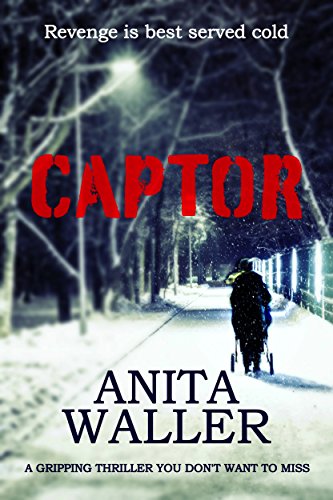
Review: Captor by Anita Waller

I’ve had a short detour into the realm of thrillers with Anita Waller’s smashing read, Captor.


“Liz Chambers is a devoted mother who works for a successful law firm. She has two children, a husband and a blossoming career. But behind closed doors, Liz is harbouring a secret that could destroy her life.

Then the unthinkable happens, and in a frenzied attack, her young son is snatched from the home of the childminder charged with looking after him.

As Liz’s life unfolds, it becomes clear that someone is out for revenge.

Desperate to get her baby boy back, Liz must work out who is responsible for his kidnap, and why.

But as the body count begins to mount, Liz’s concern grows for the safety of her child.

Who has taken her baby?

And why is Captor so determined on revenge?”

My thoughts:

What makes a good thriller? Relatable characters, a relatable plot, and a fast pace with plenty of twists along the way are all essential elements of a good thriller. Deviate from the strictures and the author will risk alienating thriller readers who don’t want detailed backstory, long paragraphs of reflection or thick descriptions. Thrillers have to create an edge of seat tension in the mind of the reader and they absolutely must not falter or meander in any way. Reading Anita Waller’s novel, it is plain she has mastered every element of the thriller genre with finesse.

Captor does not miss a beat. The twists come at just the right moment and drive the plot forward at breakneck speed. The protagonist, Liz Chambers, is sufficiently complex and flawed to make her likeable if selfish and blinkered, and Waller leaves it to her readers to judge Liz’s past and present deeds. Indeed, it is Liz’s questionable acts and decisions that provoke the reader to think and ponder what they might do, or not do in a similar situation.

The story unfolds rapidly once Liz’s baby son is taken, and from then on Captor is laced with a satisfying mix of mystery and complexity. The parallel narrative works well too, in keeping the reader informed and building up tension. I defy any reader to put this book down before they get to the end!

I thoroughly enjoyed Captor, and look forward to reading more from the author.


Book review: The Visitors by Catherine Burns

Horror fiction takes many forms. Good horror is an art form, one that requires considerable mastery and imagination. Psychological horror shades into dark fiction – bleak, gothic at times, often literary – and as ever, books can be hard to categorise. Catherine Burn’s The Visitors is one of those books.


I’m only sharing some of the blurb as I think the rest is a spoiler.

“Marion Zetland lives with her domineering older brother, John in a decaying Georgian townhouse on the edge of a northern seaside resort. A timid spinster in her fifties who still sleeps with teddy bears, Marion does her best to shut out the shocking secret that John keeps in the cellar.”

The Visitors is a grim read, more disturbing as the story unfolds, the narrative devoid of humour but not wit. The is novel driven by its backstory, and amounts to a acutely observed character study of the protagonist, Marion Zetland, as she observes her brother, John, and his deviant habits. Burns makes a study of dark passion, but not the brooding malevolence of a serial killer, more the banal evil referred to by Hannah Arendt, one laced with pathetic and inane self-justifications. For Miriam, a sad-sack of a woman in her fifties, is as drab, anxious and miserable as they come.

What ensues is a slow unfolding, a game of seek with no hiding, the reader allowed to peak first here, then there, as the narrator reveals Marion’s foibles, and those of her brother, their mother and father. The collective past of the Zetland family is not pleasant. And neither is Marion. She is impossible to like. She is irritating, repellant and frustrating. She has no willpower, no ambition, instead she is a hopeless figure stripped of her will, immobilised by indecision, her morality compromised by the voices in her head. Existing on a diet of biscuits and tinned food, she loses herself in imagination and fantasy, her escape from a lacklustre existence inside the only home she’s ever known.

Then there is the small matter of the visitors in the cellar.

What begin as justifications for Miriam’s inertia eventually turn into justifications for why she acts the way she does when she finally exercises her will. And it is only then that explanations of certain little mysteries emerge. Burns exercises perfect narrative control, in command of her plot and her characters at every turn, her premise a powerful one and demanding to execute. I can only imagine what it must have taken to write this book.

Not for everyone, but for those who do enjoy dark fiction, this novel is superb.


Review: Harlequin’s Riddle by Rachel Nightingale

Here’s my review of a sensational debut novel by Australian author and award-winning playwright, Rachel Nightingale. It might look like a YA fantasy novel, but don’t be fooled! Read on and discover why I am in rapture over this book.

“The Gazini Players are proud to present
For your Edification and Enjoyment
Tales of great Joy, and of great Woe

Ten years ago, Mina’s beloved older brother disappeared with a troupe of travelling players, and was never heard from again.

On the eve of Mina’s own departure with a troupe, her father tells her she has a special gift for story telling, a gift he silenced years before in fear of her ability to call visions into being with her stories.

Mina soon discovers that the travelling players draw their powers from a mysterious place called Tarya, where dreams are transformed into reality. While trying to solve the mystery of her brother’s disappearance, she discovers a dark secret to the players’ onstage antics. Torn between finding her brother or exposing the truth about the players, could her gifts as a story teller offer a way to solve Harlequin’s riddle?”

*****

It is a stark fact that for the last few decades the major players in the book publishing industry have chosen to be led by their sales teams, and commissioning editors must bow to their publisher’s bottom line. Editors may fall in love with a story, want to praise it from the rooftops, but they are stuck with having to tell the author the harsh truth that their sales department, not known for vision and decidedly risk averse, have deemed the work unsaleable. It happens time and again that a truly great work slips through the cracks and ends up – because it IS truly a great work – being picked up by one of the lesser known small presses. If you want to read excellent original fiction, hunt out works released by reputable small presses.

Harlequin’s Riddle is one of those books, for Rachel Nightingale has composed a work of remarkable vision and depth of insight, a work narrated in an accessible and enchanting style; gentle, inviting, sensory, like silk and gossamer. The pace is slow at first, but never meandering, and quickens at each plot point, as what begins as a quest evolves into a dark mystery.

 Harlequin’s Riddle is a story of illusion and make believe in art and theatre. The novel opens with Mina watching a travelling theatre troupe perform in her village as she misses her older brother, Paolo, who took off with a troupe a decade before, and never returned. She was seven when he left, and she’s seventeen when with her mother’s blessing she joins the theatre troupe in the hope of finding him. The reader is swept along on the aspirations, hopes and dreams of innocence, a false innocence for Mina’s childhood scars are many, and the grief and anguish and betrayal are buried so deep Mina is numb to them, until they surface and form a destabilising force, propelling her into understanding and ultimately wholeness.

Despite the fictitious setting, Nightingale paints an evocative portrait of medieval Italy with its rugged coastline, its quaint villages, forests and northern lakes. The author’s depiction of the theatre troupe with their colourful sets and costumes is vibrant and alive and enthralling, the reader provided a privileged view, looking over Mina’s shoulder at the other players and the audience. Much of the story involves the travellers journeying in their wagons to the Festival of Lights held in the large city of Aurea, and again, the reader is swept along for the ride as the troupe cope with various dramas and adventures along the way. There is much here to entertain every reader, young and old, the final quarter of the novel dripping with visual splendour.

On another level, Harlequin’s Riddle is less a tale of Mina’s quest to find her brother, and more a study of the nature of imagination and creativity, that curious moment of conjuring, bringing into being that which we inwardly see, and seeing that which we inwardly describe – words and pictures, which comes first? The creative process, at the moment of conception, differs between the arts and among artists, but always there is a point of manifestation and it is this that fills the pages of Harlequin’s Riddle.

Coupled with the theme of creativity and the creative process are ideas of spirituality and healing, the very quality we access when we transcend ordinary reality in creative imaginative acts, is also a powerful source of beneficial transformation and healing. Nightingale calls this multidimensional realm Tarya. It is what esotericists call the ‘inner planes’, and it is here that the deeper essence of Harlequin’s Riddle is apparent. 

Entering Tarya involves altering your state of awareness, undergoing an out of body experience, and engaging in astral travel. Tarya is the realm of the shaman, the magus, the trickster, the psychopomp. Here is a small taste of Tarya.

“A subtle buzzing of hidden energy surrounded her. She looked down on distant mountains, and nearby trees, and people, many people, and each shape glimmered with light, layer upon layer of light, blurring outlines of real objects. There were intricate spiderwebs laid across the whole scene, gold threads wrapped around and over everything.”

In the villages, the players are feared for it is known they have occult or arcane power, one that destroys as it sets out to give joy. Unlike the players, Mina has the gift of storytelling, and she accesses Tarya differently, going far beyond the realms accessed by the players, realms that are connected to the  living earth, to enter the purer planes of existence, where spiritual wisdom resides. This innate ability sets her apart, leads her into danger and ultimately drives her quest.

There is much to reflect on in Harlequin’s Riddle, and much to appreciate. Harlequin’s Riddle  is a story to lose yourself in, and can be read on many levels. It isn’t necessary to understand anything about the occult or arcani to appreciate the novel, although the astute reader will recognise Harlequin’s Riddle  as a transpersonal journey, one of initiation and healing. Nightingale has penned a unique and exquisite tale that deserves to be widely known, a story with a depth of awareness and understanding that will hold special appeal to those with an interest in alternative spiritualities. In the final analysis, Harlequin’s Riddle a work of intelligence and refinement that I can only compare to an Ursula le Guin, with overtones of Umberto Eco in theme but not in compositional style. A visionary fiction masterpiece.

Harlequin’s Riddle is available through all good booksellers.


Review: The Blood Red Experiment

My journey into dark fiction just keeps getting better. What is it that draws the reader into the realm of the macabre? I guess the answer to that is different for everyone, but for me, uppermost is the application of top-class literary skills.

“Inspired by the genius of Hitchcock and his films, latin luminaries such as Argento and Bava directed macabre murder-mystery thrillers, that combined the suspense with scenes of outrageous violence, stylish cinematography, and groovy soundtracks. This genre became known in their native Italy as giallo.

Giallo is Italian for yellow, inspired by the lurid covers of thrillers, in the way that pulp fiction was derived from the cheap wood pulp paper of the crime stories, or Film Noir came from the chiaroscuro of the German Expressionistic lighting.

We at TBRE want to bring gialli-inspired stories by some of the best crime writers on the scene today to a wider audience, giving birth to a new literary movement in crime writing, NeoGiallo, and drag this much maligned genre screaming and slashing its way into the 21st Century.”

*****

My entry into NeoGiallo has been rewarded with this superb collection. Edited by Jason Michel and Craig Douglas, The Blood Red Experiment is a well laid out magazine with a healthy noir vibe. Many of the stories are first instalments of serialised works, a smart move on the part of the editors, as those stories are compelling and leave the reader wanting more, rendering The Blood Red Experiment a collectible, a must-have for any noir-loving fan.

The opening story, ‘Machine Factory’ by Richard Godwin, is about as confronting as it gets inside the mind of a psychopathic killer. Unrelenting, vivid and artistic in its execution, I am in admiration of the author for his ability to enter into the pathology of macabre glorification and can only hope the protagonist is not his ‘Mr Hyde’. Godwin display his literary talents in evocative descriptions:

“I will escape it and find otherness like a black widow spider clutching with unreal feet at the empty window pane of time.”

‘Machine Factory’ contains a satisfying twist, one that entices the reader to start back at the beginning.

Every story in The Blood Red Experiment is worth a mention. Mark Cooper’s intriguing ‘Quaenam in Illis’, the tale of an out-of-work linguist used by a mysterious group to decipher ancient writings, pulls the reader into a seedy Paris underworld. Kate Laity’s ‘Maddona of the Wasps’ is a rich and tantalising tale of erotic desire and gore, as a dominatrix uses her minion, a slave to his own lust. In ‘Didn’t Bleed Red,’ Tom Leins makes use of a reflexive giallo motif, as his private investigator protagonist comes face to face with a grotesquely overweight, red-faced man who calls himself The Auctioneer. Jack Bates displays impressive narrative control and provides an unexpected twist in his confronting tale, ‘Canvas of Flesh’. Then there’s James Shaffer’s chilling and tense ‘Blood of the Lamb’, a story in which even the light bleeds; and Kevin Berg’s sensual and literary ‘L Impermanenza Dell’Art’, a story that takes searching for inspiration in an art class to a whole new level.

The high literary standard that can be found in the dark-fiction genre never fails to please, and the standard of writing in The Blood Red Experiment is excellent. The authors are adept at creating evocative metaphors and captivating imagery, and display all the artistry of good prose, brought to bear on the gruesome side of life.  Dripping noir from every page crease, the hallmark of this issue is dark sensuality, the sort only good writing can achieve. Every author is engaged in a dance of seduction with the reader. The Blood Red Experiment is a privilege to read. My only critical remark is the shortage of women writers in the mix.


Review: Worship Me by Craig Stewart

I’m thrilled to share my review of Worship Me by Canadian author Craig Stewart. Worship Me is a fast-paced horror novel that will have you on the edge of your seat.

Something is listening to the prayers of St. Paul’s United Church, but it’s not the god they asked for; it’s something much, much older.

A quiet Sunday service turns into a living hell when this ancient entity descends upon the house of worship and claims the congregation for its own. The terrified churchgoers must now prove their loyalty to their new god by giving it one of their children or in two days time it will return and destroy them all.

As fear rips the congregation apart, it becomes clear that if they’re to survive this untold horror, the faithful must become the faithless and enter into a battle against God itself. But as time runs out, they discover that true monsters come not from heaven or hell…

…they come from within.

*****

Worship Me is a story of terror and demonic conversion. A foreboding atmosphere greets the reader from the opening paragraph and by the second chapter, when Clara and her minivan collide with a cat, the reader is hooked. Stewart displays the twin talents of superb story telling and excellent pacing, along with satisfyingly rich and evocative descriptions.

Every story is born of an idea, or a premise, and Stewart’s is a strong one; he has the ability to conjure in the mind of the reader that his is a story worthy of being told, a story albeit as old as religion itself. Worship Me satisfies on a literary level, Stewart peppering his narrative with witty turns of phrase, especially in his character descriptions:

“Gary’s wife, Tina, lived on the bright side of things; you could tell she was a permanent resident there by the inexplicable glow that she carried wherever she went.”

All the characters in Worship Me are crafted with a sharp eye; the result is a cast of believable and largely unlikeable church goers of varying degrees of devotion; the congregation of a typically small-minded tight knit and remote community.  Enough complexity in the early part of the story holds the attention, the pace quickening about a third of the way in, when a preternatural wind gathers pace “like a bulldozer careening through a supermarket.”

From then, the story becomes a gripping, heart-palpitating read, the reader turning this way and that, maybe even away from the page, certainly feeling as frantic as the characters, who each display their unique traits, for better or worse, as they battle to make sense of and handle the situation they are in.

For anyone familiar with Nick Cave, think a book length O’Malley’s Bar. The terror is unrelenting.


Domingo Díaz Barrios

Sitio web de mis obras

Soul to Spirit: The New Spiritual Psychology

Becoming Human, Becoming Soul, Becoming Spirit

The Dark Side from the Inside

Writing and Reviews from Dark Places

Bookinton

Book Blogging , Short Stories , Reviews , literary web-series and EVERYTHING FICTION !

Mitch Horowitz

Author • Lecturer • Narrator

ARMAND ROSAMILIA

Author of Thriller, Horror, Nonfiction stories and more

BOOKS FROM DUSK TILL DAWN

Each night I TRAVEL THE WORLD, I LIVE IN THE MIND OF KILLERS AND WALK AT THE SIDE OF HEROES

Passport Overused

Showing the beauty of this world through the people, places and culture

BooknVolume

For the Love of Words, Art, Nature, and Spirituality

THE BLOGGING STATION

LIFESTYLE, BEAUTY AND EVERYTHING IN BETWEEN

Frankly Wright

I give you my opinion whether you ask for it or not.

a good book, a good life

comments on books by Ann Creber

Carmel Bendon

Writing tales of then and now and the in-between